How the Netherlands Feeds the World (2017)
nationalgeographic.comNot to talk down the Dutch achievement too much but the quality of statistics used in this article is terrible.
Total monetary value of agricultural exports is a terrible way to measure output. It doesn't take into account: 1. Re-exports (Rotterdam is the largest port in Europe) 2. Specialisation in the production of certain goods (i.e. high imports and exports) 3. The high price of agricultural goods in Europe, driven by high trade barriers. 4. Low domestic consumption compared to more populous nations.
For a better analysis of the monetary value of Dutch agricultural exports see here: https://www.cbs.nl/en-gb/news/2018/03/dutch-agricultural-exp...
Note for example the 22.5 billion Euros in re-exports of agricultural goods.
90% reduction in water usage is also hard to judge without looking at changes in other advanced agricultural nations.
It would be more interesting to see the yields per-hectare the Dutch are achieving compared to other advanced agricultural nations.
> It doesn't take into account: 1. Re-exports (Rotterdam is the largest port in Europe)
At some point during Ceausescu’s later years Romania (my country) was one of the largest exporters of bananas in the world, as Romania was trading with many African countries using barter: we give you tractors and Romanian-built replicas of the AK-47, you give us bananas. Those bananas were later re-sold by the Romanian Government for much needed foreign currency.
It's in Dutch buy you can read about that here:
http://statline.cbs.nl/StatWeb/publication/?PA=7100oogs
Few examples (2017 data):
Potatoes 36 900 kg/ha Sugar beets 93 300 kg/ha Wheat 9 100 kg/ha Rye 3 200 kg/ha Corn 13 500 kg/ha - 48 900 kg/ha (different kinds) Onions 55 700 kg/haOne would not expect The Netherlands to export so much in the presence of "high trade barriers". But I strongly suspect that trade barriers between European Union Members to be very low.
Low transport costs also helped The Netherlands achieve this position. Numerous highways, railways and waterways connect it to it's neighbours.
He means trade barriers against cheap food from developing countries like Africa. The EU blocks such imports with high tariffs mostly to protect French agriculture, but it has the advantage of allowing the Dutch to invest in super high tech farming. Sucks for consumers though. Food is more expensive in Europe than the USA and that's why.
The Netherlands is in the EU. They have total unrestricted access to the EU market, which is exactly where the vast majority of their agricultural exports go.
The EU isn't a free market when it comes to agricultural produce at all, thanks to the CAP (Common Agricultural Policy)[1].
E.g. just in the last year[2] central planning for how much quantity of sugar beets each country could produce was finally phased out, with the Dutch expecting in production of up to 25% as a result[3].
This was one of the grand bargains of the EU. In exchange for the likes of France, Spain etc. joining the union they wanted guarantees that these politically sensitive sectors of their economy wouldn't be subject to real competition.
So production in countries like The Netherlands is artificially low since a combination of quotas and other central planning restricts production.
1. https://en.wikipedia.org/wiki/Common_Agricultural_Policy#Equ...
2. http://europa.eu/rapid/press-release_MEMO-17-3488_en.htm
3. https://www.dutchnews.nl/news/2017/01/dutch-sugar-cooperativ...
One of the gains in yield per hectare is given right at the start of the article. 20 as opposed to 9 tons per hectare.
Though that’s a global average, and may be just as amazing in the US.
The graph labelled "Punching above its weight" is a graph of comparative yields, which looks very impressive for the Dutch.
What is kind of funny is that people here like to pay more for 'organic' food because they think it's more healthy. But what comes from the greenhouse is so lab-grown it's more healthy than anything. Those labs also don't like to use pesticides because it's unhealthy for the workers and plants as well. They use insects to control pests.
The only problem with greenhouse food is that it tastes like nothing. A tomato grown on soil has much more taste than grown on water.
Not the only problem.
They tend to pump CO2 into them to increase growth, that has the unfortunate effect of decreasing nutritional content. https://www.bbc.com/news/science-environment-27308720
I'm sure I've seen research for other veg also, but my google fu is failing me at the mo.
It's not the soil but the lack of sun that deprives the tomatoes of their taste.
Greenhouses in the Netherlands are heated with natural gas. The Dutch government subsidises the gas so they can keep their costs low and be competitive. So that's another reason to eat organic food; it is more sustainable because it uses natural sunlight. And tastier as well!
That fact about natural gas was one of the most surprising things to me. I realise the Netherlands is right next to some huge oil and gas fields, but surely burning gas to heat greenhouses filled with tomatoes in a cold climate, can't make sense compared to just importing those vegetables from countries where they grow naturally? Shipping fuel isn't that expensive?
Is this some weird side effect of the tariffs and CAP? It's cheaper for Europe to burn fossil fuels and build robots to grow tomatoes in cold climates with expensive labour, than import them from warm climates with cheap labour?
I’m fairly certain nobody would buy the Tomatoes if they didn’t have any taste.
Depending where you live you probably already do and think that ‘no taste’ is the taste of tomato. In the Netherlands (where I am from) and the south of Spain (where I spend a lot of time) the difference is huge in taste buying an average tomato; the ones in NL taste like nothing compared but seems people are used to it.
>A tomato grown on soil has much more taste than grown on water.
You mean they use hydroponics?
Yes
Only problem is that dutch vegetables have no taste and are still insane expensive compared to meat (which is also tasteless). So yeah, awesome thinkering and efficiency here, but quality is not there.
Actually a bit of a myth (I'm Dutch). It's more a case of targeting different markets with different price and quality ratios. E.g. Germans love to complain about Dutch water bombs but buy them by the kilo anyway because the stuff is cheap. They don't realize the more expensive varieties also available to them come from the same country. You don't have to buy the cheap ones but they do; it's their poor tastes that are driving the demand for this.
Likewise, Italy imports a lot of tomatoes (more than they export according to this: https://www.freshplaza.com/article/2158667/italian-table-tom...). Most of those come from the Netherlands. Italians are of course famously picky when it comes to their food. Yet they seem to buy Dutch produce.
The reason that Italy imports Dutch tomatoes is probably for using them in tomato sauce and other tomato products.
Italy's export of tomato products is far greater than its raw tomato export: see e.g. http://www.tomatonews.com/en/global-tomato-products-trade-20...
So no, I wouldn't say that Italians like Dutch tomatoes as much as their own.
In the UK, supermarket tomatoes imported from The Netherlands are also common. The tomatoes are mostly tasteless, regardless of the variety. Even the premium-priced organic ones have little flavour.
That's what modern, mass-produced agriculture gives us: tasteless, low-cost produce all-year round because price mostly trumps other factors for many, if not most, consumers. But it seems that even expensive mass-produced varieties are just as tasteless as their cheaper counterparts.
The UK used to be infamous for low quality bland food. So, it's not surprising that people tend to buy cheap low quality stuff there. Same in Germany (I live there currently). The quality of the produce in the super markets is quite poor. I recently was in Poland; they seem to have even lower standards/expectations there. Don't blame the Dutch, blame the local food culture (or lack thereof). The premium stuff gets shipped to where it most appreciated.
The UK, famous for bland food? The most popular dish in the UK is curry. The relative lack of spicyness in European food vs British food is very noticeable.
Tomatoes flavour often gets killed by chilling them too far - https://www.newscientist.com/article/2109336-heres-why-putti...
There are probably other things going on as well, but this seems to be one of the major factors at play.
The other problem is the Netherlands are at risk of getting wiped out by rising sea levels.
Your example of Italy is bad news - in effect countries that could produce their own are buying Dutch because it’s cheaper, presumably because economies of scale now work in Holland’s favor.
In other words we depend on a country that’s at risk of being wiped out by flooding for food _and_ that same countrys dominant market position is also holding back food production in other countries.
Sounds like the back story for a bad movie.
Sea level changes are not that much of a challenge. We have centuries of experience building infrastructure to manage that and decades more to leverage that. Much of the country is already below sea level and already well prepared for extreme water levels. Some of the infrastructure will need some upgrading of course. The reality of sea level changes is that they will be most devastating in places where they won't be able to pull together the economic resources to put infrastructure in place or where they are making the historic mistake of assuming it won't happen.
This is a myth. Despite the global warming, Dutch sea level rising has not accelerated. See e.g. https://www.clo.nl/en/indicators/en0229-sea-level-dutch-coas...
I was worried about that too, only it turns out that due to the exact location the risks due to the sea level are much lower than in other countries. Having the British Isles as a buffer from the Atlantic really helps.
Changes to the weather pattern (particularly the rain) are a bigger cause of concern.
I wonder if Dutch tomatoes imported to Italy are canned and then branded as "made in Italy"?
That'd be illegal for food, which must state the country of origin.
You are probably right in the straight forward example. I'm sure most of the schemes below are legal though.
-"packed in Italy"
-Add herbs and seasoning to the can.
-Process it to pasata.
-Add lots of Italian branding, Italian head office address with "made in EU"
Labelling law is not that strict in the EU except for meat and fish. The idea of a single country of origin is pretty dubious anyway.
I live in the Netherlands and disagree with your point about the price. I usually cook meals for 2-3 people. They usually cost less than 3 euro for vegetables (in total, not per person). Meat and/or cheese are usually the most expensive. And those meals contain a lot more vegetables than the typical meal in the USA and southern or eastern Europe.
I can concur to this. I have a friend from Italy where he worked during the summers at family farms down south where they produced tomatoes the natural way. Eating tomatoes in Netherlands is like eating paper, he said. The same goes for lettuce. There is no taste and it goes bad/degrades much faster even if you keep it in the refrigerator
One of my biggest complaints about living in the Netherlands is the goddamned tomatoes. Even after seasoning them and trying many different kinds, I just couldn't find one that was like... a tomato, in the way that I know it.
I find the small cherry tomatoes (the "snoepgroente" ones) to be delicious, in the right season (of course quality varies throughout the year). With some buffalo mozzarella from Italy they make an excellent meal.
Well as you know tomatoes don't grow naturally in the Netherlands.
The whole thing about Dutch farming is efficiency. Produce vast quantities with minimal manpower or land use. Feeding the world>taste.
The same applies everywhere in Europe outside of Italy and France.
> Only problem is that dutch vegetables have no taste
The expression “like Dutch tomatoes” has become an insult for vegetables being sold on the local market exactly for the reason you mention.
Vegetables are only expensive because meat is heavily subsidised by the Common Agricultural Policy.
"Food Valley"? Oh, come on... they could have done better! How about "Sustenance Valley"? But that brings up a secondary point... a valley?? In Holland??
Calling anything in the Netherlands a hill or valley is a bit of a stretch. However 'Food Valley' refers to the regional nickname 'Gelderse Vallei' and is in fact a valley between the following ridges:
Yeah, it's nuts. Every region and a half in the Netherlands that specializes in something calls themselves "something something valley".
That said I was once in Silicon Valley and there were hills on the left and water on the right. Not really much of a valley either.
And if you looked past the water you would have seen the hills on the other side. The 'valley' is between hills on either side of the bay.
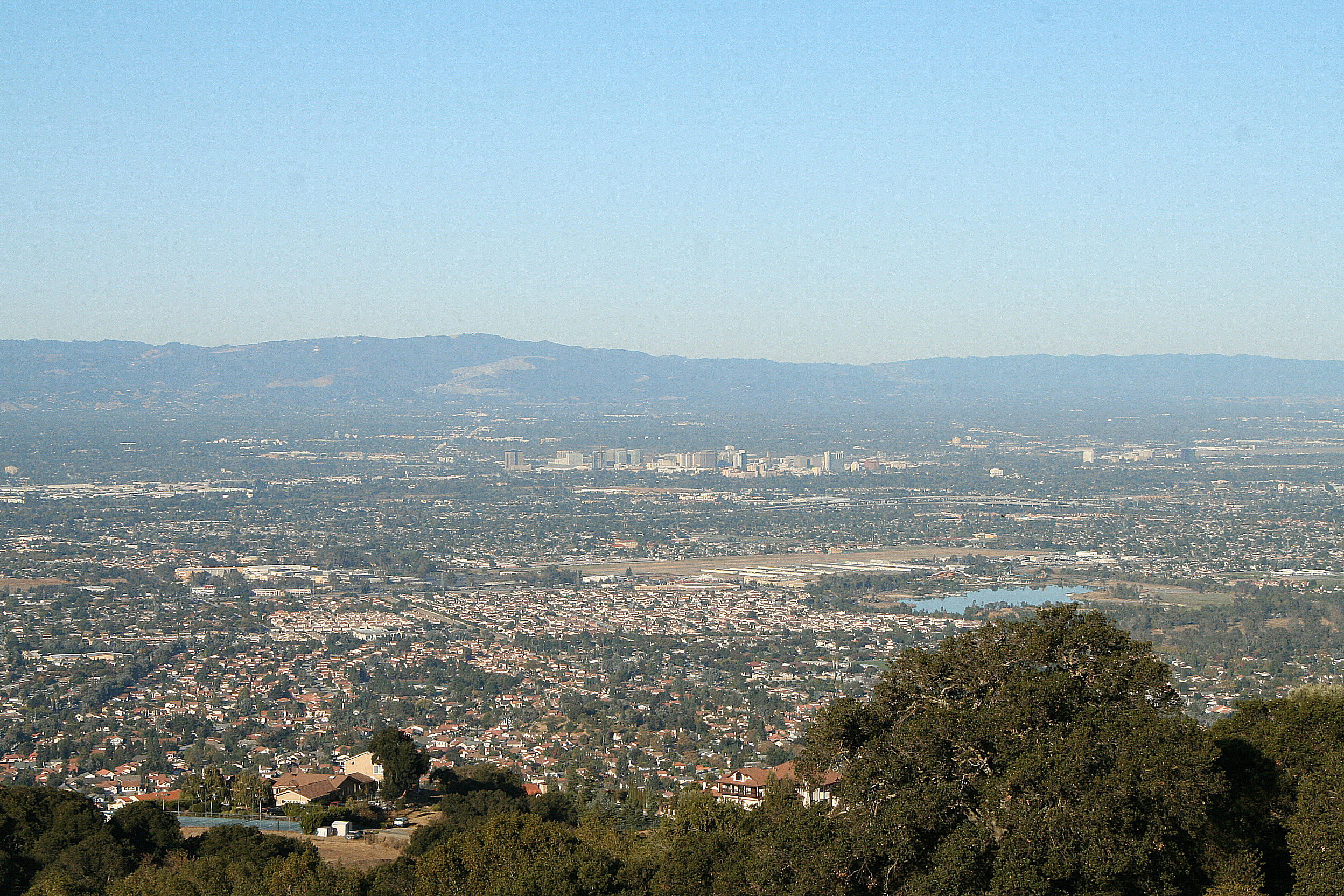
The hills in the Bay Area range from 350m to 1300m, so they're not huge, but drive/hike up over them and they definitely feel mountainous. The "Valley" can best be seen from Skyline Blvd running along the peaks to the west: https://upload.wikimedia.org/wikipedia/commons/b/bc/San_Jose...
I live in the Netherlands, and I've never heard anything like that before. I live in The Hague, maybe it's a regional thing?
I used to live in the Netherlands and I'm writing this from Utrecht. The valleys are regional:
1. https://en.wikipedia.org/wiki/Food_Valley in Wageningen
2. https://www.healthvalley.nl/ in Nijmegen
3. http://www.metalvalley.eu/nl/home in Brabant
4. https://www.immunovalley.nl/ in Utrecht
5. https://legalvalleynederland.nl/ in Arnhem
6. https://www.energyvalley.nl/ in the northern provinces
If you like partying you can always go to: https://dancevalley.com/
The pattern is so overused that organizations that never even tried to amount to something adopted it. Eg I was once at an event organized by "DSP Valley", which was never more than someone behind a desk organizing a few (mediocre) networking events: https://www.hightechcampus.nl/bedrijven/dsp-valley.
Coming back to the Netherlands from abroad it often feels like they’re pretty good at coming up with what I would consider fairly cringeworthy names.
Yep! I myself live and work in the area (Eindhoven) that willingly calls itself "Brainport". I hear the word almost daily for ten years and I still cringe.
The region is called the Valley and it is - thanks to Wageningen University - a world leader in agricultural research. So the name makes sense.
I also live there; but to be honest they could rename it to "Randstad Valley" given the amount of people who are moving here from Amsterdam and Utrecht.
"A farm atop a former factory in The Hague produces vegetables and fish in a self-sustaining loop: Fish waste fertilizes plants, which filter the water for the fish."
If people should know something about how diseases & parasites appear and develop is that the existence of exactly this kind of "self-sustaining loop" is the essential part. Even in the outside environment, any given organism bares the risk of taking part in development of a new parasitic creature's life-cycle, but that risk is greatly reduced by having an inconsistent pattern of interaction with other symbiotic creatures. Here the people involved are just asking for it (unless they go out their way to sterilize the substances circulating in that plant-fish loop).
Impressive, to be sure, especially the technical side of things.
However I really dislike greenhouses like these for the huge amount of light pollution they cause (speaking as an amateur astronomer). Sure, it probably doesn't matter much in a densely populated area like the Netherlands, but they start to also pop up here in Eastern Europe, in (previously-) dark-sky locations.
Google Earth to the greenhouse complex is southern Spain is visually entertaining. Similar giant single area in the NL?
Westland south of The Hague
https://www.google.com/maps/place/Westland/@51.9915637,4.190...
Ok. Keep scale same and look at El Ejido
https://www.google.com/maps/place/El+Ejido,+Almería,+Spain/@...
I'm guessing that Israel and Spain might be behind the Netherlands in this trend. Absolutely fascinating.