Subject: Airbnb (2011)
paulgraham.comI'd love to see more of these genuine, high-level business conversations. It can be difficult to learn and understand what really goes on "at the top", because probably every top exec is under some pressure to appear superhuman.
Most of the time I've had access to these conversations it seems like 10-20% of the time there is some really insightful and/or groundbreaking discussion going on.
The rest of the time, it's something like this:
  A: I've always found that business is about increasing revenue and decreasing costs

  B: I've also always thought that way

  A: Great! I'm glad we're on the same page
It is interesting to see how PG is selling this to Fred. This is exactly the kind of people you want to work with in a startup. People who believe in you and are not afraid to show it.
Yeah, I don’t know much about PG’s communication style, but in intra-VC communication, this is 100 max over the top support, hair-on-fire. Good for PG, and his words were prescient in ‘09, prescient in ‘11 and still prescient in ‘18. Not many times my you can say that.
Ps funny on the eBay name drop. The original marketplace model, and still doing well, but dot think vc’s reference it as often anymore.
Love his passion. I know it's possible PG himself missed out on a startups by convincing people not to invest in a simialr way, but the fact that he's not afraid to express his opinion is just as useful.
This pg quote has an r/LateStageCapitalism vibe to me: "They just arrived back from NYC, and when I asked them what was the most significant thing they'd observed, it was how many of their users actually needed to do these rentals to pay their rents."
Yes, and then a casual "there's a lot to like"...
For me it was how PG pushed the investor with the "they WILL get hotels" line. Expected more data and less gut feeling from Ycombinator.
I dunno, PG's always had a great gut instinct about startups. That's why people love his posts.
>So I think it can scale all the way to the bed and breakfast market
> But I am not sure they can take on the hotel market
Not an inaccurate assessment.
> > But I am not sure they can take on the hotel market
> Not an inaccurate assessment.
Not sure. I have stayed in AirBnBs on vacation in other countries and I have stayed in them many times on business, first during a conference when all the rooms were booked ( -- our admin suggested it!) and then after that was so great (we had a whole house for a half dozen team members) we almost always use it. Most people prefer it, though some prefer to have their own place rather than share, even though everyone has their own bedroom. We give everyone a choice and most people choose an airbnb over a hotel.
I assume "take on" doesn't mean "replace" but "become a significant player". It doesn't work in Manhattan nor, somewhat surprisingly does it in Omaha, but in most major conurbs its fine.
For my own usage, they've taken the hotel market for personal travel. I don't think their hold is as strong in business travel yet.
until you find yourself in customer care hell.
I've rented a fake room (lied about size, noise, etc. and had three honest-looking reviews) and I was talking to a rep in the US, in english. Meanwhile the host was talking to a service rep in the country i was in, in french.
In the end, the US rep promised me a credit and help. But then the France rep flagged my account. Now i could not book anything until i reactivated a credit card. Even the US rep now couldn't help me until I did that. It was a Saturday. I needed until Tuesday to validate any credit card via their statement methods. Twelve international calls later, and there was nothing they could do. at all. And I was a several-year long customer with 5star reviews all around.
Ended up on the street, with three bags, hunting last minute hotels and paying counter price. Never used airbnb ever again. The savings is not worth the risk.
Luckily I have not experienced any international issues.
I have experienced one issue where the host cancelled hours before arriving while we were already en route, but Airbnb upgraded us to a much better place as everything comparable was sold out (New Year's Eve in NYC).
(I work in the corporate travel industry, not for Airbnb)
It's definitely not a big thing in business travel yet, but at least part of that is because business travel is a slow market to change (partly because of expense integrations, private rate deals, duty of care, etc.) That said, Airbnb is actively trying to build out their business travel group and in theory are signing up customers. It wasn't clear to me how much of that was marketing vapor.
My general feeling is that they'll eventually be able to capture a small chunk of that market, although not as high a percentage as they will in leisure. Mostly because I don't think they can get the amount of reliable inventory that a large portion of business travelers will want. I've done more than my share of working from AirBnb/guest house/hotel, but if I actually have critical business travel, I'm taking the 1000 room Hilton over any AirBnb.
IMO they are chipping away at the hotel market for group (>2) travel at least.
This is just from memory. Correct me if I’m wrong.
2005: mobileride.com in Boston, phone-based ridesharing with voluntary cash exchange, shut down in 2006 with regulatory warnings
2006: zipcar hires some of mobileride team and enters rideshare business with shared zipcar rentals among BU students
2007: zimride starts with pre-arranged rideshare at Cornell, works with campus transportation directly to keep it legal.
2007: google rides opens as a platform for several tiers of ride hailing services, dominates the market and then shuts down in 2010
2010: Uber starts in NYC as high-end livery, not sure if they got the license or not, but tweaks business model to have many on-demand part-time drivers instead of full-time, but pays much better portion of fare.
2012: Sidecar in San Francisco allows anybody to accept rides and mobile payments but calls them gratuities instead of fare. Regulators show their will to inaction. Uber responds with massive push into taxi services, completely flouts regulation, and Zimride births Lyft to do the same. CALPERS is rescued from bankruptcy by investment in AirBnB and Uber.
2000: Craigslist creates a "rideshare" platform
https://web.archive.org/web/20000620091420/http://www.craigs...
> CALPERS is rescued from bankruptcy by investment in AirBnB and Uber
I would like to know more.
Yeah, this is one of the real secrets of Silicon Valley. The biggest unicorns of the post-Facebook era were all created because of regulatory capture, not despite it.
Here are the pre-2010 VC investments: https://www.calpers.ca.gov/page/investments/asset-classes/pr...
And then in 2012, they moved into managed VC/PE through Blackrock, so it's a lot harder to trace, but... https://www.reuters.com/article/us-tech-uber-idUSKBN0EH21I20...
CALPERS didn't 'start' Uber/AirBnB, but they did make huge bets on them at right about the time when regulation was threatening their existence, and then magically they became legal.
Not to mention all of Elon Musk's companies. He may not have needed the money, but easy passage through regulatory barriers definitely secured success.
> Our two junior team members were enthusiastic
> The three "old guys" didn't get it
I think that's the main reason why they passed on Airbnb. The VCs themselves were too far away from the initial target market, and could neither relate with the "airbed and breakfast" user base, nor see how it could scale.
I imagine that if the same group debated the appeal of staying in hostels the outcome would have been similar.
Those two lines should cause a VC to immediately invest. Unfortunately, the opposite is the result.
While this is an interesting post to read, it is also about 7 years old.
It's quite cool how the transcript goes to say "There's no reason this couldn't be as big as Ebay. And this team is the right one to do it."
Turns out that literally was the case! Good call Paul!
Why didn't VRBO/HomeAway become AirBnB?
It seems there was already a marketplace for short term vacation rentals....
Because they didn't do rooms in an already occupied house (and still don't). AirBnb started with renting couches or spare beds. They only moved into whole houses later, after they built up a reputation, and more importantly, built up their system of tracking the reputation of the renters.
What % of AirBnB business is single room in otherwise occupied house?
Because the tech was terrible and they did nothing to facilitate the transaction. There was no trust model -- hosts posted their own reviews, usually from paper guestbooks and guests had to mail checks to untrusted hosts weeks in advance. There was no escrow or arbiter upon arrival. Most picture quality was terrible. Because of the transaction difficulty, the concept couldn't scale down to smaller rentals (rooms, etc) for smaller periods of time.
The only thing technical were that the sites usually had a calendar, but it was impossible to tell when and if it had actually been updated, so you had to be in contact with a dozen property owners to find a place with availability.
These services showed the potential but were little more than a collection of classified ads.
Personally I only even think about VRBO for group trips in vacation rental type areas. I think I've booked 10x the trips with Airbnb, more than half of them for just me solo.
Not sure how VRBO's mobile presence compared to Airbnb when Airbnb started gaining traction but that could be a factor?
HomeAway is owned by the Expedia Group, which also owns Hotels.com and TripAdvisor.
Whatever you think they are missing, there is actually already a site for that.
I think VRBO/HA actually has higher revenue IIRC
Note there is a survivor bias here. Might be even more interesting to see PG's email exchanges with other VCs on some then successful but later failed startups.
I would be very curious to see what barriers to entry AirBnB has developed vs. say, Uber. While both are marketplaces, Uber benefits tremendously from understanding traffic patterns, from seeing how people ride, from being able to give drivers the option of traveling certain directions, etc. All of that data is worth billions of dollars and not easily discovered, and technically quite challenging to gather and exploit.
From what I can tell, AirBnB has a brand and a web application. Technically, I can't imagine the latter is more complicated than the average e-commerce site delivered at scale. I am having trouble understanding how big data can create an advantage (maybe to help owners price their rentals?). If a competitor pops up, there's no reason owners can't list on multiple sites without facing any penalties.
AirBnB is not a company I'd invest in for the long term, while I would invest in Uber/Lyft. So, what am I missing?
Airbnb has a global network effect: If I booked my last two holidays on Airbnb, I am more inclined to do it also for the next one out of convenience. I'm already verified anf signed up and I know the interface etc... This requires a global network of hosts. Any competitor has to build a global network of comparable density to be compatible.
On the other hand, Uber's network effect and synergies are mostly localized to cities. If I move to a new city and there is a competitor with lower prices, chances are I'll install their app eventually, even if it takes me a few weeks.
In addition to that, AirBnB takes a lot of the headache out for hosts in regards to local laws.
In San Francisco for example, AirBnB collects and remits the local hotel tax on behalf of hosts, making that a non-issue for hosts. But when I used AirBnB in Italy I had to meet the host and they needed to charge me the tax, print a receipt, and had me sign something...all which I imagine was because at the time or in that locale AirBnB had not set up that convenience for hosts yet. And in SF, they only do this if AirBnB is the sole platform you use--if you use multiple then you'd have to collect/remit taxes yourself I believe. Probably not an issue for someone who rents out multiple units and treats AirBnB as their main job, but for the little guy that just wants to make a few extra bucks from an extra couch, room, etc. here and there AirBnB navigating the tax stuff is huge.
Airbnb, like Uber, took advantage of regulatory inefficiencies instead of market inefficiencies. The model is do something (in the minds of regulators) illegal, quickly enough that you can become large enough to get a seat at the table when the regulations are reworked.
The counter example to these companies are the ones that quickly raised capital to dump scooters on public streets before they could be shut down by cities. None of the players were able to grow large enough to have a say in the reforming of the laws that regulate them (SF learned its lesson from Uber and moved quickly, limiting their participation to asking for proposals).
This is framed to present a VC as "missing out" in the financial sense. Ultimately a VC is liable to its capital partners in far more ways. If Airbnb had all of its assets seized by the federal government as an illegal enterprise (just as an example), we would be applauding their foresight and brilliance in avoiding this otherwise lucrative opportunity.
I think there's some truth that these guys dodge/ignore/lobby down regulations, but there's this narrative now that that's all they do. Being able to flag a taxi through an app is amazing, so is being able to rent a flat from a stranger with confidence that it will be give and work out. Regulation arbitrage is only a fraction of their value, and the regulations are often just rent seeking by those with power. Insane taxi Union/medallions, ban on flat renting to preserve property values etc.
Its not all they do. But it is the bedrock on which their whole profit model is based. So critisism seems apt.
I find corprate overrule of law for 'benefit' of the consumer facinating, but dont have a dog in the fight. But I can't help feeling its like shooting the moon in a card game. It only works when unexpected, and already on a roll.
At least in Europe there were apps to call a taxi and sites to book vacation homes before either Uber or AirBnB came over. But sure ruthlessly minimising personnel responsibilities and costs can be another "value".
>At least in Europe there were apps to call a taxi
Where?
In France the taxis never accepted debit cards (= tax evasion), and generally provided piss-poor service. They've stepped their game up massively since Uber arrived.
In the UK I never saw a taxi app that wasn't an utter heap of garbage.
Sweeping generalizations about EU countries are almost always wrong or meaningless.
> In the UK I never saw a taxi app that wasn't an utter heap of garbage.
Hold on now. Hailo was amazing. Pity they broke themselves trying to take on the big apple.
Really? On par with Uber? Because that's the goalpost that's been set, here.
Hailo was often fully booked when I tried using it, and I had several previous-day reservations evaporate into thin air. It wasn't (as) reliable.
London taxis have always been slightly better than the FR/ES/BG/IT taxis I've taken, but not that much better. And the apps have either gone bust, not worked, or both.
Yeah Hailo worked flawlessly for me here in Dublin. Right up until they started to flail commercially.
As someone currently living in a German area with almost no Uber service, mytaxi (the equivalent Uber-like taxi app) is inferior to and much less reliable and functional than Uber and Lyft.
I tried mytaxi during a vacation in Italy. Went through the whole onboarding, including checking the trips expected fare and entering CC details only to get told after pressing the 'call taxi now' button by a popup that the service is not available in this area. WTF? Also the whole app looked very cheap and felt fragile.
In my hometown I'm just calling taxis off the street or via plain old phone.
Not like Airbnb. We had sites like VRBO before Airbnb. The big difference was that you deal with Airbnb, you aren’t signing contract with the host.
Come on. These apps were not reliable AT ALL. There is no comparison here.
I took a MyTaxi in Germany and it was terrible. I absolutely missed Uber when I was in Berlin, MyTaxi was a joke, same with most other taxi apps (i.e. Flywheel here in the Bay Area)
You quite clearly never lived in Europe.
Taxi apps before Uber were either non-existent (still are for most places) or unusable.
..in the case my my experience living in the south of France, taxis wouldn’t show up at all. That happened to me more frequently than they actually showed up.
> You quite clearly never lived in Europe.
Can you please edit personal provocations like that out of your posts to HN? They add no information and are often wrong. The comment would be fine with just the second sentence.
Great observation.
> The counter example to these companies are the ones that quickly raised capital to dump scooters on public streets before they could be shut down by cities.
I live in NYC, and I’m frequently in Westchester (the county immediately north of NYC, for those not familiar with New York). There’s been a large influx of Lime bikes in the past several months. My opinion on Lime - the bike/scooter company - has quickly evolved from idle curiosity, to weak dislike, to outright disdain. That evolution started happening when I saw Lime bikes being parked in arbitrary places that blocked pedestrian foot traffic, but I think the straw that broke the camel’s back was when someone parked a Lime bike directly in the spot I usually place my garbage.
Sometimes the hustle of skirting regulation seems to be a net positive. Company culture notwithstanding, I’m happy overall that Uber exists as a concept. I don’t have a savvy opinion about their future, but I enjoy Uber rides significantly more than yellow cabs. Likewise I’ve stayed in Airbnbs before and enjoyed the experience, though I wouldn’t say it’s changed my day to day life as much.
But other times it seems like companies are being actively negligent in their awareness of the legislations they’re flippantly ignoring and the consequences of doing so. I don’t have a lot of sympathy for a system being disrupted which depends on the artificial scarcity of taxi medallions. On the other hand I find it very frustrating when my sidewalk or park is “disrupted” by a random bright green bike that yells at you if you try to move it without paying.
I wish there were a way to easily categorize the behavior of companies - between those whose cavalier approach to disruption mostly impacts existing incumbents, and those whose approach is actually a pain to end users. Sometimes the laws are legitimately outdated or very inefficient, and disregarding them vastly improves the user experience. But other times - like with Lime - it feels as though companies are pointing to those examples so they can get away with a “product” that automatically opts you into a “new normal” just because a subset of people use it.
Uber's disruption subverted the artificial scarcity of for-hire vehicles.
Lime's disruption did not change the artificial scarcity of public space that isn't dedicated to cars.
Public space in the NY metro area is largely devoted to car driving and car parking. An Uber car can tap into this vast resource, but a Lime bike cannot. Things that are not cars are forced to compete for the scarce non-car space. This includes pedestrians, Lime bikes, and garbage bins. Note that Uber is only significantly controversial in places like Manhattan, where car-dedicated space is most scarce.
I think this is part of why these two types of companies have (mostly) fallen on opposite sides of public opinion.
> but I think the straw that broke the camel’s back was when someone parked a Lime bike directly in the spot I usually place my garbage
Granted that's a problem and hopefully they're working to discourage bad behavior. But traffic and pollution are bigger problems that bikes and scooters help with. Does the fact that they're sometimes misplaced mean it's a net negative?
The scooters might be good for this, but Uber is likely encouraging more people to either drive around looking for fares or hail a ride when they would normally use the train or walk. So the brave new world of no regulation doesn't necessarily trend toward a greener world.
I agree with almost everything you've said, but have to mention that Lime bike was entirely endorsed by White Plains - https://www.lohud.com/story/news/local/westchester/white-pla...
Not sure if they're winding up in other towns nearby (inevitable, I guess), but in this case the city was totally on board with them showing up!
Yep, they end up as far south as the Bronx, and are pretty ubiquitous even in Yonkers. Curiously, I have not observed Lime bikes being strewn around haphazardly in White Plains. I would venture a guess that's because the company pays more attention to the city that explicitly sanctioned them.
I wonder did the person parking the bike in your garbage disposal spot know that it was your personal spot?
We don't throw our trash bags out in the street but put them in larger containers. Can't park a bike on those.
I use containers as well, but do you keep them outside your home at all times? There's no substantial difference between a trash container and a garbage bag if you're talking about the containers that fit three - five bags of garbage or so. In my locality you can be fined for leaving the container - or loose bags, or anything really - out on non-pickup days.
> the straw that broke the camel’s back was when someone parked a Lime bike directly in the spot I usually place my garbage.
Is this spot on your property?
That's a good question - I'm not sure. It's about 10 feet from my door. Technically speaking I'm "responsible" for maintaining it under NY law, but I don't know if it's strictly private property. The city can (and does) ticket homeowners when something is blocking their curb if it's 1) a tortious danger to pedestrians (i.e. snow) or 2) interfering with municipal activity, like garbage pickup.
That being said I'm not really concerned about being ticketed because it happens so rarely. I'm more concerned about neighborhood appearance and being able to place my garbage in a consistent spot. For context, this is in an area which is more suburban than urban. Having a regular bike chained to a sign outside my door would be equally out of place.
Is having cars parked on the street out of place? I agree that bikes blocking pedestrian right of way is bad and needs to be stopped. The easiest way to do that is to replace some of the car parking with bike parking.
The concept that a bike parked on your street would be bad for your neighborhood is an opinion you should rethink - bikes are great!
Seems to me people often confuse something being illegal with something being an actual crime. They had the insight that these minor regulations can be easily broken to deliver value with very few repercussions
Could you explain the difference to me, as I am clearly in the minority in thinking that the two are synonymous.
sure. My town has a paid beach with lifeguard and a free beach without. It is illegal to swim on the free beach. It is not a crime. Worst case that happens is they kick you off the beach.
Lawyer here! Crime is the general term, and describes any offense against the people or the sovereign. Offenses are divided into severities, ranging from felony (worst) to infraction (least), with penalties to suit.
In this case, swimming on the free beach is probably an infraction, much like failing to use your turn signal. The worst penalty you’ll face in the usual case is a fine. But if you swim on the free beach, get yourself in trouble, and a rescue party has to come save you, the fact that it’s a “crime” now gives the state the ability to recover their costs from you afterwards.
Not sure that actually makes things any clearer to me. Is it actually illegal, or is it just "not allowed"? (Is the free beach public?)
What would make it "a crime" as opposed to just being "illegal"?
Illegal means against the law or against the rules. A crime is a function of how severe your illegal action is.
Put it another way, people think if something is illegal, punishment for that must be a felony or something. But often times, it’s just an infraction so punishment is at most a fine or a minor action like getting kicked off the free beach
> Put it another way, people think if something is illegal, punishment for that must be a felony or something
I can't imagine that anybody thinks that. We're all familiar with parking tickets, for example.
many people do think that since they make a big deal out of Airbnb and Uber doing something illegal - not realizing that the illegality of what they did is equivalent to getting a parking ticket.
Illegal can be things that hasn't yet regulated or made legal. Autonomous driving car, advanced ai even travelling to mars are things that yet not exists, thus are illegal at time they exists.
Recent examples are GDPR, where before it isn't regulated to track user information without consent, now being prohibited with clear penalty. Next they should regulate personal assistance like alexa and siri
Well, no, that's not the case. To the extent any of those things are illegal it's because they're doing things that are prohibited by existing law.
> quickly enough that you can become large enough to get a seat at the table when the regulations are reworked.
It also makes sense to do this in areas where no one is watching. For example Monkey Parking got shut down almost immediately during the same time SF was probably at it's height of negotiating what it was going to do with Airbnb rentals in SF. https://www.wired.com/2014/06/app-that-lets-users-sell-publi...
Also, Airbnb, like many other companies who tout "growth hacking", illegally (in the eyes of the craigslist ToS) used a technique to basically leverage Craigslist audience to grow their own.
Mind you, this technique is also being encouraged by a partner at one of the most prominent VC firms in the valley. https://andrewchen.co/how-to-be-a-growth-hacker-an-airbnbcra...
Point is - it's very easy to blindly select what you feel is "right" vs "wrong" or "bad" vs "good"[0][1] when your money is on the line.
I think this is a great observation, and well put.
FWIW, had you made the same comment a year ago, I'd have only seen Uber, not Airbnb, matching precisely the model you describe. The lore was (and perhaps still is) that Airbnb has a platform substantially different & far better than Uber (e.g. http://archive.is/kE5hq). MSM painted Uber as this ultra-aggressive startup in terms of both company culture and taking on regulators; meanwhile Airbnb was just this wholesome startup simply trying to help student's travel on a shoestring budget and helping people pay rent by letting someone sleep on their couch.
Anyway, that was my interpretation back then; but clearly I'm no Paul Graham. It's clear from his blog post that Paul never saw it this way. To him, Airbnb was always destined to be a platform that disrupted the hotel market. Of course if you're going to 'disrupt' the hotel market in any medium-to-large city, that means thousands of residential homes will need to be converted into short-term vacation rentals.
It was either a carefully planned timing, or merely circumstance, but Airbnb has scaled at exactly the right pace to (like you mention) "become large enough to get a seat at the table when the regulations are reworked". And unlike Uber they have powerful/wealthy friends who piggyback on the Airbnb platform. It seems like almost overnight Airbnb went from an airbed in some student's loft to Corporation-Owned-Whole-Home-No-Host-punch-in-a-pin-code-to-open-the-front-door-fully-automated "STRs".
Living in San Diego I couldn't hate it more. After city council passed a regulation to limit Airbnb's to primary residences (which I believe most SD residence were happy about), Airbnb & HomeAway, and other parties formed a coalition, and hired a bunch of people to gather signatures to skirt our city council's ruling and put this action on a ballet as a referendum (http://archive.is/Yf6GP). In theory I'm not opposed to voter referendum; but here is a case where Airbnb is clearly undermining the ability of our elected official's to govern our city. The voted regulations will now be put on hold until 2020; and there will be nothing but carpet-bombing adverts for the next two years brainwashing san diegans. There's no hope.
> Airbnb, like Uber, took advantage of regulatory inefficiencies instead of market inefficiencies.
How quickly we forget... There were huge inefficiencies and Uber was an order of magnitude better than what we had.
Getting a taxi was difficult and unreliable. Ask anyone who used to use them in SF. Uber was like magic in comparison.
Part of what I wonder is how much worse the experience would really be if you were using an app to hail a yellow cab.
Just like when you'd call in dispatch they might come or they might not. Who knows.
No reason you couldn't copy the whole accept, show map, etc. feature set
I see the regulatory inefficiencies as being totally different though.
It didn't make that much sense apart from protecting holders of medallions for it to be illegal to pay someone for a car ride, but I would actually like there to be laws protecting guests and innkeepers, and preventing the apartment across the hall from turning into a hotel.
Its not just regulatory efficiencies. Its more market efficient than using craigslist as many on the sell side previously were.
Also you might want to notice that the last email from Fred is at 4:26am. In France that would be illegal in itself, sending a work email outside of the working hours. /s
What do you mean exactly by illegal? Nobody's going to jail for sending an email outside of working hours, even in France.
Edit: actually, for anyone wondering, the law is that a >50 employee's company should document it's own recommendation about how not to harass your colleagues during out-of-work hours. When fully applied, the worst case scenario would be that, as an employee, you can officially (ie. under a legal base, not legal right, but IANAL) ask your employer to have workaholic colleagues to step down on their out-of-hours emails. Nothing more, nothing less, very very far from "in France it's illegal to send a work email outside of the working hours".
> Avoid unrelated controversies and generic tangents.
I wonder what was the redacted phrase that was strategic to what AirBNB was doing (I'm sure we might know by now, but not know it was being discusses)
Maybe related to their craiglist activities? (https://growthhackers.com/growth-studies/airbnb)
Maybe the "do things that don't scale thing" where Airbnb came to the apartments and took photos of them themselves, to make the offering more interesting for customers?
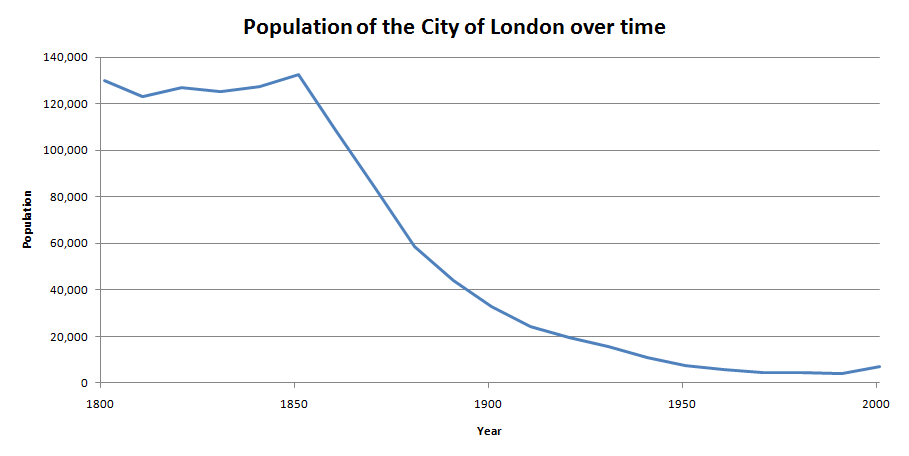
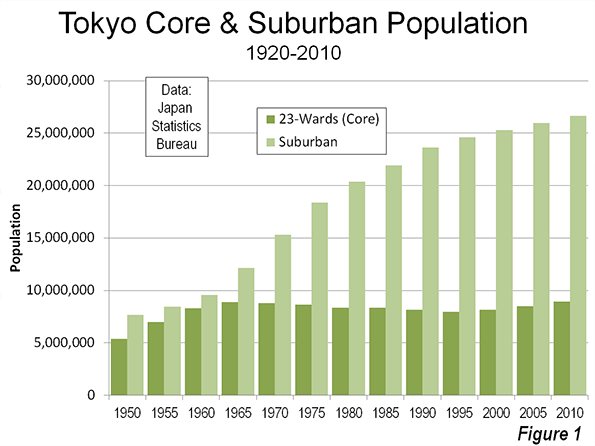
Something I often notice when people complain about AirBNB being a problem in their city- Their city has 'peaked' like a star Quarterback in High school.
In my city which is experiencing growth, I find my AirBnB guests are often business travelers who are infulencers in their respected communities. There are some exceptions like college kids on summer vacation trying to hook up away from their parents house- but mostly business people.
I see complaints from Europeans about Tourism, but that should be a reflection on the achievements of their ancestors rather than the achievements of the current and recent generations.
Which complaints are you talking about? If you're talking about loutish guests, maybe. But landlords deciding they can get more money converting apartments into short-term rentals, in aggregate driving up rents, is a bigger problem the more in-demand the city is.
Right. New York, London, Paris and Tokyo have all "peaked".
Manhattan, London, and Paris all peaked in the early- to mid-20th century.
Manhattan: https://urbanomnibus.net/2014/10/the-rise-and-fall-of-manhat...
Paris: https://www.parisinsidersguide.com/population-of-paris.html
London: https://www.washingtonpost.com/news/worldviews/wp/2015/01/07...
City of London: https://upload.wikimedia.org/wikipedia/commons/f/f6/Populati...
Tokyo is probably approaching peak: https://proxy.duckduckgo.com/iu/?u=http%3A%2F%2Fjapanpropert...
Tokyo Core: http://www.newgeography.com/files/cox-tokyo-1.png
Pedantry. If you honestly believe that Manhattan "peaked like a star quarterback" in 1910, I don't know what to say to you.

Did PG make an angel investment in Airbnb?
I wish AirBnB took more responsibility for the damage they are doing to the NYC housing market
Well, we don't all agree that the changes are tantamount to "damage", first of all.
For my part, having lived much of my adult life in New Paltz, AirBnb has greatly increased the availability of NYC housing for me, as I typically only live in NYC for 3-10 days at a time.
I can understand that, if your desire is to live there perpetually for years, you might have a different perception.
Perhaps living in a single place in perpetuity (especially near the center of a major metro/cosmopolitan hub) is just not as sustainable in an environment where smallish organizations like AirBnb (or the decentralized versions to come) can easily subvert statutory attempts to force a particular market outcome.
Also, in NYC in particular, the role of "rent control" is worth taking into account.
> if your desire is to live there perpetually for years
You mean like 99% of people? When you work in the city, grew up in the city, have met almost everyone you know in the city, to then be forced out of the city because people want to rent their apartments out for 3-10 days at a time instead of 1-3 years means that people who need the stability of a permanent address now have to either shell out much more cash than a land lord can get (illegally) on airbnb, or move out of the city and abandon the thing they have known their entire lives.
I'm not saying I have a good solution to it, other than the typical protectionist idea of tax the things that are destroying us, but at least that way there is money in the treasury to try and save a portion of the people affected by it.
But the solution is simple: build more apartments. There's no reason there shouldn't be enough housing for way, way more people other than that it's the policy of local government and the preference of many voters.
This is a solution in places like queens, brooklyn and statan island, but manhattan is quite nearly fully developed, and without displacing people to build new high-rises (which kind of exacerbates the issue), there isn't much that can be done.
build more apartments. There's no reason there shouldn't be enough housing for way, way more people other than that it's the policy of local government and the preference of many voters.
Where, exactly? Central Park?
> 99% of people
You are saying that 99% of people live in the same residence for years?
I'd love to see a source on this.
Between transient people, houseless people, digital nomads, business travelers, jetsetters, RVers, and all sorts of other people who don't live in one place all year, I have no doubt that the various modes of nomadism, taken together, account for far, far higher than 1%.
Heck, in NYC alone, I'll wager that less than 70% of today's population has lived in the same domicile for the past 2 years. There's no way it's 99%.
> When you work in the city, grew up in the city, have met almost everyone you know in the city
I made clear in my post that people in those circumstances might have a different experience. But is this the only audience NYC is designed to serve? People who grew up in the city? What about those of us in the Hudson Valley? Do we not deserve any of the economic benefits of the city (for which we pay in many ways, not least of which our watershed) just because we were born 50-150 miles away?
I think it's about time that real opportunities to live in the city for a few weeks out of the year become available to other NYers and not just the super rich.
I didn't grow up in NYC, but I consider it my city too. I know the best open mics, the places where I can order authentic Mexican or Puerto Rican food en español, the incubators and co-working spaces, the subway system, etc.
Just because you grew up there doesn't give you exclusive ownership of the culture of NYC.
There should be a new word for this type of gentrification.
People refusing to stay in the locality and socioeconomic conditions of their birth place, and instead exploring the world and learning about its people, is gentrification now?
The amount of NYC-born privilege being waved around in this thread is astounding.
I have paid, in many ways, for NYC my whole life. It's my city too, even though I wasn't born there. I identify with its culture. I know its geography and social norms. I play its open mics to enthusiastic audiences of a size that I simply can't reach upstate.
Why do you think that people who are born in NYC are entitled to these things to the exclusion of the rest of us?
I'd say that isn't the gentrification, but the fact that a wealth individual can "redevelop" a neighborhood, raising the rents of many less fortunate people who have lived there their entire lives.
Rent Stab/Control exists for a reason, had those generations of people not been there, NYC wouldn't be what it is today. But when the entire neighborhood becomes too expensive because of landlords preferring to run hotels, and the only apartment stock that is affordable is the failing NYCHA properties, then I would consider this a gentrification.
Why are you getting so defensive? I agree with you, but that doesn't mean it's not a type of gentrification.
>Why do you think that people who are born in NYC are entitled to these things to the exclusion of the rest of us?
Did I say that? Just because I noted it was gentrification doesn't mean you can treat me like a straw-man punching bag.
If we have to make the choice I think it is reasonable to privilege the concerns of people who live in a place year-round over those visiting for a week.
Let's say a 400 square mile area of land can only accommodate 10 million people, but that 2 billion would prefer to live there if they could, because it is one of the nicest localities in the world.
Why have 10 million lucky individuals get year round access to it, rather than giving 1 billion people 3-4 days each to visit it?
Because the alternative is not a city but a city-sized theme park.
Maybe the most desirable locations on Earth should be theme parks that a billion people can visit, rather than gated mega-communities for ten million wealthy/lucky long-term residents.
Maybe one day the typical life will consist of visiting a different theme-park-like city every few days, and people will identify with their planet rather than a few hundred square miles that's designated as their city of residence.
Well I wonder who is going to keep the cities running then.
This reminds me of the statist trope, "who will build the roads?!"
Well, we don't all agree that the changes are tantamount to "damage", first of all.
I'd wager that anybody who suddenly had an illegal hotel running out of her neighboring appartment will very strongly disagree with that statement.
Unless you personally made that experience, in a house where parties live for 30 years+, you are not aware what a massive impact this can have on your quality of life.
Since I've been there I stopped using AirBnb, period.
As I said, I think it's time to question whether an environment such as NYC is a realistic place to live for 30 years+ - is that sustainable for our species?
I think that the availability of short-term housing in NYC in particular is a net benefit for society, even if it adds an uncomfortable dose of reality for many people who had the extreme privilege of growing up there.
Generation after generation of people have lived in the same locality for about as long as we've had agriculture so I'd say it is pretty sustainable. I think it's odd that a jet-setting tourist should be lecturing the locals about their "extreme privilege."
Did you just call people who take the $14 bus ride from New Paltz to NYC "jet-setting tourists"?
Being born in NYC doesn't mean the city belongs to you. I'm a New Yorker too.
In the sense that New Paltz is in New York State, sure, you are a New Yorker if you live in New Paltz. But you're not a resident of New York City, not because of where you were born but because you do not reside there.
You're strawmanning. It doesn't matter if you think people should live there for 30+ years, because that's what's already happening.
Yeah, well, those of us who live there for < 8 weeks out of the year is already happening too.
I don't understand the strawman - what argument did I mischaracterize in an attempt to make it appear weaker for the purposes of responding to it?
You're ignoring the fact that 30million people already live there by posing that people shouldn't be doing that in this day and age. It doesn't matter what your opinion of those 30 million people are, the fact is that it is the current condition.
...but I can say the exact same thing:
You're ignoring the fact that millions of people already live for only a few weeks out of the year there by posing that people shouldn't be doing that in this day and age. It doesn't matter what your opinion of those people are, the fact is that it is the current condition.
citation please
> I typically only live in NYC for 3-10 days at a time
That's not living somewhere. That's visiting.
Oh yeah? I'm alive during those 3-10 days. And I'm there.
If that's not living, then where do I live? I don't have a long-term lease or anything similar. Do I not deserve the same quality of life and opportunities as people who happened to have been born in the East Village?
Semantics. I respectfully disagree. Being alive, and living at a place are two completely different things. By your definition, I've lived in 12 countries this year. I haven't.
It's not semantics. It's a simple question: if someone doesn't have a current lease in a particular place, where do they live? Particularly for the purposes of enjoying the privileges that everyone in this thread is claiming they deserve by dint of living in NYC (ie, artificially controlled rent prices such that the rest of us can't utilize the economic opportunities in the city).
Google "Tax Residence" and you'll discover, while the question may be simple, the answer isn't :)It's a simple questionWhere do you pay your tax to then? That's a reasonable enough definition of where you live.
In New York State. I pay the exorbitant taxes which pay for, among other things, protecting the water from the huge city down the road that I'm apparently "damaging" by living there a few weeks out of the year.
Sounds like you need to get a better tax accountant. If you only spend a few weeks a year in New York, then you shouldn't be paying much tax there at all.
...as I have stated above, I am from New York, just not in New York City. I typically spend several months out of the year there, not weeks.
You do not, as a visitor, deserve the same opportunities as people who live in a place permanently, IMO. What would governance and city planning look like, if that were the case? How do you build a community if you have to give equal consideration to people who want to spend their lives contributing to that community and to people who prefer to just visit every now and then?
> Do I not deserve the same quality of life and opportunities as people who happened to have been born in the East Village?
No, no more than I deserve a passport from every country I have ever traveled to.
Most US states consider you a resident if you stay more than 90 days. That's when you'd be expected to change your driver's license, car registration, etc.
You seem to be conflating the ideas of birthright and residency. I don't think anybody is arguing you shouldn't be allowed to become an NYC resident if you want to; what they're saying is that visiting doesn't make you a resident.
"Residency" in a state is a dumb concept to begin with. Why expect a technology startup to form itself in a such a way as to presume that it's meaningful? Isn't the whole point of a (good) technology startup to pose some meaningful critique to society?
> living in a single place in perpetuity
Christ. Hotdesking for houses. This is already the reality for a lot of precariously-housed or non-street-homeless people. It's especially bad for children and will cost them grades at school when moving frequently.
Perhaps AirBnb should actually follow the law in NYC (30 days minimum) until they can lobby enough to change the law.
...why? What makes this law worth following in the first place?
If there are communities where AirBnB is deliberately breaking the law, those cities ought to be collecting punitive fines.
In a civilised society, you don't get to pick and choose which laws you think are worth following, and just ignore the rest. Don't like a given law? Then engage in the political process to seek changes to it.
Because it directly impacts the residents who live there full time and pay all the taxes to that city and state? Every day that you don't live in the city and make a purchase outside the city is a tax-dollar that city is missing out on and that someone living full time in the city is paying.
I live in downtown Toronto and here are some of the issues i face due to Airbnb:
i) Some of the residents make living a hell. They come to party, don't respect the neighbours, are loud till late, trash the place and some have even gone to break the buttons in elevator.
ii) With Airbnb, new owners and renters are priced out of market. People with more money but new units as secondary investment and just Airbnb it instead of renting it, thus creating artificial shortage of available units to full-time renters.
One of the fascinating things about NYC is it's vast array of local businesses. Guess who do these local businesses need? Full time employees who go to work every day and not for 3-11 days.
>>Every day that you don't live in the city and make a purchase outside the city is a tax-dollar that city is missing out on and that someone living full time in the city is paying.
Another short-term resident would be there in his place on the days he's not in NYC. Year round there will almost always be someone staying in his unit.
And short term renters tend to spend more per day than long-term residents, so they probably contribute significantly more to the city's tax base.
>And short term renters tend to spend more per day than long-term residents, so they probably contribute significantly more to the city's tax base.
Per day costs, sure. But if you add recurring payments, don't think they are outspending it. Also, you are ignoring the entire point to begin with. A City should look after it's long term residents first and foremost. Unless you want it to eventually become a ghost city.
I haven't seen any evidence that long-term residents contribute more to the tax base per capita. The spending differential between short term and long term renters is so large that it seems not just plausible, but likely, that the former contribute more on balance.
>>A City should look after it's long term residents first and foremost.
I don't see why it should. A city should look after those within its boundaries, whether they're there for a day or a year. It shouldn't set up walls and promote long term residence over visits.
> A city should look after those within its boundaries, whether they're there for a day or a year. It shouldn't set up walls and promote long term residence over visits.
So a citizen of a country and a visitor of the country should get equal rights and opportunities as well?
Rights? Absolutely. Surely you don't dispute that? Inalienable rights, endowed by creation and not by citizenship, are a cornerstone of the western tradition of liberty. I think it's racist and totalitarian to suggest walking that back.
Opportunities? Yeah, although that's not the case now, I'm ready for a world where people have the same opportunities regardless of the text on their passport.
What is your proposal?
In Edinburgh there's a similar discussion, and the proposals I think have value:
1) Tourist tax on all hotel rooms, including AirBnB. Initially a fairly small amount. https://www.theguardian.com/uk-news/2018/jun/27/edinburgh-le...
2) For whole-unit owner-not-present lets, require planning permission for change of use. You wouldn't be allowed to run a woodworking business in your apartment that inflicted noise on your neighbours, so the same should apply to turning it into a hotel.
3) Keep upgrading the transport infrastructure. The newly rebuilt Border railway is a victim of its own instant success - someone should start the process of widening it to two tracks immediately so it'll be ready in 20 years. And so on.
(Before someone says "build houses", there is a lot of family home construction going on in the outskirts. It's the historic centre that's under consideration, and "demolish the existing 4-6 story historic dwellings and replace them with much taller residential buildings" is an absolute non-starter)
What annoys me about tourists in Edinburgh, is that everyone wants to pile into Old Town, even though it is so small.
No one contemplates Leith or Newington. Neither of those places are beyond a short walk (1-2 miles) to city center, also there are more options for food and drink (especially on Leith Walk).
2 miles isn’t a “short walk” in many parts of the year in Scotland.
This is definitely one of those things that divides locals from visitors; Edinburgh is a walker's city. I walk a mile up one way and downhill the other as part of my commute. But visitors or women in heels are not going to do that at the end of a night out, and that's also when public transport stops, all the taxis are booked, and Uber is on 3x surge pricing.
The festival makes this worse; the city as a whole becomes overbooked.
But the gentrification wave is heading into Leith. You can practically watch it progressing down Leith walk. I suppose the giveaway will be when someone builds a luxury hotel in the old dockyards.
In most of Scotland, I would agree, but in Edinburgh where the typical low in the dead of winter above freezing, the < 2 miles from Leith to Old Town isn't that bad.
This is bullshit. I fund my startup by consulting 1-2 months per year at 40k/month. Zero people think it is impressive. But $25k of Obama cereal makes a better story.
It is an impressive accomplishment; but like GPA, not an indicator-of-success in venture.
A better story is better marketing.
2008 Democratic National Convention was 10 years ago. At the time, startups, as we know them today, were a rarity. Funding yourself to start one, even more so. Hacker News itself was only 1 year-old.
" At the time, startups, as we know them today, were a rarity. Funding yourself to start one, even more so. "
Come on! Never heard of the dotcom bubble? It was all about startups.
And people have been self funding businesses throughout history.
Airbnb did what a lot of other people had been doing since eternity. Nothing new.
I am writing from a European perspective, but my impression is, that even in 2007 starting a startup or working for one was still not as common as it is today for a recent graduate in the US[1].
Startups were a rarity in 2008?
Relatively, yes. Sure, startups have existed for decades, but their popularity now is at a completely different level. Y Combinator, for instance, had 43 startups funded in 2008, and 274 in 2018. I am not even talking about the growth of the entire startup ecosystem, including angel investors and VCs. In 2008, startups were mostly only a thing in the US. Now there are tens of startup hubs across the entire world.
That's rewriting history, including a lot of hard work by a lot of people. YC disrupted the model, it didn't start it. PG repeatedly describes YC as a startup in changing how this works, so mistaking their growth with the industry misses what's happening.
The dotcom era had incubators through models like "I have access to capital but no one good idea; let me start a bunch and pick which to go". VCs regularly host EIRs (entrepreneur-in-residence). More dominant, many universities, corporates, and in gov, SBIR. Not sure how the numbers of SBIR compare to YC, but given SBIR is based on a % of each US dept's budget... ;-)
The "startup accelerator" changed the model: more $ to more varied entrepreneurs, structured program with educational eco-system, made VC capital more attractive, etc.
There are no questions about the history. What I am claiming, is that startups became much more widespread in the years since 2005, after the YC model was introduced.
And that claim is false.
https://www.inc.com/magazine/201505/leigh-buchanan/the-vanis...
The U.S. Startup Barometer paints an entirely different view[1]. Nevertheless, I am talking about the entire world, not a single country.
Thanks for sharing the link.
2005 was still a period of massive hangover for tech startups after the .com collapse. To say that startups as a concept weren't a thing, is misunderstanding the situation. Like the rest of the tech industry, the startup scene has matured and grown.
This version of history doesn't account for the first dotcom boom: https://en.wikipedia.org/wiki/Dot-com_bubble