MIT economist believes U.S. is shifting to be more similar to developing nations
theintellectualist.coAnother story about the same person and topic that I found insightful: "America is Regressing into a Developing Nation for Most People" - https://www.ineteconomics.org/perspectives/blog/america-is-r...
I have visited the US most years out of the last 5-10, including a trip through 25ish US states a couple of years ago. It's easy to get the impression that competing interests maintain a problematic or worsening status quo - infrastructure that has to be OK until it collapses because no one wants to prioritise the money to fix it (many roads in California are shocking). A voting system (as mentioned by @kristofferR) that makes it difficult for a viable third party to emerge. Health, education, private prison industries, etc.
There are parts of the United States that feel like they are struggling to survive - including areas that are quite eye-opening like Bombay Beach and Wonder Valley.
In Australia, we see lobbying groups dictate terms increasingly often too and I don't know that our country is better for it.
Bombay Beach? Wonder Valley? I had to look both of those places up, and both are places with tiny populations. Can you help me understand why I should be thinking about places like those and not, say, Youngstown Ohio?
Good question. I had never heard of Bombay Beach but it's a fascinating story: http://www.atlasobscura.com/places/salton-sea
Having said that, I think it has absolutely nothing to do with the article.
Wonder Valley also has an interesting story: https://www.citylab.com/equity/2014/12/the-last-homesteads-o...
There's a theme here of Southern California desert wastelands.
They were just two that I could easily remember driving through and with easy-to-Google names for anyone who wanted to see. We were driving through 25 states in two months with a couple of toddlers, so details are all over the place. Obviously as a visitor, you are taking in a whole range of things - ruinporn, state of urban areas (footpaths, cleanliness), retail, etc - rather than relying on data.
I don't know about Bombay Beach but I was just in Wonder Valley in January and that town is a unique place with a self-selecting population that values isolation.
There are larger towns and cities in the U.S. which more accurately depict the broader economic challenges the country is facing.
I'm thinking MIT economists haven't lived in a third world. (I was born in one) The U.S is not even remotely close to being a third-world or will be one anytime soon.
I've seen places in Mississippi, Arkansas and West Virginia that looked every bit as third world as rural Philippines/Vietnam.
What the US lacks is urban poverty in the form of shantytowns. This is because unlike most third world nations, we quickly raze them when and find excuses to incarcerate the people who live there. If we were more permissive, we'd certainly have them too.
That's such BS. Have you actually lived in a developing country?
If you're American and you care about poverty -- as in relative poverty -- in your country and you want to do something about it, more power to you. It's not like someone being much poorer elsewhere prevents you from caring about a problem in your country. But please don't trivialize abject poverty by implying that the American working class have it as hard as the lower classes in the developing world.
It doesn't matter what some parts of the US anecdotally and subjectively "look like", they don't measure nowhere near as poor as rural Philippines or Vietnam. Or urban Philippines/Vietnam for that matter.
In those countries, the literacy rate is around 95%. Imagine 5% of people around you are illiterate. Even in Brazil, a so-called "emergent" country or "upper-middle income" country, the literacy rate is only 92%. So 8% are illiterate; not "functionally illiterate" as in unable to correctly interpret certain texts, mind you, but actually unable to read. You cannot get a fast-food job or work as a Walmart greeter if you're illiterate! In contrast, in developed countries the literacy rate is >99%.
In the Philippines, 1 in 3 children are malnourished.[0] This isn't some vaguely defined "food insecurity" concept; it's actually malnourishment, kids being severely underweight and stunted.
In the US millions of people can take advantage of welfare benefits. So even the non-working poor in the US have much, much better living standards than the working poor in the developing world. Also, when exactly did the US bulldoze a shantytown? And so on.
[0] http://www.rappler.com/move-ph/issues/hunger/141134-philippi...
This econtalk episode featured an interesting comparison between US rural poverty and 3rd world countries. http://www.econtalk.org/archives/2016/10/chris_arnade_on.htm...
The US Census says the US has a literacy rate of 86%. This is a controversial metric, though. The CIA factbook defines literacy as having completed 5 years of schooling. By that definition, the US is at 97.9% literacy. Better than your 95% number, but not Nordic country levels.
Also, shantytowns aren't really allowed to exist in the US. They are becoming more common in progressive cities like San Francisco and Seattle, but even there the cops sweep through and make everyone leave every few months. There is no "bulldozing" because the structures are highly temporary, being made of old tents and tarps. You just don't see the multi-generational shantytowns common in developing nations.
Public benefits aren't very easy to get in the US. There is a lot of beaurocracy to work through and there really isn't any push to help people sign up.
> Better than your 95% number, but not Nordic country levels.
People were talking about the US being "third world", you're clearly moving goalposts.
> Also, shantytowns aren't really allowed to exist in the US.
... so? You're essentially saying that the US government doesn't allow poverty to exist. Virtually all of the US lower class lives in places with a proper roof, proper running water and electricity. Might not sound much but the point is: there's no part of the US that is like a 3rd world country.
> Public benefits aren't very easy to get in the US.
21% of the US participates in governments assistance programs.
https://www.census.gov/newsroom/press-releases/2015/cb15-97....
There are no goalposts. I'm just trying to add nuance to the discussion.
Also, governmental assistance varies wildly in the US. I was part of the reduced price school lunch program, but my family never received raw cash like is often conjured up by the term "governmental assistance."
>In those countries, the literacy rate is around 95%. Imagine 5% of people around you are illiterate.
That's high! 95% literacy rate isn't really worth mentioning when many countries are in the 30-40% range
https://en.wikipedia.org/wiki/List_of_countries_by_literacy_...
> In those countries, the literacy rate is around 95%. Imagine 5% of people around you are illiterate. Even in Brazil, a so-called "emergent" country or "upper-middle income" country, the literacy rate is only 92%.
India's literacy rate is 74.04%.
I've lived in a developing country and parts of US are indeed similar or worse than a developing country.
I wouldn't go as far as to say parts are third world, but in terms of danger, some parts of the US are close to third world (Detroit, Chiraq, etc).
Rural does not mean poor/3rd world
In the same way there's a lot of wealthy places in let's say Mexico City and other capitals of 3rd world countries
>Rural does not mean poor/3rd world
Yes, but parent compared places in the US to rural AND poor/3rd world places.
3rd world means non-NATO aligned states (or communist aligned states).
Yes, through the original conception
But today it mostly means "developing countries" (which is actually an euphemism for "stuck in underdevelopment")
"Developing countries" is a much better term. "Third world" is vague, outdated, and means something completely different.
Not that the US is a developing country; it was developed, and is currently degenerating. It's still very rich, though. So instead of trying to catch this in a single ill-fitting word, perhaps it would be better to simply discuss the actual issues: the rise of poverty, lack of social mobility, crumbling infrastructure, etc.
you mean non-communist aligned states. First world = NATO, second world = communist bloc, third world = everyone else
They might look terrible but the utilities work. Biggest differentiator in 3rd world is poverty AND non functioning government.
The water, sewer, and electricity work well enough to be relied upon even in the poorest most remote parts of the US. This is not so in any 3rd world country
I am curious about the state of water in Flint, do you know the current status? Do you know how long families had non-potable tap water, even if it is drinkable now?
EDIT - Please reply if you don't like my comment. Just downvotes do not tell me anything. Also, please consider that I just asked questions, I made no statements and I did it that way because I actually seek answers.
If the water in Flint is perfectly fine, then please tell me and explain how public perception got so out of sorts. I would appreciate sources.
I also don't think we are a 3rd world country, but we clearly have more problems than people who believe in American Exceptionalism are willing to accept.
Lead levels are only elevated in certain areas. Getting clean water might be as easy as your neighbor's hose. Flint authorities weren't treating the water properly and it corroded the pipes in some areas. Lead levels were expected to drop as soon as treatment resumed but it spooked everyone bad enough that it doesn't matter if the water is safe, they want new pipes. Lead pipes are not unusual at all in older cities and nobody else has this problem.
I don't see how a single small city whose water supply was tainted by incompetence of local water utilities is representative of the US as a whole. 99.99% of us have access to drinkable water.
No one is talking about the US as a whole but how low it has sunk in some places and/or for some citizens.
Flint is not an isolated case, it's distinctive because it got bad relatively quickly due to clear mismanagement (with a big serving of partisan politics on top). How's this for a headline? "Reuters finds lead levels higher than Flint's in thousands of locales." [0] All it took was searching for "lead worse than flint."
[0] http://www.reuters.com/investigates/special-report/usa-lead-...
The water used to get turned off for a few hours quite often when I lived in a project in DC. I mean, it was never a serious health issue, but utilities aren't as reliable for poor people in the US as you might think.
This may be the case, and be a serious problem, while still coming nowhere close to validating the comparison made upthread to the third world, where toilets are effectively a luxury.
I guess it depends on where the "third world" stops being third world (beyond the original definition of "any nation that isn't aligned with either NATO or URSS"). If third world is used as "developing nations", not every country that would fall under that label is necessarily a failed state. Not all Latin American countries are Venezuela, and not every county in California is San Mateo. In LA and SF I've seen huge amount of people in homeless encampments, to the point where family from Latin America pointed it out, and where European family and friends were completely horrified.
I completely understand your point, and a rich person in the US is in a better situation than in other countries, but I wouldn't say that the poorest among the population US are _that_ much better than in other countries. My guess is that the people pushing for the view "parts of US == third world country" might be looking at the top of the list for those countries, while you and others that seem against this comparison are looking at either the average or lower half of countries considered third world.
I personally found it horrifying to see a Lamborghini waiting for the traffic light to change while a legless homeless veteran coughing up blood was on that intersection asking for food. Worst part of it though, is that once you live in that environment, very quickly it fades in the background and turns into "just the way things are". Poor people in this country have access to more goods than poor people in other countries, that's true, that doesn't mean that services are up to the task for them.
But is does dismantle any objective attempt at asserting American Exceptionalism. We are not exceptional when it comes to water delivery, and there is no reason we couldn't be, like we once had been.
About 60% of people in the poorest, most remote parts of America don't have running water. So what do you say if the utilities work but are too expensive to hook up?
That is completely false.
I may have mistaken electricity or running water for just running water, and any numbers are sketchy as they don't have a lot of trust in the federal government, but life in the SD reservations is fucked up. Lack of utilities, 25% of children are born with fetal alcohol syndrome, people are dying from packs of wild dogs, and ~90% unemployment. You could argue it isn't third world conditions, but a slow burning genocide.
Thanks for admitting you were lying, and now you are moving the goalposts from you original claim (which also appears to be untrue).
Wasn't lying, misread an article. And I have no idea how you think it looks untrue. Their situation is quite similar to a third world country, you're free to come and see for yourself.
Citation needed for both of you.
> The water, sewer, and electricity work well enough to be relied upon even in the poorest most remote parts of the US
Flint would challenge that claim. http://time.com/4634937/flint-water-crisis-criminal-charges-...
Try visiting Portland, Oregon. A small shanty town has formed in the last year about a block from my home. In the last 2 years there has been a marked spike in homeless encampments along freeways and on public land owned by the OR Department of Transportation. There has been a persistent downtown homeless encampment, I think called Right2Dream. Protests are afoot to find new / additional / different places for permanent encampments.
If these aren't shanty towns, I don't know what is. Other Portlanders beside myself have taken to calling them shantytowns.
Not just there. In many states, one can see third-world scenery from interstates and railroad lines.
Read the article. The title is click-bait, but the actual claim is that the social and economic structure has changed in such a way that, increasingly, it fits economic models reserved so far for third-world countries. ("dual economy", power imbalance, etc.) That's a more nuanced but imo not less worrying claim.
Being born in a third world country probably blinds one to some issues though, as they don't have a historical basis within the US for comparison -- they only compare with their own country.
Of course the US wont be a "third world country" anytime soon. But it can regress closer to one than it was before.
That said, there are places in Mississippi, South Dakota, Alabama, Colorado, the Appalachia, etc. that are not that better of (if at all) than some developing nations.
I remember my first trip to the Philippines back in 2003. I saw these little children about the age of 5 wandering around at night trying to sell these little flowers. I ended up giving them some food instead of money as any money would be taken from them.
Again on a recent trip this year, I met two young children that were selling shells on an island near the food market. They should have been in school, but they were not. There has been an effort by the government to get all children in larger cities to attend school. The rural areas still have plenty of children who never see a classroom.
I think the US is very far from developing countries. Yes I have seen some extreme poverty in the mountains of West Virginia, but nothing like the Philippines.
The US is a large and varied place.
I've ridden with a Mexican friend through the poorer parts of my Mississippi hometown, and he said, "Wow, this looks just like Mexico. . . The cars are a little nicer, though."
No, but this is a certainly hallmark of unstable governments. The big difference between Mexico and Canada is a strong middle class. Happy people who can feed their families and educate their children tend to stay quiet and go about their lives without stirring the pot. Once you've completely lost faith in government, why not look the other way when a drug cartel sets up shop in your town?
Trump's election slogan was "Make America Great Again" implying that USA is at the bottom and we need him to bring it up. But then so was the campaign of Hillary or Bernie or any one else (Perhaps except Garry Johnson).
I think this is a standard trick employed by elites. That to make a very serious claim that paints USA in a bad light and then propose themselves as the "problem solver".
> The antidote, as prescribed by Temin, is likely a tough sell in today’s political climate. Expanding education, updating infrastructure, forgiving mortgage and student loan debt, and overall working to boost social mobility for all Americans are bound to be seen as too liberal by many policy makers.
At the risk of being down-voted I think the MIT economist is playing political games here. In the absence of stronger contrary evidence I would simply call him a shill.
Has any one actually read this book, and can confirm how substantive it is?
You see a post with a title like, "Study by MIT Economist: U.S. Has Regressed to a Third-World Nation for Most", and you naively assume that the link will take you to... a study. By an MIT Economist. With actual data, about how the average or mean American has recently crossed some number of economic metric thresholds.
Instead, it's a book review. Really just a collection of mushy factoids (e.g. social mobility is lower today than it was just after WWII)... and political talking points worthy of a Facebook or Reddit comment (e.g. rich people are awful, and putting criminals in jail is racist).
Is the actual book a bit more data-oriented, or is the whole thing just ideological comfort food?
I don't buy it. The last election saw relatively wealthy cities voting to increase taxes, increase equity, and make life better for the poor. And rural areas voting the opposite way with national identity, lower taxes, and lower community spending being their important things.
This is very different from third world nations where the middle class wants lower taxes and the poor vote for more spending but don't succeed.
Rather than setting up your own straw man, why not respond to some of the arguments made in the article?
> In the developing countries Lewis studied, people try to move from the low-wage sector to the affluent sector by transplanting from rural areas to the city to get a job. Occasionally it works; often it doesn’t. Temin says that today in the U.S., the ticket out is education, which is difficult for two reasons: you have to spend money over a long period of time, and the FTE sector is making those expenditures more and more costly by defunding public schools and making policies that increase student debt burdens.
The article focuses on education is a class divider that is becoming increasingly unobtainable or when obtained, burdened with debt. This is strike against social mobility. Do you buy that?
A bit harsh, that accusation, especially when I can't find any of your quoted sentences in the linked article.
For what it's worth, I was talking about this following excerpt:
> In the Lewis model of a dual economy, much of the low-wage sector has little influence over public policy. Check. The high-income sector will keep wages down in the other sector to provide cheap labor for its businesses. Check. Social control is used to keep the low-wage sector from challenging the policies favored by the high-income sector.
> Social issues are used to keep the low-wage sector from challenging the policies favored by the high-income sector.
Yet change two words and suddenly things align again. Particularly if you take high-wage sector to be that demographic of the republican party. (Obviously this isn't exclusive to the republican party, but what's present in the party matches the form in developing countries).
Another way to look at the thesis is this: The republican party's politics and functioning/platform execution matches that of a developing country. While they aren't they only party, their views/framework have been taking over American politics since Clinton's triangulation of the 90s (and arguably since Reagan's arrival in the 80s).
Am I wrong in attributing/connecting most of Americas problems with its flawed constitution/democratic system?
The first version of something is rarely the best version, and while the US constitution contained a lot of fantastic elements and freedoms that every educated American knows about, it also contained a democratic system (first past the post/two party system) that is mathematically bound to breed divisiveness. [1] [2]
Since the American system forces people into two camps/parties based on ideology instead of the delivered results, the results suffer while the ideological conflict is enhanced.
This is a bit of a hobby horse of mine, but the reason is the number of elected representatives has not kept pace with the population growth. When the USA was founded there were about 20,000 electors per representatives and now in some seats there are over a million.
If you want representation you need to be able to meet and talk to your rep - more importantly they need to be able to acquire your vote without the need for advertising. Remove the need for advertising and you remove the need for money and the corruption that flows.
I agree fully! Apparently they stopped adding representatives when they filled up the space in the capital building. I've been intending for ages to pull up the ratio mandated by the constitution to see how many "missing" representatives we have today.
It looks like Article 1 Section 2 has what you're looking for, specifically "The Number of Representatives shall not exceed one for every thirty Thousand, but each State shall have at Least one Representative" [1]
Wikipedia also seems to provide a good summary of the issue. [2]
[1] https://www.archives.gov/founding-docs/constitution-transcri...
[2] https://en.wikipedia.org/wiki/United_States_congressional_ap...
How about starting from the other side? Decreasing the number of electors to be more the way it was when USA was founded? So people with no income earning property ('passive income' as it is called here), do not vote? Before 1820s, they didn't.
If you're interested in fixing the problem the article discusses, this is pretty much exactly the wrong approach. You would actually be hard-pressed to find a solution more diametrically opposed to fixing the problem.
That would be the fastest way to regress back into feudalism, you know if that is what you are in to.
My belief is that post-scarcity society with very high technological unemployment and universal democracy are fundamentally incompatible. People who are net recipients from the government, should not vote, or they will vote the society into collapse. Can they ever vote for anything but more free stuff?
Other problems are fixable with more attention/funding to law enforcement, and yes using all the AI toys: crime prediction, drones, etc.
If it's truly a "post-scarcity" society, people can have all the free stuff they want. If they can't, then it's still a scarcity society.
More law enforcement is rarely the solution to any long-term problem: that's how you end up with the East German situation where 1/4 of the population was Stasi informers.
The stasi informal informers where there to monitor attitudes of people, not prevent crimes and either way the system wasn't particularly effective. Overall in East-Germany, people were not very afraid of police ('friend and helper'). Police didn't randomly shoot people.
I'd say the US is a better example of a police state than the GDR.
> Police didn't randomly shoot people
Well, unless they went over the wall while trying to leave.
The GDR has been synonymous with "police state" for my entire life, although it's not the place that coined the phrase. The US has colonial policing and people who believe that slavery should not have been abolished.
Well plenty of people got shot crossing the wall, but that's not really a "random shooting". Certainly much less random than "walking while black" or something.
Apparently there were 139 wall-victims in 29 years, so less than 5 per year, or about 0.03 deaths per 100k people per year. Apparently, twice as many people died of natural causes while crossing the border.
The US seems to have about 1000 shootings by police per year [2], which would be about 0.3 deaths per 100k people per year.
So the US has 10x more police-shootings than the GDR had wall-deaths per person.
[1] https://de.wikipedia.org/wiki/Todesopfer_an_der_Berliner_Mau... [2] https://www.washingtonpost.com/graphics/national/police-shoo...
America largely disproves this already. The highest proportion of net recipients of federal government benefits are from poor rural deeply conservative states that form a substantial part of the base of the Republican party, which has made rolling back those benefits a primary goal.
Never mind that most people who have to use welfare for cash assistance actually hate it, and they would rather earn their own living wages via work. Welfare queens are very few and far in between.
If the remaining voters then don't vote in the interests of those net recipients, where will that lead? A medicated underclass?
I think it's safe to wait until we can envision a truly post-scarcity society to envision how we might go about destroying it.
> Am I wrong in attributing/connecting most of Americas problems with its flawed constitution/democratic system?
Almost certainly. The US was doing fine for most of the 20th century.
Globalism is what has brought wages down. Globalism combines the economies of the richest countries with the economies of the poorest in an attempt to "help" poor countries. As rich countries and poor countries combine economies, they move toward economic-equilibrium, which means the people from the poor country get brought out of poverty at the expense of the people in the rich countries. This is fine for the "1%" on the coasts of the united states, but if you're part of rural America you're getting hit very hard by globalism.
Globalism isn't an "attempt" to do anything. It's just markets naturally tending towards efficiency.
> but if you're part of rural America you're getting hit very hard by globalism.
i.e. if you're part of rural America, you're being out-competed by superior market participants located in poorer countries.
It's not that unfair. It would be much more unfair to apply protectionist policies to subsidise the rural Americans at the expense of the truly-impoverished people in poorer countries.
completely disagree. Why is china expanding faster than most "democratic" countries. India is focused on technology which should be easier to outsource yet, Knowledge workers are doing fine in the US. It's because china is coordinates its activity like a giant company, in my opinion, to exploit markets. investing heavily in infrastructure, stealing trade secrets, destroying the environment, exploiting children and criminals, manipulating currency for decades. I could go on but you get the point
> It's because china is coordinates its activity like a giant company, in my opinion, to exploit markets.
Same thing Japan did after WWII. Works great if you can pull it off.
Japan didn't just "do it." The US allowed it and encouraged it. The US wanted a strong, capitalist ally in the region to counter Communism and Japan fit the bill. The US willfully ignored Japan's protectionism while allowing them high levels of access to our markets.
For example, the end of Kodak began when Fuji film infringed on their patents and the US government did nothing, still allowing Fuji to sell their film in the US.
You can look at that in two ways. The government broke up a near monopoly on print film that Kodak had, created competition and lowered prices for consumers. But ultimately it started an employer of 200K people on the path toward extinction. Yes it would have been eclipsed by digital anyway, but wouldn't it have been nice if those 200K people had their jobs a little longer?
I am personally torn on issues like this. I see the benefit of competition and globalization, but also the cost to local economies and industries.
The idea that globalism is an attempt to 'help' poor countries needs evidence to support it - I think there are plenty of ways in which globalism has benefitted wealthy countries at the expense of poor ones. In fact, the idea that globalism is 'an attempt' to do something, i.e. a conscious agenda to change the world, rather than just something which just emerged out of commercial activity, also seems a bit of a leap.
I think that we can once again be reminded that there is only one thing that is worse for poor nations than being exploited by global capitalism.
It's that poor nations are not exploited by global capitalism.
Then you can look up TED talks by Hans Rosling, and the follow-up reports for UN millennium development goals.
right - there have been massive improvements in poverty in developing countries as a result of globalization. But that doesn't mean that Rosling-style improvements in life outcomes for people in the poorest nations were a goal of globalization; just a side effect. And benefits have accrued to wealthy nations too - cheap gas, cheap electronic devices, expanding investment markets. If policy supporting globalization had a goal it was probably more driven by those outcomes.
The unpleasant, unintended side effects of many "good" policies often surprise activists: protectionism and orthodox equality leads to decreased trade and removes incentives to increase productivity. This is a surprise to many people who then try to deny the existence of these side effects because they think they are only advocating "good" policies so the bad results are someone else's fault.
The pleasant, unintended side effects of globalist capitalism and economic liberalism are in fact not that much a surprise. Just look at the track record. Is it bad if good outcomes follow as unintended consequences?
Arbor ex fructu cognoscitur.
Can you give a few examples of poor nations that are not being exploited by global capitalism?
Zimbabwe, North Korea. And of course many poor African nations where global capitalism doesn't operate that much and which are therefore largely in a subsistence economy.
Venezuela wasn't a poor nation to start with, but is becoming one in its urge to fight global capitalism.
North Korea and Cuba have been pretty well isolated from capitalism.
You could also look at countries in Africa that don't have extensive resource extraction (compared to those that do).
As an asside North Korea does ship workers abroad to work as slave laborers.
Partially that scheme seems to be an attempt to engage DPRK in some kind of dialog to prevent an unstable dictatorship with nuclear weapons and a lot of artillery that can reach Seoul from causing bad damage.
But given that utilising or even tolerating slave labourers on the ground in democratic nations is such a shameful thing, it might be better to actually let DPRK be completely isolated from global economy and not allow any of these arrangements. Even if that results in more misery for the people in DPRK.
iirc a bulk of these workers find themselves in Russia or China so hardly on democratic lands.
If you know of other instances of this that'd be a fascinating topic to read up on.
Zimbabwe, Venezuela, North Korea.
India and China beg to differ
The claim that globalization is an attempt to help poorer countries is controversial and would require elaboration.
The stereotypical example of a global economic pattern is a t shirt factory providing goods for a western brand that operates in a third world country because the economic equilibrium is such that raw material acquisition, labor and transport to market costs in total are lower than if the factory was situated for example next to the brand owners head office. I don't see where a will to help someone steps in there.
Globalism doesn't "attempt" anything, its not designed and it doesn't have agency.
I don't 100% agree with that. doesn't have agency true. not designed not so sure. There are plenty of treaties and other contracts between countries that effect how money etc. flows to countries. world bank and others.
Globalization is happening with or without those policies, though. Even if you don't like it, it's an unhappy reality.
You are correct, globalism is in fact designed and it is not inevitable. While as a broad concept it may lack agency, it certainly is driven by financial interests, and I am happy to assign the "agency" to them.
Whilst your point is true, you're wrong in thinking it is a zero sum game. It certainly isn't. In stark contrast to the USA, it has largely been a win-win situation in Europe for blue collar workers.
What has been devastating for the mid-west is that the exporting of jobs was politically and financially supported. Companies would receive subsidies to "globalise".
Part of the UK have been very badly hit by globalism - which arguably was one of the major factors in the Brexit vote. Similarly, the support for National Front in France was, as far as I understand it, largely in areas where there have been steep downturns in traditional industries.
Edit: I was a Remain voter - but I can completely why so many people were angry and wanted a protest vote. Just that I don't think the EU really caused many of the problems people were complaining about so that coming out of the EU is unlikely to actually resolve this issues.
So if you force Apple to make iPhone in USA with USA workers and materials then you know the other countries would also do the same and will not buy the iPones or but a huge tax on them, then you get less iPhones made so in the end you don't get that many wrokers/materials used. For Apple case it may be possible that much more money are extracted from non US countries then put from US in those countries, problem is where the profit is spent.
If it were 100% globalism than why is tech so concentrated?
The constitution we have now isn't the first version. It was created with the ability to be changed with the process of amendments. We have 27 of them so far. More could be added to change the voting system or whatever else, if there was political will to do so; but currently there isn't.
(And this is ignoring the idea of the judiciary reading into the constitution new rights that weren't there to begin with.)
My initial instinct were to agree that while changing the voting system is obviously theoretically possible, it would never happen. Why would the parties vote for solutions that would destroy the duopoly they currently enjoy?
Then I actually researched it a bit, and it turns out that quite a few countries have actually moved away from FPTP. [1] That's interesting, and something to be hopeful about.
[1] https://en.wikipedia.org/wiki/First-past-the-post_voting#Lis...
> it turns out that quite a few countries have actually moved away from FPTP
Yeah, to bring alternative ranked voting to the US, it needs to happen at the local level first, as done in Maine.
> Why would the parties vote for solutions that would destroy the duopoly they currently enjoy?
One can a imagine a situation where Democrats think the change will be safe for them and Republicans will be cast into chaos and in that same situation Republicans think they will be safe and Democrats will be cast into chaos.
I think most of the division in US politics comes from the way representatives are influenced. By co-locating them all in Washington we enable destructive lobbying while keeping them away from the people they are supposed to represent. The party system is also destructive - I advocate against any legal recognition of political parties and against campaign ads funded by anyone outside the state a person is running in. These issues will not be addressed by the people in power though because they are part of the structures that need to be eliminated.
> By co-locating them all in Washington we enable destructive lobbying while keeping them away from the people they are supposed to represent
Representatives do spend time in their own states. They also need a central place to meet. No country or system does this differently.
> The party system is also destructive - I advocate against any legal recognition of political parties and against campaign ads funded by anyone outside the state a person is running in.
I think rolling back Citizens United, which allowed corporations to donate unlimited amounts to candidates' [unaffiliated] campaigns, would be a big practical step in this direction.
In addition to rolling back Citizens United would be to re-introduce pork-barrel spending. With changes to the legislative process in the 90s, Congressional leaders lost a strong carrot to keep the rank-and-file members playing along. In the current system, with no carrot, legislators are more inclined to follow the wishes of their constituents. And with extreme gerrymandering, those constituents can be very extreme.
Pork barrel spending is special interest funding. It's not viewed as a good thing
That's true, which is why efforts were made to do away with it. However, as noted in the sibling, several political scientists have posited that the result was worse than the previous state of affairs.
In the previous system, if a legislator worked across the aisle on some big project, he might get a relatively small kick-back. A new bridge, funding for a pet project, whatever. At election time, he could point to that and say "hey, I worked across the aisle, and got this thing for you!"
Now, that pet project doesn't get funded. So, at election time, if the legislator goes across the aisle, he gets crucified by more extreme opponents. There is nothing to point to and say "I got you THIS!" The only incentive is to cater to the most extreme constituents to ensure a primary victory.
There was a pretty strong article a while back (and I assume parent likely also read) that sunshine laws and a decrease in special interest spending ultimately increased partisanship and decreased compromise.
Reason being that previous periods of American legislative politics were characterized by back room deals unknown to the public. This afforded politicans an opportunity to strike bargains with the opposition without having a spotlight trained on them (and being crucified in the next primary for "working with the enemy").
The check was that every 2/4 years voters still had an opportunity to toss out the incumbent based on his or her track record of results. (Admittedly without knowing how the sausage was made)
While I agree that transparency is a good thing, I'm humble enough to admit that the US legislative / election process is complex and has a lot of feedback. So the article's thesis seems plausible.
Which do you want more: non-partisan cooperation or absolute-transparency?
> Which do you want more: non-partisan cooperation or absolute-transparency?
Except you can have both as long as you ensure factual standards for news reporting.
What about ignore how report works and fixing the gerrymandering?
I don't know how, but lets presume there is some way to fix gerrymandering so that a legislators constituency was a statistically fair representation of their region/state. Then the extreme views would be canceled out and the best way to win a primary would be to win a primary would be to appeal to the moderates.
I agree, gerrymandering is also a big problem. John Oliver did a good segment about the justification behind bizarrely drawn districts, which kind of makes sense, so the real problem is leaving this power in the hands of the people who have an incentive to abuse it for their own benefit.
Fair elections are supposed to the check on abuse. If constituents fairly re-elect people who line their own pockets, presumably that is what they want.
No amount of fair or unfair reporting will sway the minds of left wing or wing right loyalist entrenched in their view that their team is correct. A mix of opinions is required to get a different result on a given issue in a Democracy.
I don't know of any fair way to do it and I see the potential for abuse, but it makes want a poll test of some kind. No voting without critical thinking and a basic understanding of the issues you are voting on. But that can't work without abuse in anything like our current system. Fixing districts and voting methods is probably the best we can do until we see what problems that raises.
Can you?
With the American primary election system, legislators are driven to cater to their most extreme constituents. With transparency, they can't work across the aisle AND also win a primary. At least with pork barrel, they get a tangible thing to point to while campaigning to attempt to appease constituents.
Legislators are driven by extreme positions because of the perception that these positions represent enough voter sentiment to influence elections. In fact most constituents are more centrist, which factual reporting standards would highlight.
I'm not sure that's correct for primaries.
Primary elections are by party, so are by definition more extreme than general elections. A candidate must win over an average Democrat OR and average Republican, not an average across all voters.
Further compounding the problem, many states/districts hold closed primaries and/or caucuses, which limits participation to those with a strong interest in elections (either enough interest to join a party and/or enough interest to give up half a day or more of time to join a caucus).
Yes, private organizations shouldn't have special methods for placing names on ballots, the rules should be the same for everyone.
Groups can still endorse candidates in that world, it just doesn't impact the names that show up on the ballot.
'Most' constituents may be centrist, but the constituents who vote in primaries generally are not.
You can only have both as long as you have a dispassionate electorate driven by logic and willing to research issues with the aid of a well-funded and independent press.
Given that I don't think we've ever had those conditions... lesser transparency for more cooperation seems a decent bargain.
Like I said, mandate factual reporting standards and the news agencies will do the research for the people. That's their purpose after all.
Studies have shown that moderate positions need evangelists just as much as extreme positions, as people tend to cluster around the positions with evangelists. Mandating factual standards ensures evangelists at least have justifiable reasons for their positions.
> Like I said, mandate factual reporting standards and the news agencies will do the research for the people.
You can't mandate factual reporting and still call it a free press as those enforcing the "fact" standards now control the press. You seem to think that you can't lie with facts, but it's quite easy, watch fox news they do it all day long. Free press and free speech mean just that; free and that includes lying and the supreme court has affirmed this to be true. You're talking about essentially removing the right to a free press.
> You can't mandate factual reporting and still call it a free press as those enforcing the "fact" standards now control the press. You seem to think that you can't lie with facts, but it's quite easy, watch fox news they do it all day long
They're often quite non-factual actually. And you can't call it "press" unless it's factual, free or not. You can't just ignore one factor in favour of the other.
Furthermore, you seem to be assuming quite a bit about what I mean when by factual standards. Anyone can broadcast whatever opinions they like, so free speech remains intact, but to call yourself a news organization requires satisfying stricter criteria on fact checking, data sourcing and biased presentation.
Perhaps one thing that's ignored a lot: equal time/space should be given to retractions due to factual errors. That better aligns the incentives to get things right the first time.
I sympathize with your goal, but you can't legally enforce journalistic ethics. And yes of course Fox is often non-factual, my point was one can be misleading with nothing but the truth and they demonstrate that constantly, stopping them from lying isn't going to stop them from misleading their audience.
The solution to bad speech isn't to ban it, it's just for others to put out better news. However, people don't seek out real news, they seek out confirmation of their existing beliefs so no amount of fair and accurate fact based reporting is going to change that, they'll still seek out whatever organization offers them confirmation of their biases whether it's called news or not. Fox is popular because it lies. The audience doesn't want real news; they want to believe what they believe and have it confirmed, nothing more.
> And yes of course Fox is often non-factual, my point was one can be misleading with nothing but the truth and they demonstrate that constantly, stopping them from lying isn't going to stop them from misleading their audience.
Solving a problem doesn't always mean requiring something bullet-proof. Good enough can be enough. It won't stop some people from misleading with the truth, but a lot more people will be better informed than they are now, which is an important step.
> However, people don't seek out real news, they seek out confirmation of their existing beliefs so no amount of fair and accurate fact based reporting is going to change that, they'll still seek out whatever organization offers them confirmation of their biases whether it's called news or not.
Exactly, which is why factual standards are important to classify as proper journalism. They can still seek out their confirmation, but it will be more difficult to find it, and more difficult to convince others of their distorted realities.
Citizens United wasn't about campaign donations. It was about whether a corporation had the right to broadcast its own material endorsing or denouncing one or the other political candidate within a certain time window of an election.
> They also need a central place to meet.
Not anymore. I'm sure the last 20 years of technological advancement hasn't escaped your notice. I think eliminating colocation is an idea that deserves serious consideration.
I'm a software engineer, working remotely, and still prefer face-to-face conversation over phone or internet-video chats.
I'm glad that our representatives meet to discuss things. If they didn't, I imagine there would be more miscommunication about what's best for America than there already is.
Yeh right no offence but face to face debate does not work very well over teleconferences you need to have everyone in the room.
Having a president having to do PMQ's and maintaining the confidence of the house and senate might be a good thing.
I don't know know if you've ever watched C-SPAN, but in person debate already doesn't work. In fact, the wisdom of the crowds effect works best when each actor in the crowd makes up their own mind without the influence of external actors.
Well the US house and senate are some what unreformed 18th century institutions one senator /congress man commented that the house of lords was more democratic - the is pre removal of most of the hereditary pears.
You can't just "roll back" Citizens United other than amending the Constitution or having a future Supreme Court overturn the ruling.
The current US party system might be destructive, but am a believer in party politics - mainly because without it, to get anything done would take the form of voting blocs which can lead down the path to more backroom "scratch my back" deals.
Isn't "backroom deals" just a negative way to describe cooperation and collaboration? If not please explain it to me and pretend I am really dumb on this topic, because I am.
It's a big piece of it, seemingly.
The US has an interesting constitution:
- First past the post. Such systems tend to favour fewer parties. The UK (also FPTP) barely has more than two parties. In most of continental western europe, there's considerably more, due to proportional representation. On the continent you end up having a bunch of different opinions, and you don't have to squish every issue onto a liberal/conservative axis. For instance you get socially conservative big state parties. Or socially liberal big state parties. Or socially liberal small state. And there's other axes too.
- A separate executive. In the UK even though they have FPTP, they have a government formed by the leader of one of the parties, and they "whip" the MPs to vote according to the party line, subject to various forms of sanction depending on how important an issue is. In the US, you choose two legislatures and a separate president. If they're not in agreement, it de facto entrenches the existing status quo by making it hard to change the law.
I think the seperate executive could be more a strength than a weakness in that it could allow a congressional system where stable coalitions are unnecessary and different issues could result in different coalitions. Possibly this happens more than I would think in systems that require coalitions, but it seems to me like not needing them would be more likely to change the simplistic us vs them narrative.
The other issue is which system to change to. There doesn't seem to be a single ideal system. IMO, in terms of the voting itself, ability to resolve an election in one ballot, limiting the usefulness of strategic voting, and getting at least close to a Condorcet winner would be the most useful properties.
I recently started to try to put together something based on five value range voting but I'm not sure it is even possible to derive a system from that which has the above properties. I haven't found any existing methods that seem to fit the above properties well, although some are much closer than others. Another option, easier in a lot of ways but more expensive, would be two ballot elections.
There is also the structural part. IMO, a parallel system has more appeal than mixed member proprotional, but it has some significant disadvantages as well. Anytime a significant change is proposed there will be strategic maneuvering for a system that benefits particular interests.
As someone else mentioned, states need to change first. The west coast in general would be a great place for that and I think Oregon may be taking the lead in political disfunction at this point (well, on the west coast at least, even though California is very innovative in that area)...
"results suffer while the ideological conflict is enhanced"
exactly. The most disconcerting part about the state of American politics is the focus on a predecided ideology of the other party being wrong.
proving the other party wrong is apparently worth everyone suffering over.
When each party is increasingly controlled by less people, then we now have a country where 300million people are willing to shoot themselves in the foot in the name of their party, with the ruling groups of each party having the interests of neither in mind.
Now youve just created an ideology of sacrificial progress in the name of a party.
There is more loyalty in this country to ones party than there is to the country and the progress of the country. The emotions and irrationality of attachment, and continual degredation of the other party just to be in the right, approaches religion.
The only thing more demoralizing than this is the fact that this conversation is continually broadcast on two news stations each owned by billionaires, who curate the "news" themselves. The biggest progress I've seen in news lately is Bill Oreily being fired for 11 pending and accumulating harrassment lawsuits. Must be nice to get paid $75million to be fired. True journalism shines through again.
It's extremely....disconcerting.
There's nothing in the Constitution about political parties, two or otherwise. In fact, the initial idea at the time was that the US wasn't going to have political parties and that voters would focus on individuals instead.
Whether or not the Constitution says anything about political parties, it establishes a "winner takes it all" voting system that has the effect described above. The Republican party should long ago have split into a loony Tea Party fraction and a conservative fraction, and half of the Democrats would politically be more at home in the Green party.
But these things are not realistic with a first-past-the-post system, so there are two large, internally divided, dysfunctional parties that "represent" a lot of people whose voices are ultimately not heard and whose interests are not represented by anyone.
The parent comment was referring to mathematical properties of the voting system itself which tend to give rise to a two party system almost automatically (specifically, the combination of a first past the post voting system and single-representative districts)[1]. The Founders were not aware of these effects and could not compensate for them, so their vision of a party-free democracy did not prove relevant to how the system actually functions in practice.
Given the "rules of the game" set in US Constitution, a two-party system is a natural outcome, all other situations and fluctuations converge back to that - as shown both by game theory and practical historical evidence. Intent doesn't matter here - if you want different systemic outcomes, you have to change the rules.
> while the US constitution contained a lot of fantastic elements and freedoms that every educated American knows about, it also contained a democratic system (first past the post/two party system) that is mathematically bound to breed divisiveness.
Disagreement is a human condition, not a democratic one. Democracy is just a way to let some ideas win some of the time.
There isn't a system in the world that's freed people from disagreement. Humans like disagreement. We want to be creative, original, and unique at times. That requires setting your own path.
Disagreement != divisiveness.
E.g. I disagree with you on that point, but I'm not using my hypothetical army of sock puppets to downvote every single of your comments into oblivion from now to eternity. Sometimes, US politics feels more like the latter.
You're splitting hairs. They're related terms
I have no control over an army. I just have me and my own opinion
Not a US citizen, but my understanding is that the two-party system is not mandated by the constitution, or even encouraged. It's something that developed on top of it, as a consequence of some bad rules (first-past-the-post as you say) but also other factors (campaign financing)
Because the beneficiaries of the system get to make the rules, there is also a push to change regulations more and more to favor the two-party system.
There are other parties (e.g. greens) it just doesn't make any practical sense to vote for them.
Your first and your last sentence contradicts each other, in my view. The reason why it doesn't make sense to vote for the greens is the system laid out in the constitution.
I agree that first past the post is stupid, but the strong divide between Repulicans and Democrats seems to be fairly recent.[1] They used to vote less along party lines. So maybe the rise of mass media is to blame?
http://journals.plos.org/plosone/article?id=10.1371/journal....
At some point someone discovered that reporting on a fictional version of reality that confirms the audience's biases was more profitable than reporting on actual facts.
> it also contained a democratic system (first past the post/two party system) that is mathematically bound to breed divisiveness.
It doesn't have anything about parties in it at all, and leaves it up to the states to decide how to choose their electors. If California or any other state wanted a different system, it could decide to use ranked choice voting right now just like Maine chose last election.
That could make a difference in the House, but not in the Senate.
I think it could be reasonable to have system where the House represents the people (making proportional representation necessary) while the Senate represents the states. As long as the role of the Senate is sufficiently limited and not the core of the legislative process, that could be very reasonable. But it's vital that the people are more important than the states.
For example, the House could decide on the laws, with the Senate only deciding whether this is an issue that belongs on the federal level at all. And maybe double checking whether the law is constitutional and in line with existing treaties.
If they do the same thing, it makes no sense to have them both.
Still, pretty nice though?
Our problem is the rural/urban split, and how the rural areas have a much more powerful per-person sway over policy and election outcomes.
Two senators per state is pretty kick-ass if you live in North Dakota.
Our problem is the cities, and how they have many more people. Representation in proportion to population is pretty kick-ass if you live in New York.
It's a little less kick-ass if you live in North Dakota, and wonder why a few coastal congressmen are able to pass laws which interfere with your lifestyle.
More seriously, our problem is a metastasised federal government. Very little should actually be a federal issue (read the enumerated powers of the United States in the Constitution!), and yet almost everything now is. As a result, every issue becomes winner-take-all: the entire country must comply with me, or the entire country must comply with you. There's no room to allow Massachusetts to go wrong and right in its ways, and to allow North Dakota to go wrong and right in its ways.
> Very little should actually be a federal issue (read the enumerated powers of the United States in the Constitution!), and yet almost everything now is. As a result, every issue becomes winner-take-all: the entire country must comply with me, or the entire country must comply with you. There's no room to allow Massachusetts to go wrong and right in its ways, and to allow North Dakota to go wrong and right in its ways
Saying everything is this way is too much. More like, a few issues such as gay rights and abortion pissed off enough church-going folk to the point they began to rally against federal government overreach.
There are plenty of other things that are managed by states. You don't hear about many differences between state and federal because they aren't contentious. States and the fed are happy with plenty of state laws.
I wasn't really trying to get into the whole liberal/conservative/size-of-government debate.
My experience with most rural towns is that it's like entering a time machine to 1985. When those places set the agenda, we are going to be "behind" when it comes to the metrics economists use (regardless of how relevant or misleading those metrics may be).
When it comes to letting places go their own way (like sanctuary cities, medical marijuana, gay marriage, etc.), I totally agree with you!
> It's a little less kick-ass if you live in North Dakota, and wonder why a few coastal congressmen are able to pass laws which interfere with your lifestyle.
And which laws would those be? I'm curious because the fact is a vote in North Dakota is worth several votes in New York so you're already getting far more power than you deserve in any fair system and the only issues that tend to go federal are issues of civil rights which affects the lifestyle of the oppressed, it isn't oppressing you or anyone else in North Dakota.
Don't forget the racism. Some of the weird structural elements date from the "three-fifths compromise", like the electoral college.
There's also a cultural aspect. E.g. Note how people in the us don't protest much, much to their detriment.
Aren't there better ways than protesting to affect change?
There actually aren't. Not as immediate and direct. Occupy Wall Street made a lot of people in power really uncomfortable. Also see the recent president Park protests in South Korea.
> The first version of something is rarely the best version, and while the US constitution
The US is not the first democracy or democracy-style entity. The US constitution was certainly something interesting and with new stuff for its day, but democracies had been around in various forms for a while. But yes, a large part of the problem in US politics is the inevitable two-parties, which engenders a 'with us or against us' mindset. I wouldn't lay the blame for 'most of the problems' on that, but it seems to be significant.
> The first version of something is rarely the best version
Second, actually
https://en.wikipedia.org/wiki/Articles_of_Confederation
As another comment mentioned, it's arguably greater if you include subsequent amendments.
The US Constitution has its share of flaws, but it ignores quite a bit to call it a first version.
It's not something we like to hear, but I think most people prefer to keep first past the post elections. The U.K. had a referendum to change it and 68% voted "no".
Two party system isn't in the constitution. If you go back and look at us history politics have always had periods that look nutty and disfunctional.
The problem is not the constitution or the existing system. The problem is there is a privileged class that don't follow the rules of the law. And privilege is one of most inefficient thing in a system!
Who is not following the rules of the law?
Which rules?
I generally agree with your point but it is worth pointing out that almost any democratic system will have flaws which can lead to unexpected results. See Arrows impossibility theorem.
The UK seems to having similar problems - so I don't think it is related to the specifics of the constitution/democratic system.
The UK also has first-past-the-post though.
And what's the common denominator?
Neoliberal Capitalism.
Indeed, and a slavish adherence to Neoliberal Capitalism as the ideological answer to all questions.
But the UK also has a first past the post system.
Ah but you're assuming that the problem is not enough wealth when actually America is incredibly wealthy. The problem isn't the democratic system, it's income inequality.
How did I even imply that the problem is the America doesn't have enough wealth? My comment didn't touch on anything of the sort.
My point was actually this: In a better democracy the people who believed income inequality was a big problem would vote for the "Bernie Sanders Party" instead of being forced to vote for Clinton. Let's say that just 20% voted for the BSP while 31% voted for the Hillary Party.
They would be forced to govern together, and create the best solutions in order to retain or grow their parties. The constantly changing dynamic between all the different parties would in turn lead to better solutions for the voters instead of the current solution in the US - where people on the left are practically forced to vote democratic and the people on the right are forced to vote republican, no matter the job performance.
Since the US forces people into camps based on ideology instead of the delivered results, the results suffer while the ideological conflict is enhanced.
I feel like this is a more general symptom of attempting to apply a democracy where every citizen's is valued equally in a very large population. At some point, it's simply impossible to have a whole population which is both properly educated and able to voice it's opinion. This line of reasoning is a large part of the reason that Rousseau suggested that societies would be best served by an educated aristocracy[1].
America has an aristocracy emerging in it's political/business class, but it still attempts to have every voice heard in elections, and as a result you'll always have people who feel hardly done by attempting to rebel against the status quo.
I'm also going go take the opportunity to share CGP Grey's videos on First Past the Post voting[2] and the electoral college[3], and the issues with those. He also has videos directly the electoral college, without his opinions, if you need some background[4].
[1]http://www.bartleby.com/168/305.html
[2]http://www.cgpgrey.com/blog/the-problems-with-first-past-the...
[3]http://www.cgpgrey.com/blog/the-trouble-with-the-electoral-c...
[4]http://www.cgpgrey.com/blog/how-the-electoral-college-works....
> At some point, it's simply impossible to have a whole population which is both properly educated and able to voice it's opinion
Are, it's impossible to have that at all points. The point is to strive for it, not achieve perfection.
If we don't strive, then with people like DeVos in charge of federal funding, public schools will be gutted and the problem worsens.
The vast majority of education funding comes from the states, so cutting federal funding won't really have much impact.
"That means the Federal contribution to elementary and secondary education is about 8 percent" - https://www2.ed.gov/about/overview/fed/role.html
It really makes me wonder what we need the Department of Education for...
> It really makes me wonder what we need the Department of Education for...
According to DeVos, we need it to undermine public schooling by directing tax money to private schools.
> societies would be best served by an educated aristocracy
And what goals and principles would that aristorcracy govern by? Who is deciding about the goals and who makes sure they are actually enacted?
What if said leaders decide that, in order to combat overpopulation, parts of the "surplus class" need to be removed?
The reason many people migrated to the US centuries ago was to get away from aristorcracy. So how do you avoid repeating the problems?
How do you propose ensuring a democracy doesn't fail? In the first passage I linked, hereditary aristocracy is referred to as "the worst of all governments", it suggests that "the wisest should govern the many", and Rousseau even acknowledges that aristtocracy "demands others which are peculiar to itself; for instance, moderation on the side of the rich and contentment on that of the poor".
But representative democracies - the wide majority of current-day democracies - absolutely follow "the wisest should govern the many": Most things are not decided by general elections but by specialists. Only the questions of what exactly constitutes a specialist and what the goal of their work should be are resolved via elections. (At least that's the theory)
First of all, it is a republic and not a democracy. The difference is quite important. Secondly, to attribute the problems to the constitution is mistaken. That founding document is the only thing standing in the way of a complete and total disaster for the country.
Nearly all the problems can be traced back to where politicians are ignoring the constitution in part or in full and thereby eroding the public protections built into the republic.
Taxonomies are not always mutually exclusive.
The other answers remind me of my son as a toddler: FURIOUS as he explained: "It is NOT green. It is ROUND!!"
"It is not a democracy, it is a republic" is every bit as mistaken.
Read the rest at: https://www.quora.com/What-are-the-differences-between-a-dem...
On the other hand, the US has a legalistic style of politics which you could blame on people relying too much on the constitution. The US is like an oppositional court room, with each side tearing at each other to get as much benefit as they can. It does diminish the shared duty to do what is right and good for the country and the democracy.
Although of course the US is also a relatively fractured country by its nature, so perhaps can't rely on a vague, shared sense of what is good and decent, in the same way as a small European country, with more or less a common ethnic and cultural identity.
The purpose of the constitution is to protect the public from the tyranny of the government. And within the public, to protect the minorities from the majority.
> First of all, it is a republic and not a democracy.
That's like saying it's a dog not an animal; our republic is also a democracy, they are not mutually exclusive terms so please stop saying this nonsense.
No, we have a republic. Fundamentally different animal.
In a democracy, the public could vote to do something that would be considered wrong such as stripping voting rights from everyone who likes country music. And with majority rule, that would pass and become law of the land.
In a republic like ours, the constitution governs what can and cannot be enacted by the majority. Since such an act would take away guaranteed minority rights, the constitution prevents the majority from doing something like that.
> No, we have a republic. Fundamentally different animal.
No it's not, and it's really sad and tiring such a simple concept escapes so many people. Please take a course in government and learn the difference between these things you're conflating. Republics don't have to have constitutions and constitutional governments aren't necessarily republics. Republics can be democracies or not, ours is, not all are.
Our minority rights are protected because we're a constitutional government who has protections for those things; that has nothing to do with our being a republic.
First of all, a republic is a type of democracy...
No, ours is, but not all republics are democracies. Republic just means we don't have a monarchy and leaders are chosen by some other means. It doesn't mean that means is a democracy.
No, it's a republic because it has a constitution that sets out the rules for what the government is and is not allowed to do. Democracies give the people absolute rule, whereas the constitution denies a majority from enacting certain laws that violate the constitution.
Having a constitution just makes a country "constitutional", it doesn't make it a republic. You're conflating being constitutional with being a republic, they are different things; we are both of those things, but they are unrelated things. We are a republic because we don't have a monarchy, that's all it means. Our minority rights are protected because we're a constitutional government who has protections for those things; that has nothing to do with our being a republic.
It's capitalism continuing to return to its "normal" after the exceptional post-WWII era where strong unions, social democracy, and the threat of the USSR forced generous accomodations for the working class at home while a large stable and rapidly developing economic sphere ensured a few decades of prosperity.
But an abnormal period, and we are now returning to the normality of capitalism described by critics like Marx or Dickens over 100 years ago.
The distinction between "developing" and "developed" is a dubious distinction anyways especially now. "Developing" implies that liberal capitalism has a linear narrative towards something (presumably something that looks like "the west"). There's a lot of hubris in that statement, and I don't think it is supported by any evidence.
How long until we see favelas in the US? Low income areas completely devoid of economic opportunity, more or less ceded by local municipalities, with lawless informal economies and virtually no basic city services? Or do we already have them by another name?
Not quite there yet... but ...
Flint has a bunch of abandoned housing.
It's sort of the opposite of a favela, people left housing behind because of the lack of economic opportunity (whereas a favela is people dealing with poor housing in order to seek economic opportunity).
Visit West Baltimore. It isn't a favela in the sense of either density or construction but in terms of missing economic opportunity, informal economy, very weak city services.
Ghettos, the projects?
But they don't really function like favelas.
The facts are piling up to support this view. However I don't see it as mere regression, insofar as time doesn't flow backwards, and it is still quite unfair to developing countries to say their condition is 'as good' as that of even lower-class US citizens.
It looks more to me, as I had somewhat theorized a decade ago, as the emergence of a 'new medieval age' politically and economically. The US being one of the most advanced countries on earth, it seems quite logical that they would pave the way forward towards new social orders in this century. Sadly not a desirable change, but history is made of ups and downs in quality of life.
Middle class people in developing countries, e.g. Small business owners, have much better quality of life than the lower class US. Much more likely to have emotional healthy families, low cost of living allow high rate of savings, can afford electronics and broadband internet, support family of 3-5 kids with good enough tertiary education, and maybe even a car. Compare that to some of the places in the US riddled with drug addictions...
The difference being, here we don't let the commoners engage in bribery, it is only reserved for the higher levels, and even then measures are taken to conceal the nature of the transactions. In many developing countries, everyone gives and receives bribes for many things. It is acceptable (and there are limits). I think it's healthy, if the system is corrupt, everyone should be able to exploit its corruption.
Bottom-up corruption has its advantages. If people like Michael Brown could bribe cops, there would have been no Ferguson scandal.
However the top-down approach allows corruption to be managed and ensures that important business isn't derailed because some random bureaucrat has a drug habit or is in a bad mood.
You might be interested in this article http://thelastpsychiatrist.com/2011/08/the_nature_of_the_gri... which tries to explain the difference between corruption in first and third world countries.
I don't know if his thesis is true because I only know the third world kind. If the article is of interest to you, can you tell me what you think of part VI? Does the story with Sally at AT&T sound true? I only have experience with what the author says happens in Hungary, and that part is spot on.
Except if it's the justice system and the victim doesn't get justice. Oh and the taxpayers which are overpaying for an inferior product/service so someone can line their pockets. OR the person that gets sick or injured because someone isn't properly trained. I could go on but I'm starting to get little sick...
> everyone should be able to exploit its corruption
disgusting.
While I don't think the US is, de jure, a third-world country, I completely believe that it is, de facto, for many. I am on my way back from Memphis and onto Detroit, and both of these cities and their home states have plenty of areas that look unbelievably impoverished. Based on what I've seen from my years of traveling the country, it would not surprise me if most of the country had this problem. It's really sad.
I am not sure how a country becomes a Third World country _de jure_. Does it apply for membership in the Third World, sign a treaty to join the coterie of developing economies? Does the Supreme Court rule in a landmark case brought to it to finally settle the country's global status?
Could this be a case of "I don't think that word means what you think it means"? :-)
Can we be a little more charitable and stick to the topic?
De jure "Third World", would mean that the country is either poor, or developing, possibly industrialized[2], and rightfully such[1].
[1] https://www.google.com/search?q=de+jure&oq=de+jure
de jure - denoting something or someone that is rightfully such.
[2] https://en.wikipedia.org/wiki/Third_World
"Because many Third World countries were extremely poor, and non-industrialized, it became a stereotype to refer to poor countries as "third world countries", yet the "Third World" term is also often taken to include newly industrialized countries like Brazil, India and China now more commonly referred to as part of BRIC."
"Over the past few decades since the fall of the Soviet Union and the end of the Cold War, the term Third World has been used interchangeably with the least developed countries, the Global South, and developing countries, but the concept itself has become outdated in recent years as it no longer represents the current political or economic state of the world."
I would say that America in its current state is more simillar to one of the BRICS nations. It has levels of poverty/wealth disparity that will be familiar to anyone who has spent enough time in South Africa or Brazil but simply do not exist in most parts of western Europe.
What countries don't have any impoverished neighborhoods?
Developed ones.
A more serious answer: each country has impoverished neighborhoods. The difference between developed countries and developing ones is the magnitude of the impoverished neighborhoods.
So far I haven't seen any really big slums in Germany, for example.
Then you obviously havent been to Halle/Silberhöhe. But as you said, the difference is the magnitude. The scale of informal economies is certainly higher in Brazil, Honduras or Colombia. While here, even in problematic spots of certain cities, you will have the occasional criminal, the economic situation of a whole city is not dependent on it.
Apart from a few trailer encampments of sinti/roma there really aren't. Those usually get demolished after a few month.
how is comparing a small affluent country to a large and econ diverse one even remotely fair?
i would not be aware of one in switzerland
a handful of small, affluent European nations. That's it
As I stated above:
3rd world means non-NATO aligned states (or communist aligned states).
https://en.wikipedia.org/wiki/Third_World
Unless the US turns communist, it can not be a 3rd world country.
Did you even read the link you posted? It states that the definition of what the "third world" is is changing, right in some of the first paragraphs.
http://www.newstatesman.com/politics/elections/2017/05/frenc... This article comes from a french/european side but it is the most insightful take on current economic and social developments that i have read.
Another article on the same book, "Escaping Poverty Requires Almost 20 Years With Nearly Nothing Going Wrong", https://www.theatlantic.com/business/archive/2017/04/economi...
Is this just happening in the US or is it also happening across many other "Western/European" nations? I wonder if it is isolated or widespread in part because there will be some equalization as other developing nations rise -- like China and India.
Demographics is destiny, so yes. Particularly demographics of the youth.
If you import your population from 1800-Ireland and 1800-Germany in the 1800s, in 2017 you end up with a country like 2017-Ireland or 2017-Germany. In other words, pretty nice.
If you demographically replace the existing population (and what, precisely, was wrong with the existing population, such that we have to replace them, other than their race?) then you end up with the immigrant's country, but located here. Surely Somali in 2117 is not going to be a paradise, likewise USA in 2117 will be the same as Somalia, no paradise, thats for sure.
There is no magic dirt. Anglos taking over Hawaii didn't turn anglos into Hawaiians. Anglos taking over the midwest USA didn't turn the anglos into native americans. Likewise the replacement of native cultures with imported cultures means the annihilation of the former cultures and replacement by the invaders. The USA will be a moderately poor Spanish speaking hispanic nation. Europe will be a moderately poor Muslim caliphate.
Hacker News is not a site for ideological battle—especially involving inflammatory handwaving—and you've often used it as such. Please stop.
And I'm afraid that Europe is shifting to be more similar to the US...
Everything must start again anew,
Everything just goes that way my friend,
Every king knows it to be true,
That every kingdom must one day come to an end,
- Ben Howard, EverythingYou mean a banana republic?
I definitely support paying more taxes to improve the infrastructure/rural areas of the country, but I also start to think that maybe the country is just too big.
Are there any countries that are nearly this large that have a consistent quality of infrastructure for everyone? I live in a large city and it seems that even we have trouble maintaining up our roads/bridges/grid/telecom systems and we pay a lot of state taxes comparatively — I can't imagine how a much larger, less dense, less wealthy area filled with people staunchly against taxes could even begin to keep up.
It's amusing there is so much misinformation on rural America on HN. You'd think it was mostly 3rd world by reading most of the comments on this post. I come from ND, which is an extremely sparsely populated state. However, don't let the rural nature fool you - per capita tax revenue was one of the highest in the nation. It's filled with rich farmers making more than many engineers here on HN. Most of the income comes from Oil & Farming but that excess money is being invested in developing a growing technology scene.
I regularly visit CA/SF as I have clients there. It's a beautiful place, but many things about living in ND are much more attractive.
I feel like ND is a bit of an outlier though, I can try and find the data to back it up. I lived in rural MS for a while, and parts of it felt close to parts of rural India that I've visited.
I don't disagree with you, but ND is a bit of an outlier. There are huge swathes of the once-prosperous rural south and midwest that are slipping into developing nation territory as their infrastructures degrade over time.
Many of the prominent examples of a successful rural area are either very self reliant (parts of NH serve as good examples, but the opioid epidemic is taking a toll) or reliant on a single industry that might just up and leave (airline manufacturing or fracking come to mind).
You're ignoring large chunks of your state, the reservations. They tend to better than the SD ones, but still have things like 50% unemployment.
ND is in a weird place thanks to the oil fields. I grew up in the Upper Peninsula of Michigan, and while it was a pretty good living and I never felt like I was in a developing region, there were places that was closer to reality.
That's not a very good analogy. If you're going to compare ND and it's oil boom, then you need to contrast it with somewhere like Saudi Arabia which has very little economically except for it's oil production.
Or more accurately compare any of the non-oil related rural areas in the country. Or any of the particularly poor rural areas of the black or white southern US.
Canada is bigger and with just 30 million people and the infrastructure is good. I live in a small city of 30k and sometimes I'm surprised how deteriorated the infrastructure is in big cities like Montreal (I also lived there for some years).
Having lived in both Canada and the US, it's a reasonable counter-argument, but I'm not sure "bigger" is really applicable to this argument. Most of Canada is empty, the population lives on a narrow strip of land near the US border. And having driven most of the trans-Canada, I'm not really convinced the infrastructure is good.
I'd argue that majority of Canada essentially lives on the equivilant of an US coastline. The US population is larger by a factor of 10 and while we have population hubs, our overall population is less centralized than Canada.
The less dense areas don't or won't soon: http://www.oregonlive.com/pacific-northwest-news/index.ssf/2...
The Republican philosophy means rapidly shrinking public services. These area already have super low taxes and the conservatives who moved there don't want to pay anything that might benefit someone who isn't them. Such is the price to pay when selfishness is the primary political philosophy.
Yes, it would be great if we could sub divide the large country into smaller areas, and give each of those areas control over most of the roads / bridges / etc.
If spending and benefits are primarily local, shouldn't the decisions be as well?
You mean like the States?
Sure, but there's no regional intermediary. Government scales from city, to county, to state... then straight to federal.
> Sure, but there's no regional intermediary. Government scales from city, to county, to state... then straight to federal.
There are only 50 states. The median state is larger than Greece.
The true problem is that the federal government is responsible for spending three times as many tax dollars as all the states put together. The county government knows they need to fix the bridge, but the feds took all the money the local taxpayers could spare and spent it on not-the-bridge.
How many of those federal dollars spent are for the military?
Roughly 16% of Federal expenditures go towards the military.
Federal Outlays: ~$3.8T
Federal Defense: ~$0.7T
Heres a graph of federal revenues --
https://media.nationalpriorities.org/uploads/revenue_pie%2C_...
And here's a graph of federal spending --
https://media.nationalpriorities.org/uploads/total_spending_...
In theory the payroll taxes from the first picture completely cover the spending on social security/unemployment insurance -- (and this is currently the case) -- so including that category in the total federal outlays is a little disingenuous when making an argument about too much federal spending/taxation if you don't intend to cut that source of federal spending/taxation ...
If what you say is true that the issue with u.s. infrastructure is entirely the result of too much money going to federal tax authority and not enough to local tax authority -- then to make more dollars from the federal budget available for local taxation you are going to need to do one of the following in order of which action affects the largest monetary amounts:
- argue for reducing payroll taxes and cutting social security benefits
- argue for reducing federal healthcare spending
- argue for reducing tax expenditures https://media.nationalpriorities.org/uploads/taxexpenditures...
- argue for reducing the defense budget
- and then way down there at the bottom, the entire rest of the federal budget which is typically vilified as "government waste" and out of control federal spending by people who adamantly refuse to consider any of the above funding priorities when making arguments that try to scapegoat federal spending for regional management failures ...
> argue for reducing tax expenditures
Tax deductions are not a part of the $3.8T. If you were to "cut" "tax expenditures" with no change to the tax rate it would cause federal receipts to increase. If made revenue neutral by a corresponding reduction in the tax rate, federal spending would remain at $3.8T, all that would change is the distribution of the same total federal tax burden.
> In theory the payroll taxes from the first picture completely cover the spending on social security/unemployment insurance
They in fact more than cover social security, which is part of the problem. We have a highly regressive payroll tax -- janitors pay >15% while Warren Buffet pays <1% -- which is then used to collect more revenue than the program it ostensibly supports actually spends. The rest of the money is immediately spent by the rest of the federal government through an accounting fiction in which the government issues bonds to itself, as if the debt and the bond together could sum to anything other than zero.
> including that category in the total federal outlays is a little disingenuous when making an argument about too much federal spending/taxation if you don't intend to cut that source of federal spending/taxation ...
Eliminating payroll taxes is what we should do. Pay for social security from the general fund and let rich people and corporations pay their share.
And there is no inherent reason benefits would have to be cut to remove them from federal jurisdiction. Hand the entire program over to the states. It changes who is responsible for the problem, which allows it to be solved, because each state can make a rational local choice between different local needs.
Then you don't have inefficient decisions as a result of federal politics. Right now states like California are falling apart because they have a high cost of living, even though federal tax rates take no mind of that. Making $70,000 in California produces the same standard of living as making $35,000 in many other states, but causes the person in California to pay a higher federal tax rate and receive fewer federal benefits. The state then has to suffer or cover the benefits deficit while its people have less discretionary income for the state to tax, because a higher percentage of it goes to the feds which is then spent on other states.
That sort of interstate theft is inherent in large central governments. The people of California pay the brunt of the burden, but they aren't a majority of the federal legislature, so they can't stop it. The money goes primarily to cronies and large corporations (especially with federal healthcare spending), but there is a secondary benefit for people in low cost of living states who get subsidized by people in higher cost of living states, which gives it the votes to pass at the federal level and creates all of this waste. Wasteful and expensive programs are easy to pass because losing half the money to corruption is no impediment to passage when it was some other state's money to begin with.
> and then way down there at the bottom, the entire rest of the federal budget which is typically vilified as "government waste"
The waste isn't the NIH budget or NASA, it's in the structure of all federal spending. Social programs belong at the state and local level. Even the defense budget should be more local -- let the state-level national guard be a larger percentage of the military.
People malign the US healthcare system, but the root of the problem is that we have federal heathcare policy. It would be like trying to have a unified healthcare system for the whole EU, regardless of the different cost of procedures, income levels, cost of living or anything else between countries. It's not that Italy can't have a functioning healthcare system, it just needs different rules from the German one. California needs different rules from Alabama.
If you try to build one system that works for everybody, you end up with an inefficient bureaucratic mess that doesn't work for anybody.
Spain decentralized the healthcare system even within their state with positive results, indicating that the optimal scale for healthcare may even be at the county level.
Not always true. SF is both a city and a county, for example. Also, different states do it differently. Colorado has many cities that span county lines. Yes, going across the street in the same city means you now are under different laws. This isn't all that different than, say, a school district and it's tax base. We do also have regional systems, like the Mississippi/Colorado river watershed districts that help manage and maintain water usage in those areas. These inter-state issues have been cropping up for a long time (Bleeding Kansas, for an extreme example) and we mostly manage them pretty well and pretty silently. Turns out, the constitution actually does work alright.
It's my understanding that, from a constitutionalist perspective, states were meant to be sovereign and the Federal government was meant to have minimal presence. The idea is that states would be responsible for themselves only, through both success and failure.
I'd also imagine this could calm a lot of the "all our taxes go to the coastal elites" mentality and drum up support for local taxes (even though it's generally an errant stance).
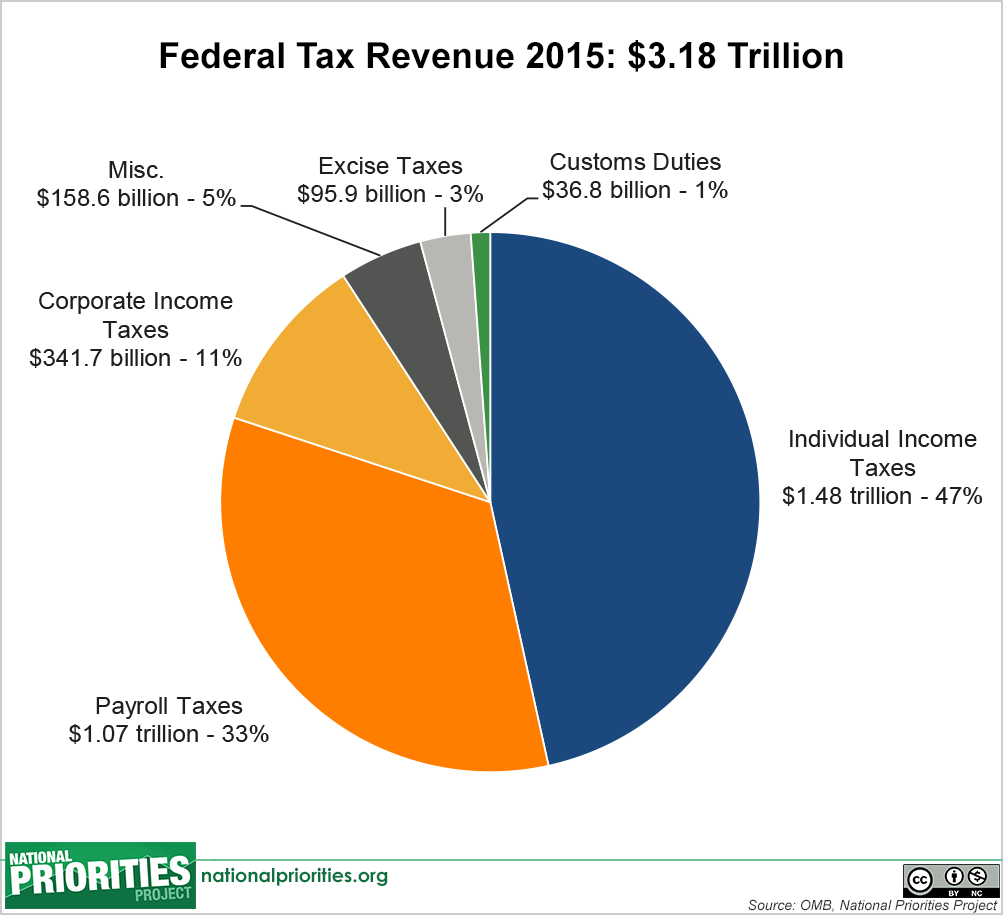
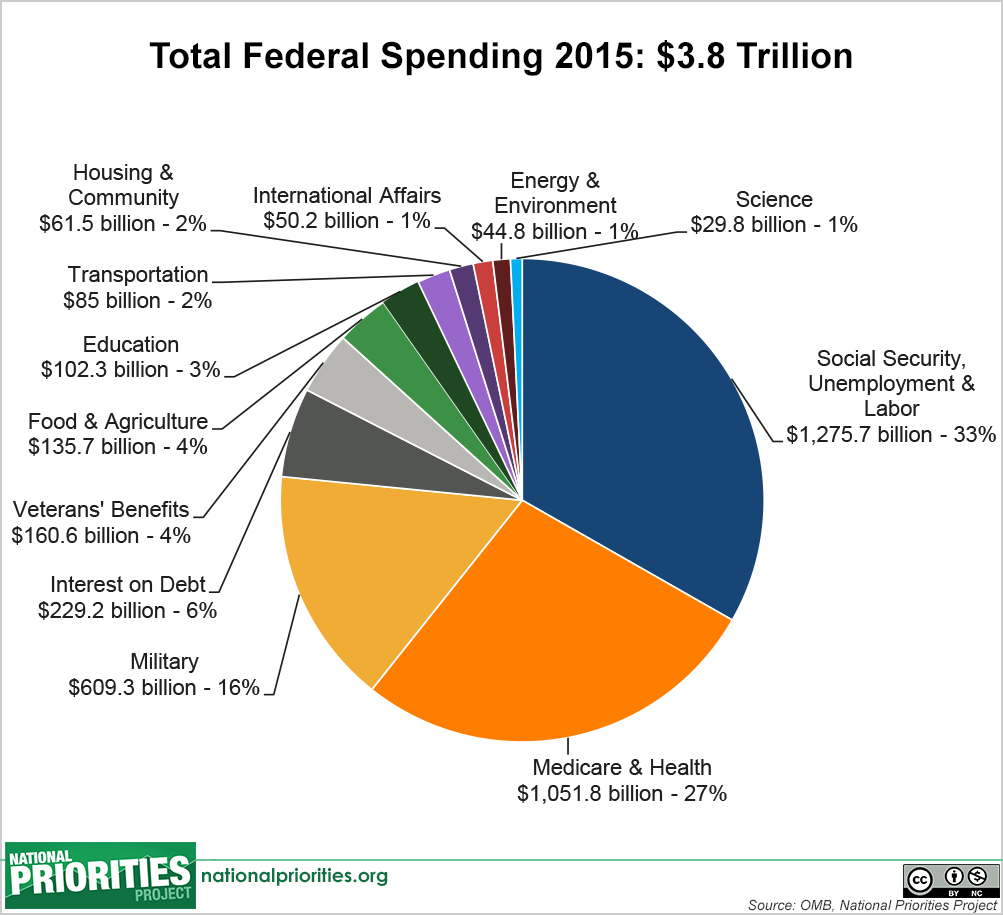
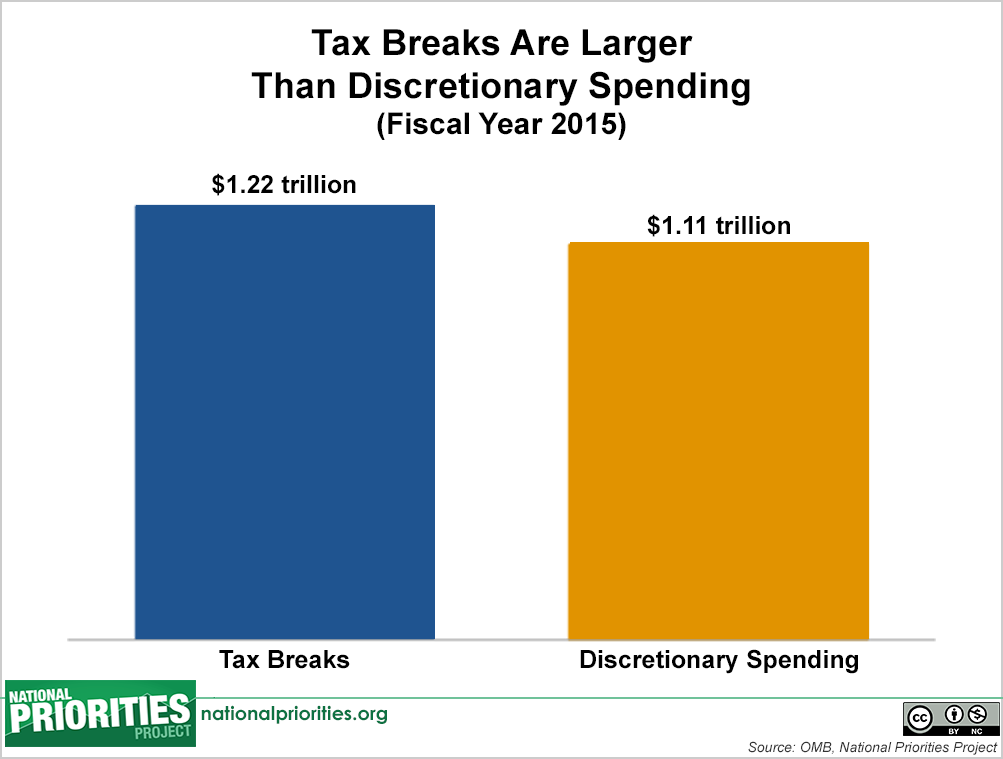
developing is good no? rich and developing should be a goal
That's not what 'third-world' means... we're still part of NATO
The general usage of "third-world" has changed over time to be focused more on development than on whether a country was pro-USA or pro-Soviet.
If one were to hold to the original meaning of "third-world", then one would have to class Namibia and Angola as "first-world" countries while classing Switzerland, Ireland, Sweden, and Finland as "third world". Something that clearly goes against the current general usage of the term.
They are better described as developing nations however I agree that people tend to understand that third world means this, rather than the political definition.
I wasn't aware of the original meaning. From Wikipedia[0]: "The term "Third World" arose during the Cold War to define countries that remained non-aligned with either NATO or the Communist Bloc. The United States, Canada, Japan, South Korea, Western European nations and their allies represented the First World, while the Soviet Union, China, Cuba, and their allies represented the Second World. This terminology provided a way of broadly categorizing the nations of the Earth into three groups based on political and economic divisions."
I personally always thought "third world" had more or less the same meaning as "third estate". That is, the "commoners"; or the ones left out of the global elite; and I have yet to find anything that credibly proves that it doesn't come from there. On the upside; that meaning is the one usually associated with it, in my experience.
Wow, that's really lame. It's like dividing middle school into the "cool kids" the "delinquents" and everyone else. If you're not part of a faction though you're a "third world" loner.
Cold war wasn't such a lame thing. As a third-worlder (Finland), I'm quite happy that the US was there to help with the "cool kids".
I just meant the characterization was lame. How do you like Finland being a 3rd world country given the negative connotations that have since been assigned to the term? You may just say "that doesn't fit" like I did when I learned that Finland is a 3rd world country.
But it's how it's used now. But yes, it's not in original meaning of a word.
But based on original meaning Switzerland is third world country which also does not sound right.
On the other side swiss people seem aware of that and don't use the term so loosely like everyone else.