The new £1 Coin
thenewpoundcoin.comHow the "hidden high security feature"* in the new £1 coin works is covered here:
https://security.stackexchange.com/questions/53673/how-does-...
* Royal Mint’s new anti-counterfeiting technology, which can be authenticated by high-speed automated detection, was called Integrated Secure Identification Systems (ISIS) - but for obvious reasons, they've stopped using that name.
tl;dr:
special uv-altering particles in coating allows using a light to detect counterfeit; basic and high end scanners avail. for detection.
reading between lines:
sounds like the 'basic scanning' can be used e.g. for consumer/POS equipment to keep out the unsophisticated counterfeitters (e.g. coating is/is not present, perhaps some 'watermark' in the coating), and the 'sophisticated scanning' could potentially identify serial numbers/coin hash values in the light patterns or other means so that individual coins could be tracked, allowing discovery of more sophisticated attackers once these coins pass through banks or similar.
Erm.
If your assumption is correct, it's the _legit_ coins that could be tracked, not the counterfeit ones. Which, incidentally, makes this feature much more interesting.
Could be that it isn't a signature that is intentionally generated. It could just be based on how the light scatters, which is likely to be unique per coin. Like a fingerprint.
"Approximately one in thirty £1 coins in circulation is a counterfeit" "16 October 2017 onwards - demonetisation - you are under no obligation to accept the round £1 coin from your customers"This is the big deal for users of the current pound coins. Somebody is going to get stuck with a lot of irredeemable £1 counterfeit coins.
Musical chairs, in coins.
It is my understanding that the banks will still accept them but as a retailer you no longer have to.
i think the banks will not have to accept counterfeit coins. So 1/30th of the coins in circulation will be urgently shunned by everyone with the capacity to notice them.
So this means every coin in circulation would be uniquely identifiable through a unique random pattern of embedded luminescent particles.
K, damn.
Per the article, one in thirty of these coins are counterfeit.
Just adding another source:
> The Royal Mint regularly conducts surveys to estimate the level of counterfeit £1 coins in the UK. A survey undertaken in May 2015 found that the rate of counterfeit UK £1 coins in circulation at the time was 2.55%, compared to 3.03% in May 2014.
http://www.royalmint.com/discover/uk-coins/counterfeit-one-p...
This link first loaded the page, then unloaded it and put me in a queue! I was told how many people were ahead of me and an estimate on when I would get to read the page, complete with elevator music. Why would anyone even make that?
This is the most British thing I have seen in a while.
It's hilarious. ;-)
After reading your comment I immediately tried to visit the page and was very disappointed to see that the content was now being displayed directly. But just as I was about to close the tab I was placed in the queue! Hooray! :)
> Why would anyone even make that?
Right? I thought the exact same thing. Seems like the time and effort and expense it takes to build a queueing system could be put into building a site that could handle infrequent heavy loads.
If you're using something like an F5 for your load balancer you can implement the queue there. Cheaper than provisioning hardware for occasional peaks and F5s can serve a lot of traffic.
The British love a good queue.
You're not wrong - and tutting, you have to tut. In Honkers people queue for buses but then when the bus doors actually open it's every umbrella-fella for himself. A sort of Sino-British now you queue, now you don't. Not much fun if you're 6'5" and at the front of the scrum though. Well they used to anyway.
I've never ever seen anything like this. It would appear that this functionality has been there for a while and was also triggered on the Queen's birthday[0]
[0] http://metro.co.uk/2016/04/13/how-very-english-visitors-to-t...
Similar queuing mechanisms are used on things like Ticketmaster which experience extreme demand peaks when high-demand tickets go on sale.
Presumably the Royal Mint experience similar demand peaks occasionally when limited-release collectable coins go on sale?
Yeah, but, this displayed the article that I wanted to read, then redirected me to a queue system, now i'll eventually go back to the actual page. Its causing more work for the system. The ticketmaster queues block a heavyweight process (ticket search), not simple page displays.
This is the equivalent of ticketmaster not letting you see pages with lists of upcoming performances without waiting in a queue.
Exactly! The redirection to the queue happens after the page loads. Why would you ever want to build this feature? :)
I can't say for certain about the Royal Mint, but the US mint certainly does experience such a load pattern. It responds by either crashing or failing to load, unfortunately. A lightweight order-taking site that pushes orders to a queue for fulfillment would be a massive improvement over the strategy they actually choose (per-household quantity limits).
Occasionally you do get a pound coin that is slightly heavy. I guess those are the counterfeit ones. Bit hard for the layman to tell.
It's not too difficult for most of them.
Drop it edgeways on the table. Most counterfeit ones don't give the proper 'clunk', maybe the material isn't right.
Or, the colour or alignment would be bad, or they'd appear more worn than normal.
I don't think the 1/30 fakes are evenly spread around the country. When I lived in London, they were much more common than that.
I remember getting a counterfeit bi-metallic 10 Franc coin. I was excited I had a "defective" one where the center was falling out, until it was pointed out to me this meant it was fake.
Depends how heavy. Modern circulation coins, not having any precious metal content anymore, tend to have fairly loose manufacturing tolerances.
As a UK citizen, it stuns me that one-in-thirty pound coins is a fake because a) i can't imagine how it's possibly worth it b) out of the thousands of pound coins i must have handled, I've never spotted a fake - they must be very good. Still, the new coin certainly looks nice!
> I've never spotted a fake - they must be very good
Some regions seem to get more than others, I used to see large numbers in the change I got in London.
The quickest "tell" for me is the lettering on the edge. Some of it is shockingly poor quality and almost looks like someone took a soldering iron to draw it on.
The next time a machine rejects one of your pound coins, take another look at it, there's a good chance it's fake.
EDIT: Here's the first page I found looking for example images:
http://www.larkinweb.co.uk/miscellany/counterfeit_one_pound_...
To my eye they look really shonky.
Edit II: A couple more examples:
http://www.cryst.co.uk/category/fake-pound-coins/
http://www.employees.org/~tw/quids/quids.html
FinalEditIPromiseNoReally:
Check out this stack, they're almost comically bad:
http://blog.alism.com/wp-content/2006/08/coinstack.jpg
(found on this blog: http://blog.alism.com/fake-one-pound-coins-part-three/)
Interesting. Thanks for the links.
I have indeed had some pound coins which were tatty round the edges and had to be pushed through a self-service checkout several times or wouldn't even go through at all. I still hadn't realised they might be fake, though.
I have noticed that a lot of old 10p coins are noticeably a lot thinner (presumably worn down rather than starting out thinner) than new ones. Is this as it should be or should I start looking at these with suspicion too?
>I still hadn't realised they might be fake, though.
Yeah, I was the same until a machine failed and a colleague said that the coin might be fake.
There is something rather delicious in the fact that we're so used to machines and computers failing that the idea the coin could be wrong never entered our heads!
True rage is having a machine reject your money for overpriced parking while you stand under one of those anti-loitering alarms.
It would be even better had one received the money in question as change from such a machine...
I was standing in front of two vending machines the other day: one for food, one for drink, and all I had was a $5 bill. I wanted food, but the food machine would only take $1s and coins. On the other hand, the drink machine took $5s.
So I put my money in the drink machine and hit the coin return. Nothing happened. I tried a few times and figured the coin return was broken or that it was out of coins. The only thing in the machine was soda, which I can't drink if I don't want to trigger my acid reflux. But I bought one anyway since otherwise my money was "wasted", thinking I'd give the soda to a friend later.
Of course, once I bought the soda, the machine spat out all my change: 3 quarters and 2 dollar coins - now I finally had coins that I could buy food with. Naturally, the food machine didn't accept dollar coins. Most machines here don't, so no food for me.
The food machine accepted coins and $1 bills, but not $1 coins or other bills? It almost sounds intentionally designed to be as difficult to use as possible. (I realize the $1 coin is larger and newer, and accepting larger denomination bills would mean dispensing more change, but still.)
USPS vending machines are well-known as the main non-bank source of $1 coins. (E.g. insert a $10 bill for $7 worth of stamps, and get 3x $1 coins back.) IIRC, a long time ago they didn't actually take these coins as payment in the first place...
I want with a guy who had fake money come out an ATM in the middle of Cusco, Peru. I offered to buy it off him as a souvenir, and offered about half face value. I was out bid by 2 others and in the end he decided to keep it as a souvenir.
That was pretty common in Peru when I visited. Or shop keepers giving it back as change.
I have noticed that a lot of old 10p coins are noticeably a lot thinner (presumably worn down rather than starting out thinner)
Prior to about 2010, 5p and 10p coins really were thinner. They were changed from copper/nickel alloy (Cupronickel) to nickel-plated steel to reduce costs. But in order to maintain the same weight, the coins had to be made thicker.
Didn't know that - thanks!
You can get answers on so many topics on HN...
Oh shit! That's why they sometimes don't fit 5 to a section in my coin holder. I thought it was just poor quality control on the 5p coins.
Great links, I still wouldn't notice.
Those coins just look like they've been battered a bit too much, I just assume lots of coins get really rough treatment.
I think it's really hard for a layperson to detect these. I've been checking for months my change and still havne't spotted a convincing example. Every blog or page explaining them requires generally deep knowledge around what dots should be where or what the correct symbology is for the issue year, etc.
It's lettering/patterns/quality on the edges that I find I can spot counterfeits for, and misalignment is a dead giveaway - see GP's first link for examples of that where it's a few degrees off, or completely reversed.
I find this incredibly interesting.
Your second link made me laugh, both because the blogger guessed that I was admiring a specific photo and the gradual reveal of the true level of the incompetence on display.
As it's illegal to knowingly pay for anything with forged currency, I deliberately never check too carefully, and assume any coins rejected by vending machines must simply be worn.
I briefly worked in an arcade a few years back, so was changing a lot of £1 coins. 1 in 30 sounds about right, it was amazing how many fakes we'd see.
Like others have said, the lettering around the edge is always the biggest clue, but also the head and tails stampings will sometimes be off centre, and misaligned to each other.
The fake ones also make the 'wrong' noise when you drop them on a hard surface. It's hard to describe, but really noticeable if you compare it to a real coin.
What was the process when you found one? Report it in some way, or hope the bank didn't notice?
Honestly I don't know, above my pay grade :) I just reported it to the boss
As a student a dude in Liverpool was selling 50 for £10. A guy I knew lived on them for 3 years. His life revolved around 99p stuff.
Why didn't the dude just spend them himself? Too many fakes for that to be a viable option?
Too many fakes and risk of merchants tipping you off to the police I guess. If you become known as the guy who keeps giving dud coins, you're probably going to raise some suspicions.
Probably easier to disperse the coins and hopefully not let them be traced back to you
Good points ;-)
If you know the 'wrong' people you can buy £100 of pound coins for £40 (if they don't work in vending machines) or ~£80 (if they do work in vending machines).
This is a thing in black market channels, so, for the junkie with nothing in life except where the next high is coming from, you can imagine that they can spend all day passing off these coins to get legitimate cash back, for that next high and for that next batch of counterfeit coins to pass off.
I'm pretty sure I've seen some — rather crude detailing (especially around the edges), sometimes a slightly funny colour, and consistently rejected by vending machines.
But there are also a lot of £1 coins in circulation that are more than a decade old. I sometimes get coin bags from banks and even from those, some are rejected by vending machines and look crude.
I wonder whether banks test every £1 coin that passes through their hands.
Either way, being rejected by vending machines is probably neither a sufficient nor necessary condition for being a fake, but it's almost certainly correlated.
> i can't imagine how it's possibly worth it
Let's say you're one of three (or five) major creators/distributors of said coin. a third (or fifth, or whatever) of a thirtieth of all the pound coins in circulation doesn't seem worth it to you?
> As of March 2014 there were an estimated 1,553 million £1 coins in circulation
A fifth of that would be ~311 million pounds.
Let's say you're one of fifty or 500 counterfeiting rings, that's still £31 or £3.1 million. Even if the process for counterfeiting cost a million pounds to acquire (probably much less), it'd still be £1M pure profit. The numbers for both cost and slice of the pie probably scale down to a bunch of small-time counterfeiters, but the margin is definitely there.
You've never had a vending machine or self-service checkout reject a pound coin before? I've held ones which are noticeable lighter and more worn than a real one. You've just never really paid attention.
At least for Euro coins (are these more difficult to fake?) it often happened to me that some vending machine accepted a coin only after multiple tries.
What might be fun to try is to use a Euro 5c coin in a machine that expects 20p sterling coins. Living on the border with Northern Ireland, we figured out when I was young that the sweet machines in Northern shopping centres could be conned like that.
The old (pre ~2005) New Zealand 50cent coin was a match for 5 franc coin in Switzerland (~5USD). I knew postgrads that would always stock up to use in vending machines, after finding that out I've always been curious to know how much research a mint does to prevent this from being possible.
>I've always been curious to know how much research a mint does to prevent this from being possible.
At the Canadian/US mint, seemingly zero.
US 5 cent coins (aka nickels) are (or used to be) the same diameter and weight as 20p sterling coins as well, as a grad student in London I may have accidentally used a few in vending machines and doing laundry...
In the 80s I was able to use 5p coins (same size as the modern 10p) instead of quarters in arcade machines when I was on holiday in Florida.
The same trick worked with Australian $1 coins going into machines expecting NZ $2. imho having $1 larger than $2 isn't right.
Same for Euro notes. It often takes multiple tries of trying to straighten out the bill before a vending machine will eat it.
Yes, but I've been conditioned into thinking a fault with the vending machine is much more likely than a counterfeit coin. Just the other day, I was using a vending machine that had a special panel on the front of it, with the specific purpose of rubbing your coins on it in the event that the machine didn't recognise them!
I've definitely noticed worn coins before. Some of the current pound coins have been in circulation for 34 years, though, so I'm not surprised there'd be quite a range of wear.
I've had machines refuse one pound coins, which then looked slightly off on closer inspection when comparing to other coins.
I was cheated in the most crude way in London once - gentlemen selling African street food gave me (in my change, amongst other coins) a coin that looks and feels very much like a British pound, but is Ugandian (IIRC) and has some kind of ostrich-like bird's head on it instead of the Queen's.
That could have been a mistake. Some coins from New Zealand, for example, look a lot like British currency.
Likewise for the euro: the Thailand 10 baht coin (worth about 27 cents) is quite similar to 2 euro coin, similar enough that you actually have to look carefully to notice.
Each euro country mints their own coins with different insignia, so people are used to 2 euro coins that what whatever figurehead.
That always piqued my interest as to how more easier Euro coins were to counterfeit given the numerous variations on coinheads.
Yes, compared to most of the previous national currencies; in the U.S. there also seem to be a number of variations of coin heads (for quarters at least). The coins in U.S. are smaller value so it does not matter as much.
The 1 and 2 euro coins are dual metal though, making the counterfeiting much less lucrative. The Finnish 10 mark coins also used to be dual metal; so I think was the French 10 franc coin; I don't recall if others had much security against counterfeiting.
Yeah. I got a NZ$1 in my change the other day. Didn't bat an eyelid. Time for a trip to NZ I guess
In a similar fashion, here in New Zealand, I've been using 5 Piso coins from the Philippines instead of $2 coins for my washing recently.
In the US, it's reasonably common to get Canadian pennies for US pennies.
You get NZ 20c coins in place of Australian ones a fair bit.
I once got a Swazi Lilangeni coin [1] in change from a machine at Paddington station. Could it have been one of those? As an entirely above board numismatic dealer selling them in bulk [2] says:
"they are lovely looking coins, bearing an uncanny resemblance to the British One Pound coin [...] All of the One Lilangeni coin attributes are exactly the same as the British One Pound coin."
[1] https://en.numista.com/catalogue/pieces29731.html
[2] https://www.alibaba.com/product-detail/One-Lilangeni-Coin-19...
It happens a lot around here (in New York, a few hours from the Canadian border) with Canadian coins.
Obviously it's a bit different here, as the values are roughly the same, but I can see how that would happen as an honest mistake.
I find that in cities near the border, Canadian and US coins are interchangeable and usually accepted at par. In Toronto there are a fair amount of US coins in circulation, and I've never had an issue using them here.
Helps that each of our coins are almost exactly the same size and weight for all common denominations.
I just got back from Whistler BC. Because Vancouver tends to take USD, and Whistler is not far (and is even more heavily touristed by % than Vancouver, I'm sure), I figured we'd have no problems with USD.
Mostly we paid with cards, but my wife brought a few US$100 bills. It was silly to try to spend them for small purchases, but one night we had a CAD$60 dinner and we asked if we could use USD (hadn't been a problem anywhere else). They said yes, BUT they'd only accept it at 1:1. Obviously that's their prerogative, but it seemed silly to expect us to eat $18 or thereabouts, so instead they ate the credit card transaction fees. shrug
Granted, this is probably not bad policy in general because they're going to be even less expert at spotting fake US currency than US-based merchants are.
The toll both machines don't accept them even though the coins are superficially quite similar.
Where I grew up, in MA, canadian coins were accepted, generally.
I'm in a city now and I've had people refuse to accept 2 dollar bills (which are rare, though absolutely legal tender).
Steve Wozniak's hilarious book of perforated $2 bills: https://www.youtube.com/watch?v=LJ1TIYxm1vM
You can buy it here: http://www.moneypads.com/products.html
I've done it both ways with Korean and Japanese coins because they look nearly identical, I assume due to the colonial past. The values differ by 10x.
There's a page on the site telling you how to spot counterfeits.
http://www.royalmint.com/discover/uk-coins/counterfeit-one-p...
I clicked that link and was told 'You are in a queue... You will be redirected to our website as soon as possible. There are 16 people ahead of you'. It was like being on hold for call centre! Screenshot: https://s8.postimg.org/6yp8lcs51/Untitled.png
Perhaps its because they often release unique/collectable coins for sale, and so a simple cache wouldn't work. It seems odd to apply it to a static page as well as the shop though.
Nah, the fakes are fairly obvious once you know what to look for.
It doesn’t really matter so long as they circulate like other currency though. Money is weird.
Somalia spent years accepting fakes as real, because there was no "real" government: http://jpkoning.blogspot.co.uk/2017/03/bringing-back-somali-...
(Price fell to roughly the cost of production)
You could call it an unofficial form of Quantitive Easing.
> It doesn’t really matter so long as they circulate like other currency though.
Except that it's all profit for the criminals counterfeiting them.
it cost money to make money though so not all profit
Sure. I don't see what that changes though - my point is that counterfeiting is profitable for the (criminal) counterfeiters, so it's not the case that it "doesn't really matter".
I was told that Hackney has the greatest concentration of fake pound coins.(no source on that)
Have received many in my time.
Machines don't like them
They seem to be not quite straight.
Is there any insight into who might be making the fakes and with what tools?
They use coins from South Africa which are made from the same planchets. They put those into a hydraulic press with hardened steel dies.
I've spotted a few. They feel "light".


For any interested in the related costs:
https://www.theguardian.com/money/2014/mar/19/cost-new-pound...
Seems like there are £45m worth of counterfeit coins in circulation, but the switch may cost over £100 million.
____
EDIT: The percent of fake coins in circulation appears to be in flux, which makes me wonder what methods they use to estimate the fakes in circulation, if they use controls like injecting known fakes into the count to see if they are spotted, if the sample is truly random, the maths is correct, etc.:
1% 2004 [1]
3.03% May 2014 [2]
2.55% May 2015 [2]
Of note is that the Royal Mint states in the 2016 annual report that the last survey for fakes was in May 2015, but the report was issued in July 2016, which means at least as of that date they failed to do the annual survey; or at least publish the results.[3]
[1] http://www.telegraph.co.uk/finance/personalfinance/10707540/...
[2] http://www.royalmint.com/discover/uk-coins/counterfeit-one-p...
[3] http://www.royalmint.com/~/media/Files/AnnualReports/ar_2015...
The societal cost of counterfeiting goes far beyond the nominal value of the fake coins in circulation (approximately one in thirty one pound coins is a counterfeit).
Yea, it would be a bit like conflating the nominal value of currency in circulation and the actual value to society of having physical currency at all. There are huge multiplier effects.
I used some coins today. It was probably the first time in a year I used cash...
While I see the value of failsafe money (except it really isn't) I think the returns are diminishing...
There are £45m of fake pound coins in circulation currently. The various banks and mint, etc, will be removing them as they come in, taking losses from that. There's an ongoing cost every day.
If a one-time cost of £100m will remove the fake coins and prevent new fakes, it's well worth the price tag.
The new coin will not get rid of forgeries completely, at least not until the old is removed from circulation. In pure money terms, it's not worth it. But since they're printing money anyway, I guess if it's too costly, they can just print more money to pay for it ;)
The old one will be out of circulation in October. Did you read the page?
So there was no point in doing it? This seems super weird for a financial institution that should be looking at hard data; maybe they did some analysis about the increasing ease of forgery?
Its a politically strategic time to reaffirm some kind of public 'pride' in the Pound. Its a symbol of nationalism.
(am brit)
The new pound coin has been in the works for years, it's not some knee jerk reaction to Brexit.
I would suspect the rate of introduction is increasing. So while maybe it took 20 years to circulate this 45m amount, they may expect the next 45m to come though in a few years. That and pride/confidence in money validity. This is my guess and not fact.
Anecdata, I know - but certainly even 5 years ago it was rare for me to spot a forgery in my change. Over the last few years I found more and more - so I'd think that the process and cost for creating fakes is dropping. Though since contactless payment has been around I can honestly say I've spent actual cash about 4 times this year so far, so my collection of 'interesting coins' has not been added to like it once was.
Not sure if this is flawed, but I want to attempt an analogy that felt right to me.. Let's say they figured out catching a thief cost £500 and it became public knowledge the police wouldn't investigate any theft under £500. The cost of transitioning to the £1 seems worth it to prevent further abuse.
Your analogy is flawed because you are discussing investigating a crime that has been committed. The purpose of the new coin is to prevent the crime from being committed in the first place by making it harder to commit.
Given the expense of rolling out the new coin, it probably makes more sense from a economic and moral point of view to spend money investigating these crimes rather than preventing them.
> Let's say they figured out catching a thief cost £500 and it became public knowledge the police wouldn't investigate any theft under £500.
Is this not already true? When my laptop was stolen, I was advised "don't bother reporting it to the police".
It might well be true, but the police themselves can't say that it's true in an irrevocable way. The recent indie film "I Don't Feel at Home in This World Anymore" is an entertaining consideration of this scenario.
There is some kind of psychological cost too, since the money is only valued as much as people want to value it. Too much fakes might damage the brand more than the face value of the fake coins.
This is legal tender inside the UK, people can't put a value on it. Outside the UK the coins have no value as only bank notes can circulate abroad.
If forgers can infiltrate 2.5% to 3% of the market, there's no reason for them to stop at such modest levels. Why not try for 30%?
We also don't know anything about the volume of forged coins withdrawn from the market each month. If detection at pubs, grocery stores, etc. is poor, then fake coins enter the market at will and are detected only when merchants present their cash to banks. That's annoying for everyone, and it's possible to come up with scenarios in which each year sees 2x or even 5x the introduction of fake coins, with many of them staying in circulation for only a few months but causing damages anyway.
In either of these scenarios, clamping down now on forgery is economically prudent, even if the 100 > 45 comparison doesn't reveal the true cost.
If we knew that there would only ever be £45m worth in existence then perhaps not but one would expect that this figure is growing.
Sweden is also replacing the coins with new ones and a major advantage I keep hearing is that their weight is lighter, which reduce transportation costs and makes it easier for bank.
But I would guess from a public relation perspective, asking a whole population to replace their coins just to make it cheaper and easier for banks is a harder sell that arguing security.
It isn't really a cost/problem to "ask the whole population to replace their coins". Coins are constantly being circulated, with worn ones replaced by new ones anyway.
The cost of changing comes primarily from businesses having to update vending machines, coin counting machines, etc (as well as increased production costs due to the new security features.)
But this switch has been planned for many years, so businesses have had a long time to prepare.
From experience, the lighter weight makes the coins harder to tell apart. The old coins had three denominations: 1kr (~$0.10), medium sized, thin, silver; 5 kr (~$0.5), big, thin, silver; and 10 kr, small, thick, golden. Their big size (compared to Euro coins) make them comfortable in the hands and trivial to count the right amount.
By comparison, the new, smaller coins are much harder to grasp and the new denomination (2kr) is hard to tell apart from the new (1kr). The new notes are similarly hard to tell apart, as they all i) have the same height, and ii) use similar (pastel) colors.
"Never attribute to malice what you can blame on stupidity", but it almost feels like they are making the new cash hard to use on purpose.
The main reason for doing it is that they don't want the public to lose faith in the "value" of the pound, which will eventually happen if forgeries become more abundant.
I'd imagine the point is to prop up confidence in fiat money. Cash represents 3% of "money" so a small counterfeit issue with pound coins is a fraction of a %.
Meanwhile the entire currency is debased annually by failing to include land prices into the inflation calculations, despite most credit creation being against land.
This debases GBP for workers every year. Therefore propping up confidence is vital.
Who is counterfeiting? They dont usually do such small denomination.
It is definitely more efficient to counterfeit larger denominations but you also have to measure the relative difficulties and chance of getting caught.
The old £1 Coin was relatively easy and cheap to counterfeit and the counterfeits were practically perfect (I've had a few over the years, they're REALLY hard to spot unless you know what you're looking for, just Google "spot a fake £1" for some examples of how good they are).
Seems like many of the counterfeit coins come from abroad, in particular countries with a much lower cost of living and where counterfeiting foreign currency may be ignored. There's also a huge market in pushing counterfeit money onto foreign exchanges in other countries.
Unlike large notes with security features, no one really checks £1 coins for authenticity. You can spend them all over the place with very low risk (especially if you can get anything useful from vending machines – buy a train ticket at a major station, for instance, and it'd be essentially risk-free).
1 in 30 pound coins is fake. If you have a handful of smash and examine the pound coins you can usually find at least 1 fake one. Counterfeiters made millions before anyone caught on
Off topic: I love English idioms like "handful of smash." Keeps me smiling.
"Shrapnel" is another common one.
Yes I wondered about the 'more secure' claim - secure for whom? I don't have any trouble spending counterfeit coins that may end up in my pocket. Where's the issue? Not with the public.
For comparison, the American $100 bill was widely counterfeited (by the Libyans?) to the tune of maybe a billion dollars in circulation. The US Treasury left it be for years - too costly to detect the very good copies. Eventually bills were reformulated to include harder-to-copy features but for years the only response was to print fewer. Since so many good ones were in circulation already.
Watching the video - I was waiting for John Ive voice at the end saying "it's the best coin we've ever made"
> "Approximately one in thirty £1 coins in circulation is a counterfeit."
That took me completely by surprise. Is there really that much of a market in counterfeit coins? The profit margins just seem so modest relative to counterfeit bills.
> That took me completely by surprise. Is there really that much of a market in counterfeit coins? The profit margins just seem so modest relative to counterfeit bills.
If no one's checking for counterfeit coins, and the users themselves don't know they exist, it sounds like a pretty awesome opportunity for the counterfeiters.
Just take a look at the number of comments here saying the same thing as you - from a counterfeiter's perspective, it sounds pretty ideal.
But, what do you do with your counterfeit coins? You've invested all this money and effort in minting equipment, but it would look extremely weird to spend more than like 20 at once.
Unless they can fool machines, it seems very inefficient.
My best bet, after mulling this over for a few minutes is that the fake coins are sold in bulk to people who handle lots of small change - kiosks, fast-food joints etc - then they just mix them in with the real money in the register for giving change.
What I want to know is why would you counterfeit (serious charge) when you can use a similar looking coin? For example
I was given a South African 5 Rand coin in my change in Amsterdam (should have been a €2 coin):
https://en.wikipedia.org/wiki/File:5-za-rand.JPG
Broke a 20 getting intoxicated in a bar/coffeeshop, then bought a kebab after on my walk back. Kebab shop was only place I got metal change that night.
I didn't notice until the next day when a coffee place threw a fuss when I used it to pay for my espresso.
I suspect they often mix them in for drunk tourists.
That idea has been tried out before with great success - in the 1880s.(0)
Adjusted only for changes in the CPI, Josh Tatum netted $121 in today's dollars every time he spent a gold-plated nickel.
(0) https://www.pcgs.com/News/The-Man-Who-Could-Stop-The-Mint
The UK has a large market in coin-operated gambling machines - there are heavily-regulated low-stakes ones in all kinds of non-casino locations and, I think, higher-stakes ones in legal betting shops.
A relative who works in the industry told me he sees large numbers of counterfeit pound coins. I would guess counterfeiters might launder coins through machines. Or even, though I've never seen it, sell discount coins directly to gamblers? In any case machine recognition would be a high priority. The machines in question would be relatively unsophisticated ones with a thickness gauge and a 'ski jump' that effectively checks the weight.
Many gambling machines have a 70% return. Ie. 70% of money put in is paid out again.
One could probably go to a casino with a bag of fake coins, put 50 in each machine, and take any and all winnings. Some machines even pay out winnings in notes.
Britain has relatively liberal gambling laws, so you wouldn't need to go to a casino. High-street betting shops can have up to four fixed-odds betting terminals, which offer electronic versions of standard casino games. European (single zero) roulette has a house edge of just 2.7%.
FOBT winnings are paid out via a receipt that is redeemed over the counter, so you can use them to convert coins into notes very easily. Gambling winnings are not subject to tax in the UK, so these machines are an extremely attractive money laundering method. Britain has around 9,000 betting shops, so it's easy to move around and avoid suspicion.
https://www.theguardian.com/uk-news/2013/nov/08/gambling-mac...
You mix in legitimate coins, and deposit them at a bank in Northern Ireland as takings from your (real) businesses. With a rotating cast of 20-ish fronts (each with multiple bank accounts), you could put in £1MM+ a month easy & transfer it onwards as normal-looking purchases.
Note that this was a great way to get millions of coins into circulation back in the early 2000s, not so easy now.
Don't vending machines have the ability to check by weight/size? Couldn't a bank just have that in their counting machine? If you have like 50% fakes it is going to look fishy.
Most banks don't bother. Also, most counterfeit pound coins are made from redirected planchets (blank coin base) intended to be used as Swazi lilangeni (or just restriked lilangeni), so they are identical in size, weight, and material composition to legitimate pound coins (since they use the same planchet).
> But, what do you do with your counterfeit coins?
Launder them through your other criminal activities.
"Hey, you want to be paid for all the drugs you've sold recently? You can have 500 in 'real' or 1,000 in fake notes + coins."
I think you'll find most people drug dealers interact with don't take kindly to being passed funny money.
The supplier/street vendor relationship is not the same as the street vendor/drug user one.
Also, this is not a case of the supplier trying to con its "client", but one of choice. "Would you prefer real or or more in fake ?"
A lot of them can fool machines, because they're made using a coin that uses the same blank.
I work on a market stall in London at the weekends. In my experience it's probably higher than that, you get given some really ropey ones but everyone just treats them normally because there's so many in circulation the banks don't even bother to reject them. I can totally see why they're replacing it.
Due to the lower value the risk is also much lower, apart from vending machines who actually checks coins for fake and refuse them ?
For a merchant the cost of annoying a potentially unaware customer is more than the value of the coin that he will probably simply give back to another customer as change.
Try using an actual real 500€ bill anywhere else than Germany.
> Try using an actual real 500€ bill anywhere else than Germany.
I paid for a 17K CHF car with 17 notes once. The Swiss trust their money completely.
>Is there really that much of a market in counterfeit coins?
Take the amount of £1 coins in circulation. Sum the value. Divide by 30. Equals the market in counterfeit coins.
From http://www.royalmint.com/discover/uk-coins/circulation-coin-...
£1 are 1,671.328 £m / 30 = 55.71 £m
The market in counterfeit coins is therefore over 55 million pounds. This is, however the cumulative, total value of the market and not per year.
It also depends on the rate the counterfeits are being removed from circulation by bank sorting machines.
They have a relatively high value and are easily faked (currently no bimetal design like the £2 coin or 1/2 Euro coins) – and nobody looks for counterfeit coins.

Funnily, the new "most secure" pound will be introduced one day before a pretty big event, Mrs. May's Article 50 invocation, which widely predicted to devalue the pound significantly.
You might buy new pounds as "secure" coins, but you'll probably some percentage of their value the next day...
From all the big ForEx investors who will only learn about Brexit when they read in the papers that it has happened?
There is a strong emotional effect at play, so it's hard to say what will happen. I know someone currently buying a house, and the question of what will happen when Article 50 is invoked has been a persistent theme. E.g. in London, thousands of banking jobs may hang in the balance, with at least one bank having made it very clear internally that once Article 50 is invoked they will start planning which jobs to move - something that for that bank alone will start to shift massive amounts in salaries out of London (hundreds of millions at least)
On one hand finally getting clarity might be good news in that some people who have held back might spend more once the uncertainty of the immediate reaction is out of the way. On the other hand for a lot of people it makes things definite and will cause more cautious spending patterns, and there's still plenty of other uncertainty.
It also starts the clock, which will make people speculate about the timing.
I haven't the faintest clue how that will make traders respond. What I do know is that because I don't have the faintest clue how it will make people respond, I'm acting accordingly cautiously, and have cut my spending considerably since the referendum, and I know many others in the same situation, and indeed the UK has a whole has seen consumer debt levels drop substantially.
All this to say that it is foolish to assume that it boils down to whether or not the actual event itself is expected or not.
> I'm acting accordingly cautiously, and have cut my spending considerably since the referendum
thankfully you aren't the majority; we really would have had a recession if everyone had cut their spending
There's a number of indications that people are being cautious [1] [2] [3], but most people don't have the disposable income to allow substantial reductions in spending, given the low levels of salary increases ever since 2008. Basically ver since then low interest credit has been used as a substitute, and driven UK consumer debt levels to crazy heights.
I for one thinks that recession or not, a lot of people are setting themselves up for major pain once interest rates start moving up again and would be best served by doing what they can to cut down on spending.
At the moments large parts of the handling of the UK economy appears to be based on trying to push problems ahead of us in the hope that things will start looking rosier some day. Instead it's looking scarier and scarier.
[1] https://www.retailgazette.co.uk/blog/2017/02/consumer-spendi...
[2] http://myinforms.com/en-gb/a/184905009-consumer-spending-gro...
[3] https://sputniknews.com/business/201701201049832161-uk-retai...
this sort of doom-saying and cherry-picking of statistics to derive a narrative is in itself harmful, as the economy is almost entirely based on consumer demand and confidence
brexit itself doesn't change the fact there's a short term business cycle driven by credit and low interest rates
> At the moments large parts of the handling of the UK economy appears to be based on trying to push problems ahead of us in the hope that things will start looking rosier some day.
capitalism is based entirely on eternal exponential growth, which is clearly not sustainable, there's nothing UK specific about this
> this sort of doom-saying and cherry-picking of statistics to derive a narrative is in itself harmful, as the economy is almost entirely based on consumer demand and confidence
Consumer demand and confidence largely comes from how safe people feel in their jobs and whether or not they get raises, not statistics. I'm sure there's some feedback, but my own cautious spending is a direct result of knowing of direct threats to a substantial number of jobs, and seeing the consequences of e.g. potential clients pulling back on spending. I'm not very worried about my own income, but the only reason I'm not very worried is that my disposable income is high enough that I can sustain drops without being affected much.
Meanwhile e.g. my ex. has to deal with knowing that hundreds of jobs where she works will be cut (and no, that's not rumours - she works in HR and has direct knowledge of the plans) as a consequence of Brexit. If the negotiations goes badly, it will be several times that.
That is the kind of things that's causing consumer confidence to soften.
> brexit itself doesn't change the fact there's a short term business cycle driven by credit and low interest rates
No, but it has directly affected that starting to come to and end because of softening consumer confidence.
> capitalism is based entirely on eternal exponential growth, which is clearly not sustainable, there's nothing UK specific about this
No, but there is something UK specific about currently being in a situation where the government has chosen to drastically cut public spending at a time when low salary growth has left people using low credit as a means to keep the party going, and are then suddenly hit by events that cause a great deal of uncertainty over their ability to continue to service debt.
the plural of anecdote is not data
In my case the anecdote is data for my specific case: It explain the direct causes of my decision to reign in my spendings. It is not data that we can use to extrapolate whether or not consumer confidence is softening, but I have already presented a number of references to actual data on that.
Article 50 has been priced into the markets for months, I’d be very surprised to see any significant movement.
You'd think so, but every stage in the process so far has led to another drop, at least temporarily, even though they've all be widely trailed beforehand.
The fact that it will occur and likely outcomes has been priced in, but there will possibly be new information on government strategy which may move prices up or down.
We're getting a new pound; it's called the "dollar".
Another possible recent security feature is a polymer ring: http://news.coinupdate.com/germany-introduces-next-generatio...
It's super cool, but this coin is not used in general circulation and is more or less only a collectors item.
That seems weird. Why would they spend 10 years of research to produce a one-off collectors item?
My guess it's because the production cost is too high, and counterfeit euro coins aren't a big enough problem to warrant them. Also having a germany-only euro coin in wide circulation would be a bit backwards and impractical, so they would have to implement them in all 19 euro countries.
To demonstrate feasibility and estimate costs. The tech could then eventually be rolled out but since Germany is part of the EU for EU-wide legal tender all mints need to switch: "standard" euro coins have a common design and reverse, and a national obverse (with some restrictions).
Nitpick, but you mean the Eurozone specifically.
Guilty as charged.
As a case study before introducing it into general circulation.
Developing a new coin for hundreds of millions of people in daily use is a big task, it’s easier to start with a subset of 80 million potential users to demonstrate feasibility, and test.
Who says they don't have plans to apply this technology in quantity production in future (just not yet)? I consider it as a very sensible choice to use a one-off collectors item to make a first test towards mass production.
While looking into this coin, I saw that next month they are going to release another one with a red polymer ring, and plan to have 4 more designs with different colors until 2021 (so 6 different designs in total).
But so far only as collector coins.
For a moment I thought/hoped the UK would introduce an official cryptocurrency...
... and call it britcoin.
> and call it britcoin.
BrexitCoin
Not Brexit, just a hard fork.
Yesterday our home secretary said that WhatsApp's end-to-end encryption is "completely unacceptable". So we're a long way away from that.
A government cryptocurrency could be built on a blockchain, but there is really little point. Some properties that it would need are:
* It's backed by usual pounds by the treasury, which means only they get to issue new coins (no public mining rewards).
* Court judgements must be able to block, reverse or force transactions. This means either the government gets a copy of all private keys, or simply has master keys for the system.
* UK government would probably want to attach names to all accounts, so new wallets could probably be only generated on some gov.uk site, or participating businesses like existing banks.
In the end, the blockchain is wasteful and inefficient when you could just have a big-ass server somewhere with an API.
> * Court judgements must be able to block, reverse or force transactions. This means either the government gets a copy of all private keys, or simply has master keys for the system.
You can certainly avoid that, just make it part of the protocol. You could create currency with such rules on top of Ethereum today. Court judgments simply become a part of trusted oracle.
Hasn't UK been fighting encryption since at least the 90's ?
To be honest, they have been fighting encryption since the 30's.
Public key encryption was actually first thought of at GCHQ - but was you would expect they kept it secret:
https://en.wikipedia.org/wiki/Public-key_cryptography#Classi...
Aye. We should just go back to using the Royal Mail.
Wouldn't be surprised if the surveillance infrastructure for physical mail started deteriorating already and a beautiful handcrafted, scented letter with calligraphy could fly under the radar.
I kinda hoped that they'd include something like an RFID chip with something like a certificate inside, signed by the royal mint (Turkish government recently switched IDs to something like that).
That'd allow verifying every single new coin (unless it is damaged to the level of breaking the rfid chip, but I suppose that's not that easy).
It'd also enable tracking. I kinda regret that idea now. BUT if used responsibly, that can significantly reduce the counterfeiting by the means of somehow cloning the RFID chip (which wouldn't be simple if done properly -- there aren't any successful attacks on proper implementations of stuff like mifare desfire EV1/EV2 afaik). A coin was used on a market on london on 10am and with an ATM on Glasgow on 10:30am? Yeah, flag that coin down.
"Hidden high security feature – a high security feature is built into the coin to protect it from counterfeiting in the future."
So you never know - but how would that work inside a metal coin?
Supposedly the super secret bonus prize is embedded luminescent particles[1], if you fancy reading about what that is
> So you never know - but how would that work inside a metal coin?
That's a good point, I completely oversaw that.
I don't think it's entirely unfeasible, the entire coin could act as the antenna (instead of shielding one, that is).
I'm assuming it has an NFC tag or something similar... Can't wait to cut one open and look. :)
Yea, when I heard that, I immediately wondered if there was a tracking _feature_ in the coin.
How much would it cost, though? I mean if a pound coin costs more than a pound, that's not good (that's possible even with the dumb coins, I recently heard that the turkish one kurus costs two and a half turkish kurus).
(edit: when I say "cost" I mean the production cost)
The 1 kurus was stopped being manufactured (still have one though: https://s.ave.zone/969.JPG )
Well, a pound coin is used more than once, and there is tax applied on every time it is used, so it'll pay off for itself in a relatively short timespan, imo. Plus, it pretty much beats counterfeits, so loss from that is gone too.
Problem with 1 kurus was that it wasn't used often, the monetary value was small and that it had no anti-counterfeit stuff. Also, people were melting it and selling it. You can't really sell a broken or write-protected rfid chip for much.
Not necessarily -
Since most money is held in banks, electronic transactions, etc - the question is more the 'value of supporting this denomination in currency to the economy' than the cost of a coin.. Like of $100M USD worth of tax/federal reserve interest revenue is generated from $10M of $100 bills that cost $15M to produce, it's not really a loss, but a business expense...
It seems that cost-to-produce vs. face-value isn't a terribly important ratio. The US has continued making pennies for a lot longer than necessary, though it seems to cost ~1.5c to make them.
> (Turkish government recently switched IDs to something like that).
That’s actually quite an old idea – most european countries’ IDs just have a normal smartcard in them, allowing normal signing and verification.
Interesting, I wonder if it's like the EMV credit cards. I wonder if this stuff is standardized, are the ID and credit card chips the same? Having the same readers would be useful, especially if all countries started doing that. Would be a little insane to have like a tower of card readers at like airports. "Oh your from America use the one in the middle" "Your from Canada use the one at the bottom."
If the same hardware, then I guess the only different would be that the public keys would be associated with somthing else. But it's probably a huge patent mess to make this a standard for all countries and states.
I know two stores in my area that don't even support chip cards and this was within going in the past year. One has the readers, but they don't work. The other has no chip readers at all.
I always thought paper signing was a bit outdated, especially since schools don't teach cursive really. We spent like a hour on it, and then next topic!
But then if someone stole your ID, lost it, etc... They could sign for things... but people can forge your signature anyways... Maybe if the machine had a camera in it to take a selfie when you use the card, but a bit creepy in a way to.
Well, the standardization was covered by others, so here's stuff about forgery:
The Turkish Govt's new ID allows you to- no, it requires you to set a password. You are given an 8 character PIN code when you apply for the ID, and you can change it from the kiosks at the citizenship bureau. It allows between 4 and 16 characters (while I chose 16 myself, most people will choose a 4 character one :( ).
Plus, even if it gets stolen along with the password, technically the certificate can be revoked as soon as you report it, preventing forgery.
Yes, they are the same standard.
In Germany this is actually used in all cigarette or alcohol dispensers.
You can pay via EC card or via cash, but you first need to verify age via EC card or ID.
EC cards (kinda like debit cards) and ID cards have two age verification functions, of which only one per minute can be called, these just verify if the account holder is > 16 or > 18.
So you press the button to get a bottle of beer, the system checks if you’re 16, you pay, and you get it.
Or you press the button to get a bottle of vodka, the system checks if you’re 18, you pay, and you get it.
All this is standard tech, supported by any normal RFID or card reader, and you can use the same reader for secure home banking, for verification, etc.
Australian (NSW) drivers licenses actually have magnetic strips in them that cause interesting results in some credit card machines.
Maybe that is the "hidden feature" that they describe on the linked page.
Well people had been stating on this thread that if that was the hidden feature, it'd not be "hidden" for long as anyone can get and cut open a coin to see if there's anything like that inside.
Can't RFID chips to be copied though?
They can, depending on how they work. If the values are being fetched from a secure chip, however, I believe it's not as easy. And as I said, even if it is copied, unless it is spent VERY carefully, it can be spotted and marked as copied.
Here's mifare desfire EV2's leaflet that talks quite a bit about the security features it has: http://www.nxp.com/documents/leaflet/MIFARE-DESFire-EV2-Leaf...
As if. Our goverment is currently on the warpath against evil cryptography.
Compared to the "It's a day ending in 'y', so a cryptocurrency or a cryptocurrency exchange probably got hacked today" pattern, I'll take the physical coin.
Poe's law is failing me here.
Reading the title that's exactly what I expected, discovering that it was simply a redesign of an actual coin was a let down. I guess this is related to the UK being close to falling apart due to brexit.
Lol, how is the UK close to falling apart? Do you mean literally that the union is falling apart or more figuratively speaking that the country is unravelling?
Odds are increased that Scotland will eventually go for independence. Northern Ireland is closer than ever to a Republican majority in Stormont and speculations are on the rise that a border poll might be on the table in the near future (as in within not too many years; it will still take time) and even some unionists appears to accept that there is a greater than ever chance of a unified Ireland. More importantly: at least some unionists appears more accepting of that possibility, as they see Brexit as yet another example of Norther Irelands concerns being ignored - how the negotiations unfolds will potentially have a dramatic effect on the Northern Ireland issue as a result.
Irrespective of that, it's pretty clear that Brexit will force Westminster into promising drastically increased levels of devolution not just to Wales, Scotland and Northern Ireland, but also to the major urban regions like Greater Manchester and Greater London that will reduce the de facto power of Westminster dramatically and allow the regions to drift even more apart in terms of differences in public policy.
At the same time there is a major split amongst those who considers themselves predominantly or only British or who considers themselves British first vs. those who predominantly see themselves as English, Welsh, Scottish or Irish first, and British second or not at all, with "Britishness" being weak and fractured.
Basically, to a lot of people living here, the UK means as little or even less than the EU, compared to other parts of their identity.
And a lot of the political discourse has been around how the elites ignore people. What people are about to find out is that in that respect the London elite were the ones ignoring them, not Brussels, and accordingly Brexit will not solve any of the problems they had in that respect.
Expect to see increasing upheaval and pressure for more power to be devolved from Westminster as a result. E.g. after the Brexit vote there was a brief flash of people talking about pushing for independence for London, and while that won't happen anytime soon if ever, expect to see those debates flash up again and lead to an actual (if miniscule) political movement at some point over the next couple of years.
I personally think that while the UK may persist in some form, the UK 10 years from now is reasonably likely to exclude Scotland, and the UK 30 years from now is likely to exclude Northern Ireland, and be more like a loose federation with massively devolved powers to Wales and several English regions and at least Manchester and London. Maybe even with increasing support for Welsh independence.
I honestly though Brexit was good for the EU and the rest of the world. The GBP was terribly overvalued. Why did the UK get a free pass on not implementing the Euro and not being a part of the Schengen Area?
It's been nine months and starting the article 50 process is suppose to happen soon, but I have a feeling the UK will negotiate its way into the Economic Zone instead, keeping trade and immigration without work visas, while forfeiting their place on the EU parliament. Either that or they'll just ignore the will of the people and never leave.
Agree with your analysis and opinion.
And we need all this new cruft because the current situation is insufficiently complex.
???
Pretty sure the knowledge that there will be a new £1 coin has been known far longer than brexit has even been a thing.

Coin has WiFi and a microphone and sends data to the nearest surveillance spot if it is in range.
If they weren't metallic, it wouldn't be a bad idea to put some RFID in them, or even set some secret handshake to automatically detect false coins.
There is likely an embedded known hash/serial number/other identifier in the U/V signature for exactly this.
It reminds me of the old threepenny (prounounced "thrupny") bit: https://en.wikipedia.org/wiki/Threepence_%28British_coin%29
The Royal Mint are actually selling a commemorative set that includes the new £1 along with a old Threepence coin.
Because of the increase in traffic to this page I was actually put into a queue before I could view the page, how very British.
Interestingly, taking inflation into account, the value of 3 pence in 1949 is exactly equivalent to £1 in 2017.
Unfortunately it doesn't work as well for the commemorative coin dated 1937, which is worth closer to £2.
Wow: "Approximately one in thirty £1 coins in circulation is a counterfeit."
I have about a dozen £1 coins in my informal 'collection of currency from other places' bag and it looks like 2 of them are probably counterfeit (at least by the standards of the Royal Mint) one clearly is, the date and back picture don't match, the other has fairly poor milling around it.
> Hidden high security feature – a high security feature is built into the coin to protect it from counterfeiting in the future.
"security through obscurity" as a feature?
Security through obscurity isn't a bad thing. The army uses security through obscurity by using camouflage. The only issue with it is when it is only 'security through obscurity'.
For example, the National Institute of Standards and Technology recommends:
> For external-facing servers, reconfigure service banners not to report the server and OS type and version, if possible
http://nvlpubs.nist.gov/nistpubs/Legacy/SP/nistspecialpublic...
Indeed, the biggest problem with security through obscurity is not that people use it, but when people overestimate the level of protection it gives them and reduces other protections accordingly.
When it was first announced, I read that it was a series of phosphors embedded in the metal. As the coin wore with age, different ones would become detectable at the surface.
Obviously I have no idea of the veracity of that, or the accuracy of my memory of the potentially fictitious article.
It would be quite amusing if this feature didn't actually exist and it was only an attempt to confuse potential counterfeiters.
-It would definitely be amusing, but given the current state of affairs - basically, the public is ignorant and vending machines are used to weed out the fakes - I don't think your average counterfeiter would care.
After all, your fakes don't need to be perfect; they just need to be good enough to enter the system without you getting caught every time.
(Which leads me to wonder - how do counterfeiters insert their fake coins in the monetary system? Where can you spend a lot of coin without arousing suspicion?)
-Coins sold at a discount to people who, perfectly aware they are fakes, use them for small purchases?
-Perhaps more likely - the customer is your friendly neighbourhood cigarette shop, which then mixes them in the change they give?
-Are some vending machines so bad at detecting fakes that you can use those (preferably ones with no security camera watching, which can be a challenge in the UK nowadays) to launder your fakes?
-Other?
Off to google I go. I really wonder how one can make a viable business model from getting fake coins into circulation.
I just looked over the £1 coins in my desk drawer (22!) - I found two dodgies. Perhaps I should bring them to the UK next time and ask in a bank - they may be just worn...
> Which leads me to wonder - how do counterfeiters insert their fake coins in the monetary system? Where can you spend a lot of coin without arousing suspicion?)
There are plenty of corner shops that'll happily sell you duty free tobacco amongst other non-legal things. I'm sure they'd be happy to take £100 worth of fake coins and mix them into their tills/takings/change if it only costs them £40. The difference can go into their pocket.
I think this will be a Crim2Crim business model, selling £100 fakies for £50/£40/£30 real to other crims depending on volume.
I'd be interested to find out about who makes the molds / dies and sets up the machines to manufacture these. I like to think its some eccentric retired machinist in a shed in the middle of the Yorkshire countryside :)
Don't vending machines only check weight, size and if it's magnetic? Should be easier to fake for a vending machine than for customers then.
People bother checking their coins at all?
To be fair, all security is a form of security through obscurity. An encryption key is just very, very obscure.
If this security feature could only be reproduced using a bunch of PhD chemists and millions of dollars of lab equipment, then the security can be considered to be pretty obscure. Even the strongest key based encryption system is vulnerable to brute force attacks if you have enough computer power.
> "security through obscurity"
My understanding is there is some luminescence profile that is very easy to create from basic chemicals if you know the quantities of those chemicals. But that it is very difficult to establish the precise quantities from the luminescence profile. In effect, a "one-way chemical reaction hash".
What's even the benefit of anti-counterfeiting measures that people don't know about? It doesn't matter if you fail a test that nobody knows to run.
Presumably some people will know about it, but who? If banks are the only places that can detect a fake, for example, does that gain you anything?
I suppose you can do something like "ah, this bank is getting a lot of fake coins, which means they're probably getting injected somewhere in the local area, maybe let's interview some people who've been cashing them in and see if there are any businesses they all frequent". Might be valuable.
Something I've missed?
The tests can be introduced incrementally, once forgers get good enough to pass the currently public tests.
Perhaps that's the point. They have a secret method for checking the authenticity of a coin such that counterfeiters do not know to imitate. This doesn't help the population to distinguish counterfeits, but it may help the government more easily keep track of the ratio of counterfeit coins out there.
So why mention it at all?
Security through obscurity is just fine as part of a layered approach.
I am not criticizing the concept, just that making an announcement of something hidden is somewhat paradoxical.
What happens if they have to remove the thistle and the shamrock after Brexit?
Why Brexit? Do you mean Scottish Independence?
Some would say those two are linked.
If that was the intent, why not just mention SI directly?
If they decide to become independent now, it'll be because of Brexit. Same goes for Northern Ireland (which will take some time).
Not so sure about NI. Do you think the economy could survive without UK membership? Don't you think NI-independence would be seen as an attempt at re-uniting Ireland, and hence bring back the troubles?
It isn't really a problem because Scotland will keep the pound, and very little will change in that regard.
Scotland could certainly use the pound (like how Cuba and Zimbabwe use USD), but England (and Wales) wouldn't like it and might move to make it difficult for them if they so wish.
If Scotland votes to leave it will be to remain in the EU debate after Indyref1 led me to conclude that Scotland would have to petition the EU to join as a new member instead of inheriting the UK's membership, and the EU requires new members to adopt the Euro... so if Indyref2 passes then they'll have the Euro.
Some of the dual metal build coins suffer from faults when they are exposed to cold environments. Once can test for this by placing the coin inside a freezer and observing one of the metals shrink to the point where it disconnects from the other part of the coin.
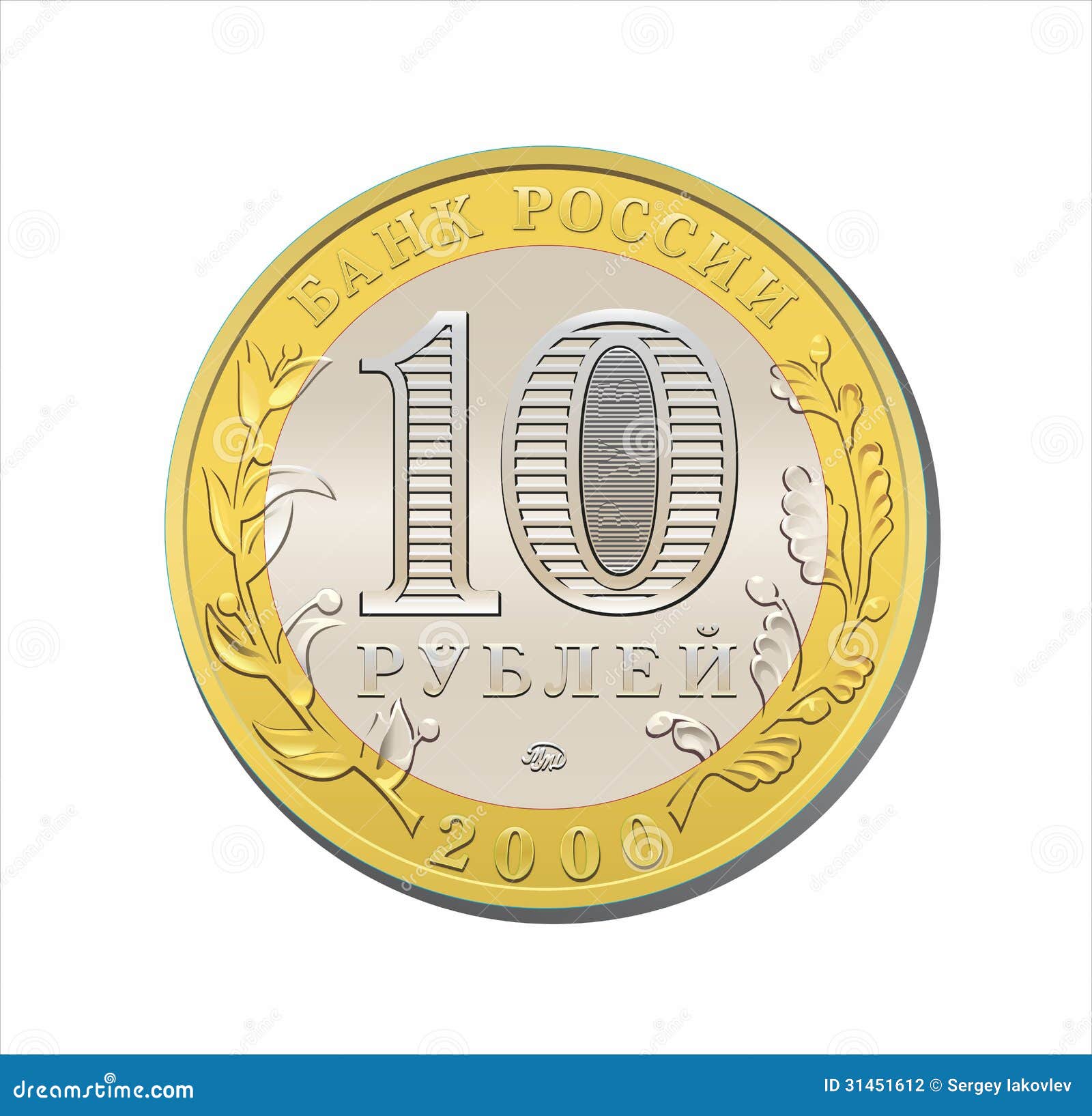
There are much older examples of latent image technology on coins, for example Russian 10 ruble circa year 2000 (look at the middle area of the '0' character): https://thumbs.dreamstime.com/z/coin-rubles-russian-commemor...
It looks like a nicer version of the 1 euro coin. I like that the coin isn't round but 12-sided, which will certainly help visually impaired people use the coin. I wonder if they will introduce a new 6-sided 50p coin.
the 50p and 20p coins already have polygonal shapes, following this principle: https://en.wikipedia.org/wiki/Curve_of_constant_width
Euro Coins are actually designed to be distiguishable by blind people, they have different edges and sizes. I once was at a blindness awareness workshop and it is just one of those things you usually don't think about it.
So are the British coins, and personally, I think they're a lot better -- the seven-sided 20p and 50p are much easier to 'feel' than the 20¢ and 50¢.
Just curious, has anyone any insight into what that "hidden high security feature is"?
I know there was some public talk a few years back about them using a combination of phosphorescent materials that absorbed and re-emitted specific frequencies of light. Not sure if that's what they ended up going with in the end.
I think it's some kind of radio signal transceiver, because I saw a video where they talk about detecting it at high speed from a small distance as coins pass through a system.
That seems expensive, and easy to find by cutting one apart. I suspect it's something about the metal composition, detected with spectroscopy.
It could be a passive radio device, maybe just a loop of ferromagnetic material that gives a particularly noticeable electromagnetic response when excited at a certain radiofrequency.
A 1 uCi radioactive source is exempt in the USA yet quite easily detectable.
I suspect sooner or later someone is going to try radioactive currency.
I'm so old that when I went to uni we did a neutron activation of silver experiment in physics class because the half life of whatever isotope of silver was about a minute, so after an hour of lab you could put the coin back in your pocket. I don't know if they'd let college kids play with either a solid silver quarter from a few decades ago (probably worth a couple bucks today) OR a low level neutron source today. I could see picking some very obscure isotope of some obscure metal and dissolving it into the metal of the coin and if your xray metal analysis machine that scrapyards have (a kilobuck ish cost in a hand held device) detects the proper amount of iridium or whatever or a simple neutron activation followed by gamma spectrometer shows the right isotope in there...
Aside from spontaneous emissions and activation reactions, there are some weird cross sections out there. Whatever's irresistable to thermal neutrons thats used in reactors, probably a cadmium alloy, could be the core of a coin, and then blasting boring thermal neutrons that are semi-transparent to fakes but the cadmium core coins would look pitch black from eating all the neutrons. Or play the opposite game and make the coins out of pure neutron-transparent zirconium and only the neutron transparent coins are legit.
Especially for an object designed for mass circulation, any secret information about such a coin would be found out through various destructive engineering techniques, and then the info would be in the wild anyway. Coins have been proven to work for the past millenia without any major changes and I don't see a space for innovation within it.
One could replace a coin by a small circuit that represents a physically unclonable function and a cryptographic certificate by the state, saying that this is a valid coin.
Make it look like a normal coin so people can trade by hand, but in any store interaction they could be checked.
I don't think it's that.
>iSIS™ (Integrated Secure Identification Systems) is a direct derivation of covert and forensic features used in banknotes, comprising a unique additive technology – already used not only in banknotes but also in other industries such as fuel and perfume. This, however, is the first time it has been applied to coinage.
>The additive is incorporated into coins using The Royal Mint’s aRMour® full-plate technology and can be authenticated via high-speed automated detection. As it forms part of the electroplating process, it is not a surface coating and will not wear off over time.
Maybe it can be detected by spectral analysis of light like they do to see what gasses the sun is made of?
http://web.archive.org/web/20131119210211/http://www.currenc...
Which also tallies with the stylistic ripples emanating from the centre of the coin in the promotional video, when the 'hidden feature' is mentioned.
not sure of the veracity of the following: http://www.gizmodo.co.uk/2014/03/what-is-the-new-1-coins-isi...
but it might give you some insights...
I was about to post the same link. They couldn't have thought of a worse name for it.
IIRC when copper-plated steel 1p and 2p coins were introduced (up until then they were bronze), they caused havoc with vending machines, whose manufacturers weren't forewarned.
Is it a curve of constant width like the 20p and 50p? If its sides are straight it cannot be.
Also from wiki:
> The new design is intended to make counterfeiting more difficult, via an undisclosed hidden security feature, called 'iSIS' (Integrated Secure Identification Systems). [1]
Huh.
The coin does appear to be a Reuleaux solid, which was a relief to me. British coins are some of the most common Reuleaux solids in the world.
The sides are not straight; they are curved outwards. The curve is defined by an arc of a circle whose center is the opposite corner on the coin.
It's a neat class of shapes! My dive into them came while researching the rotary Wankel engine (rotors are roughly Reuleaux triangles)
But with an even number of sides (12 in the new coin), can that work?
It can not. Reuleaux solids must have an odd number of vertices, or they indeed don't work. It would appear that I didn't have my brain fully on this morning.
To apply the principle of Reuleaux geometry to a regular shape with an even number of vertices, you'd make arcs tangent to the point in question, extending in a curve that increases the coin's diameter as the arc gets longer. The arc would come to an end in a point midway to the next point, where it would intersect with that point's arc. You'd have a star-shaped solid where all geometry external to the inscribed circle are tapered triangles. Kind of neat, but it would be tough to put through a vending machine.
No, it's twelve-sided, therefore cannot be.
> Is it a curve of constant width like the 20p and 50p? If its sides are straight it cannot be.
If I'm not mistaken it has to have an odd number of sides, but it has 12.
The sides looks like they might be very slightly curved in order to facilitate rolling. But it not being of constant width could still make life more difficult for vending machines etc.
What I don't get is why we need coins anymore? Can't they just make £1 pound note same to the £5 one? I am always annoyed when I got coins on me and I never pay attention to them. Why not make £1 worth more by making it a note? Why not move away from notes nowadays? Is there any specific reason to that?
Is there just too much metal sitting around that they thought that would be an ok use of it?
We used to have pound notes, and they're still technically in circulation in Scotland (although I've never seen one). According to wikipedia they were withdrawn because:
"Part of the reason for this change was that notes, on average, lasted only nine months in general circulation, while coins could last forty years or more. The government also believed that the growing vending industry would benefit from the introduction of a one pound coin."
Maybe the economics have changed with polymer notes. But the BoE inflation calculator tells me that the £1 notes withdrawn (in 1984 money) would be worth about £3 today. So maybe the fiver is next.
Then there's the lunatics that want to abolish physical money altogether...
> So maybe the fiver is next.
Something like that is already being discussed on the continent.
The memorial 5€ coin recently (which is legal tender) wasn’t just that, but it was also a test if a 5€ coin would be accepted, and doable.
We do also have memorial £5 coins here in the UK although I don't know if they are a test for anything, as there have been quite a few over the years. A common gift for people as they are quite large with nice designs on
https://en.wikipedia.org/wiki/Five_pounds_(British_coin)
There's been a British £5 coin since 1990 along the same lines (commemorative, but technically legal tender).
Switzerland has been using the 5CHF coin for a long while now, and as an end user, my only issue with it is its size and weight, originating from the fact that the coins ranging from .50 to 5CHF are defined to linearly scale in weight.
A quick look suggests that one reason is that coins last a lot longer than paper currency.
Notes need to be replaced much more often than coins, making them significantly more expensive. There are actually people arguing for doing the exact opposite of what you suggest in the US - replacing all $1 notes with $1 coins to save money.
> replacing all $1 notes with $1 coins to save money
yay. Australians didn't die when they introduced the $1 note and remove 1c and 2c coins - they seem to do just fine.
Because one GBP is worth so little now it's not economic to manufacture notes which don't last long. Other coins have also become smaller and lighter as they try to keep the issuance cost below the cost of the metal.
Pound Notes are way more expensive to produce than pound coins (given lifetime of note vs coin)
> Hidden high security feature – a high security feature is built into the coin to protect it from counterfeiting in the future.
I bet there's an RFID in each coin that uniquely identifies each one. If true, it'd also let them (or a thief!) identify the total value of the coins jingling in your pocket.
> Approximately one in thirty £1 coins in circulation is a counterfeit.
That seems incredibly high! Anyone have comparable stats for US dollar bills or 1 Euro coins?
> The legal tender status of the round £1 coin will be withdrawn on 15th October 2017. From this date shops will no longer accept these coins, but you will still be able to take them to your bank. We would encourage you to use your coins or return them to your bank before 15th October.
Six-months is a pretty short window for something like this.
What prevents a shop from accepting the coins after Oct 15th and then they take it to the bank?
Also, how does the 1/30 fraud number impact the returns of the current pound notes?
> What prevents a shop from accepting the coins after Oct 15th and then they take it to the bank?
The law, which only allows individuals to exchange the old coins after that date. Yes, shopkeepers could change their bills for old pounds and then deposit them in person to their current accounts at the local branch, but if I'm a shopkeeper then I probably have better things to do with my time.
How would the RF get past the metal casing?
Could be a ring on the outside between the two layers.
Many commenters in this thread are speculating on how counterfeiters are inserting the, apparently large volume of, counterfeit coins. Maybe one source is actually unrepudible /merchants/. In dispensing change to customers, market participants it would seem be less likely to scrutinize the coinage.
> Many commenters in this thread are speculating on how counterfeiters are inserting the, apparently large volume of, counterfeit coins
I've written elsewhere that I reckon other criminal channels might be in use.
If you offer your street level drug dealers a choice of 1,000 pounds in "real" money or 2,000 in "fake," (or a mixture of them both) that'd probably do the job.
I'm working off the assumption that there's the exact same problem with distributing drugs.
Like, what would you do with a kilo or two of cocaine just lying around? Get many smaller dealers to handle the problem for you instead and make their money along the way.
If you also have some fake money lying around, I can't see any reason why you wound't try to combine the two.
This doesn't work because "your street level drug dealers" pay you, not the other way around. They get paid by keeping a portion of the proceeds, or of the drugs.
It works if you need to employ petty criminals for jobs other than sales, though.
Isn't it 14 sides?
Hahahah. I guess technically it is, nice catch.
That coin is a beauty. It looks like it would be a denomination much higher than £1.
As someone who collected coins a child, I've been a tad disappointed by some of the newer designs coming out of the US Mint. Some are classy, others seem a bit goofy.
But this new pound coin is very tasteful. Well done, Royal Mint!
US Mint's seeming priority is cost cutting in metals rather than counterfeit coins, since our paper money is so simple I think counterfeiters are focused on that in the lower denominations..
UK notes are much more sophisticated even for the lower denominations, so probably there is more focus is on coins..
"The pound won’t be round for much longer" is a pretty awful tagline, I'm not sure they realised what this sounds like...
It's a play on words. Of course they realised.
I know that, but I'm not sure they realised it's a BAD play on words
Why is it bad?
edit: oh yeah I see it now
I read it with the meaning “the pound won’t be in use for long” at first which seemed rather incongruous. I was wondering whether there was something I had missed about happenings with respect to brexit (I’m Australian, never been to the UK). It took me a while to interpret it as “the shape of the pound is changing from a circle to a dodecahedron”.
Fortunately the domain name is rather less ambiguous and primed me for the weak pun. I'm ... glad(?) that the wordplay survived the marketeering sessions and civil service vetting.
BTW: dodecahedron is the solid object, dodecagon is the 12-sided polygon. D&D style dice as currency would be pretty awesome but it might make it difficult to resolve dilemmas using pocket change.
If it meant that, I'd expect it to be:
"The pound won’t be around for much longer"
so the original sentence is sort of a pun. Maybe "around" is a local use of English.
Just like “until” is commonly shortened “till”, “around” is commonly shortened as “round”.
I know this doesn't affect your point, but it's interesting: "till" is older than "until".
Thanks to the "you see what you expect to see" effect, it took me until someone pointed out the pun before I realized the word was "round" and not "around".
I don't expect we'll be changing to the Euro any time soon.
The new coin is still called "pound", so indeed the statement makes no sense.
The old pound coin was round. The new pound coin is 12-sided. Thus, the pound coin will still be around but it won't be round much longer.
It's a pun - the new coin is not round/circular, it's got shave edges.
It won't be round though, it'll be dodecahedral. It makes perfect sense, but has two possible meanings.
Yes he knows; he's saying that the pun is a bit shit because only one of the two meanings is actually true.
Canada has an 11-sided 1 dollar coin (the loonie) and a bimetallic 2 dollar coin (the toonie). This new £1 coin is basically a mash-up of the two.
Fair warning: People are going to put these things in pneumatic presses, hit them with sledge-hammers, etc. and then claim their brand new £1 coins are defective and "just fell apart". You should probably ignore these people. I'd be very surprised if the Royal Mint hadn't talked to the Canadian Mint and made sure they know how to make these things absolutely bomber.
The UK already has a bimetallic £2 coin. I don't see anything radically new here.
The UK has been using bimetallic coins (£2 coin) since 1998.
The bimetallic Toonie from Canada came out in 1996, but Italy beat everyone with their 500 Lire in 1982
Is counterfeiting coins very lucrative?
From my other comment above:
We know 1 in 30 £1 coins are counterfeit.
Take the amount of £1 coins in circulation. Sum the value. Divide by 30. Equals the market in counterfeit coins.
From http://www.royalmint.com/discover/uk-coins/circulation-coin-... £1 are 1,671.328 £m / 30 = 55.71 £m
The market in counterfeit coins is therefore over 55 million pounds. This is, however the cumulative, total value of the market and not per year.
I was curious how much the penny costs to mint as to put your number into context. Only to find the Royal Mint won't release per coin detail since they mint other coins not for the UK it's classed as a commercial secret. Which means for all the effort put into our currency we might actually be turning a profit on the capability.
ref: https://www.whatdotheyknow.com/request/costs_per_unit_of_min...
That doesn't really answer the question though. Is all the effort to create a fake 1 GBP coin worth it? Unless you have access to the right equipment, I can't imagine it is based on the effort to make each coin.
If you can make 8x1 GBP coins a hour, then you clear a cool 64 GBP each day. Better than nothing (and tax free!), but there are a lot of jobs that pay better than that.
Well yeah, you'd buy a stamping press and mint 10k/day.
I fear HN underestimates the amount of work people will do to avoid getting a boring (legal) job.
Yes. That's why the government doesn't want amateurs cutting in on their business.~
Some people--though not many--survive that can remember when newly-minted coins still had silver in them. Then governments all over the world got greedy and debased their coinage, upping the seigniorage to obscene levels to turn their mints into profit centers instead of cost centers.
So whenever I see governments complaining about counterfeit currency, I feel that they are hoist on their own petard. They learned it by watching you. I am honestly impressed that a system run almost entirely on public confidence can get away with so much chronic, endemic chicanery.
I was really hoping that India's little experiment in destroying its economy by removing larger-denomination cash would have resulted in a tiny bit of blood in the streets, pour encourager les autres. Without pushback, the trend will continue. So the world really, really needs a currency system that no one can effectively manipulate. Bitcoin gave me hope, but so far no cryptocurrency is anywhere near ready for universal adoption.
Hard to know, but what I do know is it tends to be done in bulk. You need someone with a job that handles a lot of cash e.g. a sandwich shop. Then they are given 1,000 coins to mix in with the float.
What I don't know is the going rate for 1,000 fakes.
Bulk shipments of as many as 500,000 have been intercepted in the past, although that was further up the distribution chain than someone trying to actually pass them off in retail: http://www.bbc.co.uk/news/uk-england-tyne-33650317
Lucrative for sure as one can tell from the number of fake in circulation. Very lucrative maybe not, I doubt one can become a billionaire unless maybe if the manufacturer if he was the only one making the fakes.
Looks a bit like the failed US Susan B Anthony $1 coin. https://en.numista.com/catalogue/photos/etats-unis/g1288.jpg

That failed because people don't like to carry coins, they prefer bills.
In the UK they don't have a 1 pound bill, forcing people to only use coins.
Coins are cheaper for the government since they last much longer.
So if you were a government, which would you pick: What your people want, or what's cheaper for you?
Note that the people often may directly want one thing, but also want indirectly what is cheaper for government, since they also usually don't want to pay more taxes, and do want government to do things.ib other domains that are constrained if it spends more than necessary in the domain under immediate consideration.
Government officials really have no other reason to care about "cheaper for government", since it's not their money anyway.
I wasn't implying that because it failed, that the £1 Coin would fail. I mentioned "failed" so that non-US readers would know it's not popular.
Why not make the new £1 coin Euro compatible? Despite Brexit and all, it would make so much sense to share the same dimensions for the pound and the Euro.
Old pound: diameter 22.5 mm, thickness 3.15 mm.
New pound: diameter 22.63 - 23.43mm [1], thickness 2.8 mm.
Euro: diameter 23.25 mm, thickness 2.33 mm.
So close and yet so different! Why??!?
Edit: Okay, I'm not sure why I saw "so much sense" in having the pound and the Euro the same size. I go to the UK often and hate having different coin sizes in my pockets, but obviously the pound and the Euro aren't the same value, so there's no real reason they should be of the same size...
[1] Since the new pound isn't round but dodecagonal, the diameter isn't constant; the smallest value is the diameter of the incircle and the other value, the diameter of the circumcircle.
Because then vending machines would accept Euro coins as well as pound coins and you would be able to obtain goods for 60%(?) of the asking price??
Modern vending machines are not so easily fooled.
But, the old UK 5 pence and German 1 mark coins had quite similar dimensions, and were made from the same material, so vending machines at that time were fooled by the 5p, which was worth much less than the mark. I understand that truckloads of coins were sent back to Britain as a result.
False.
The vending machine use setup of electromagnet to recognize the coin, not their size. [1]
[1] http://someinterestingfacts.net/how-do-vending-machines-work...
> 60%(?) of the asking price??
*86%
Erm, I don't think vending machine owners would like that. What would be the advantage anyway? £1 isn't €1.
Not sure how it would make sense? They're worth different amounts(1), surely it would open up an easy loophole to make money if they were the same size?
(1) or are sometimes, depending on how much of a mess Brexit ends up being!
Blind people need to be able to tell the difference.
> Why not make the new £1 coin Euro compatible?
Are you mad
Vending machines have to detect the difference.
So is the 'hidden high security feature' NFC? Something similar?
How much lighter is the new coin? I have to say, the old £1 coin is my favorite I have ever seen in the world. It had a great heft/weight/size to it.
After two pints it won't be distinguishable from € coin, many people have both in pockets, it's already hard for < 1 €/£ :(
Two pints of what? Tequila? What in God's name do you have on tap over there, that a mere two pints gets you so blind you can't tell coins apart?
Poor sight from programming probably.
That looks neat. Never seen a coin before that changes based on how you look at it. I kinda want one, even though I'm in the US.
I'll post you one if you like.
How is this claim substantiated ? I fail to see any difference from the coins that are widely available around the world.
Made to look like the 1Euro coin to ease the transition to Euro currency in the future, I'm sure.
> Approximately one in thirty £1 coins in circulation is a counterfeit.
That's staggering.
Will they have to replace it as soon as the Queen dies? Seems wasteful.
It's really pretty. I wish euros would be designed that well.
I'll be glad to see the back of the old Thatcher.
At first I thought this was some Euro-related prank.
i like how they on longer mention the name of the technology inside it which when it was first announced was to be called "ISIS"
I don't like it.

I like the optimism of keeping symbols of Ireland and Scotland on the coin. Of course, those could become ironic in the not-to-distant. The leek seems safe, though.
Is my business ready? Why wouldn't it?
Many reasons.
- You have vending machines which only take the old coins - You haven't sat down with your retail employees to make certain they can identify the security features of the new coins - You don't have sorting machines which can handle the new coins so that you can have an accurate inventory of your coinage - You don't have a policy in place for removing the old coins from circulation
Those are just off the top of my head.
> a high security feature is built into the coin to protect it from counterfeiting in the future.
Reminds me of the Indian Rupee 2000 'gps feature'
Designed in California. /s
Coins?
How much longer will we be using coins for?
Hopefully a long time, unless you are happy with your spending being mediated and controlled by a third party.
I wonder how many people are going to try to push out the middle the way they do to the toonie.
It's interesting that they chose .com versus .co.uk for their domain.
I see by the design that they're already planning for Br-re-entry.
dot com? Why?
The Royal Mint is a state-owned enterprise and not a government department. For a start, they produce currency for other countries directly, which is not something the government would want to do.
This coin is being produced for the UK.
Yes, but they also produced coins and notes for 39 other countries in 2015-16: http://www.royalmint.com/~/media/Files/AnnualReports/ar_2015...
The website is not for the Royal Mint, which of course needs a dot com address, this website is for the new UK pound coin. Why does the new UK pound coin, with a UK audience, not use a UK domain?
Oh, oops, hadn’t realised what you meant. Presumably seeing as it’s not a company though a .info would be more appropriate though?
.info would also be non-uk.
There is the .uk domain in the uk, so www.newpoundcoin.uk would work.
They probably should have continued using the letters. The more things called ISIS the less important those letters are to any one thing, including the terrorist org.
We detached this subthread from https://news.ycombinator.com/item?id=13967100 and marked it off-topic.
Yeah, that seems reasonable. This got way out of control.
The "terrorist org" never used those letters in the first place. The acronym in Arabic is "Daesh". ISIS is an English-language acronym formed from a (bad[1]) translation of the group's name. Think about it: why would a decidedly muslim organization name itself in a foreign language after a forgotten infidel goddess?
[1] Most western journalists rapidly moved off onto ISIL, which is a better translation (the name never referred to Syria the nation, but the geographical area better captured by "Levant"). Really only the right-wing sources continue to use "ISIS", presumably because it sounds more like a Bond villain's outfit.
Or in the case of the BBC, they use "The Islamic State group", or "the so-called Islamic State", as an effort of denying them any legitimacy as an actual state.
If we want to make them angry we should be calling them daesh.
https://www.bostonglobe.com/opinion/2014/10/09/words-matter-...
Calling them a nasty name? Do you really think that's a mature and effective strategy in this situation?
Of course it shouldn't be the only thing we do, far from it, but as Sun Tzu said:
"If your opponent is of choleric temper, irritate him"
How many ISIS members do you think will read these comments?
IMHO, it is just childish, and to me, devalues someone's comments when they resort to insults. It's as if you were talking g about Trump or Clinton but referring to them as "idiot" rather than by name. It's simply unnecessary and shows clouded, emotional, judgement.
It is normal to translate acronyms. USA is EEUU in Spanish or EUA in Portuguese, for example.
I'm not contradicting you, just clarifying.
The Moro Islamic Liberation Front (MILF) and offshoot Bangsamoro Islamic Freedom Fighters (BIFF) are additional examples.
>right-wing sources ISIS on youtube: 5.2 million ISIL on youtube: 0.6 million
> ISIS is an English-language acronym formed from a (bad[1]) translation of the group's name.
Former name; they dropped the geographical modifier years ago, and it's just (translated) “the Islamic State” now.
This actually happened a lot.
https://en.wikipedia.org/wiki/Name_changes_due_to_the_Islami...
The name of the spy agency in the cartoon Archer, the International Secret Intelligence Service, also fell victim to this.
They handled that extremely well though - I can't recall the exact timing but ISIS was seemingly always on the verge of crumbling or being bought so they just sort of let it happen and the group made a seamless (if not painless) transition into ineffective drug dealers and bungling private investigators ("The Figgis Agency")
Anyone stumbling across this comment and wondering WTF we're talking about - definitely check out Archer, it's pretty great
Sure. NSA has plenty of resources to process and store all of them.
The website for the most secure coin in the world only gets a B rating from ssllabs: https://www.ssllabs.com/ssltest/analyze.html?d=www.thenewpou...
It's ok, the coin will only connect to websites over an ethernet connection, and will only load a particular site if it can validate the full certificate chain.
A sufficiently crafted coin would be an interesting attack vector against a vending machine, for example. I'm interested to see how counterfeiters would be able to use a passive/active security device within the coin for potential gain.
It looks like the only problem is they've missed off the GoDaddy intermediate certificate (which presumably most users will have cached from other sites). Funny how all the more complicated things like ciphers are considered well-configured but something simple like this is missed, but I guess it's an easy mistake to make (if you're not checking ssllabs) depending on how the certificates have been supplied by the vendor.
Our government has said yesterday that encryption is bad and helps terrorists. So why should they use it for websites?
A friend failed opening it at all (while I can open it in FF51) and clicking it directly from discord gave tons of SSL issues (screenshotted here: https://s.ave.zone/556.png ). Yeaah, pretty secure, I guess.
I just checked bitcoin.org as a comparision (A+): https://www.ssllabs.com/ssltest/analyze.html?d=bitcoin.org
If only bitcoin exchanges were actually secure...
Big surprise the downloads-provided primarily online currency has better online security than the single page landing site of a primarily physical currency.

Containing 1 pound of silver in it? No, so it's fake.
From my understanding, all money is created as debt. Counterfeits would be an exception. What is the impact of this?
If you do it on a large enough scale you'd get inflation as you have more money supply for the same amount of goods so that the money loses value. This would then lead the central bank to raise rates to counteract inflation. This in turn is bad for the economy (more expensive to take out a loan leads to less investment) so you could get a recession. I doubt that you'd be able to inject enough counterfeit money for that, though.
However, most central banks do that on a much larger scale at the moment to get that inflation and it doesn't really work (the Bank of England has stopped that though).
This sounds like one of those things that's not a problem but becomes unfixable when it is a problem. Like you say it's the scale required.
Only 3% of "money" is cash.
What is the difference between counterfeit and "original" coins? Unless they have 1 pound of silver in them they're all fake money.
I think everybody should just accept and use counterfeit coins, if they look like the coins issued by the central bank.