Life in a Studio Apartment with My Wife and Two Sons
gregkroleski.comIt's interesting that most reactions here are either a)"this is nothing compared to country x" or b)this is an example of extremely negative hardship.
I thought the direct lessons he laid out were excellent, about being ruthlessly honest on what you truly need to be happy, and the freedom that you get from the resulting wealth when combining that with a SF tech salary.
It is a reasoning from first principles on living conditions that not enough people do imo. I think we tend to subconsciously accept the default of more space/stuff=better without making a direct choice on what is the specific right amount for ourselves. Coming to a definition of what "enough" is for ourselves keeps the goalposts from moving as income rises.
Also the point about gaining empathy for the poor based on experiencing a lower margin for error and high cost when things went wrong in this lifestyle was another good observation.
For anyone wondering how this is possible: by violating fire code. He says he, then he and his wife, then one or both of their children were sleeping in the closet. I'm not familiar with the language of the California Building Code, but in the 2014 verison, volume 1, chapter 10 gets into the limits. The closet is not a "sleeping unit": it doesn't meet the 120 sqft minimum, doesn't have a wide enough door, and doesn't have two methods of egress. There's probably more I didn't find.
I know this seems like tedious legal nitpicking and the main apartment room is right there and "everybody does it", but nearly every line of fire and building code exists because of a preventable tragedy. Even if it's not against the lease it's unsafe. (And he built a barely-braced lofted bed in an earthquake zone!?)
The author happily compounded the rent they saved every month but failed to compound the increased risks they took every night.
Are fire codes really enforced in this way? Obviously the closet wasn't built to sleep in. It's one thing to force building owners and landlords to build and maintain rooms a certain way, but using a law to force people not to sleep in a closet seems counterproductive.
Oh definitely. Especially for rentals.
To be a bedroom it has to have a window, a certain size (which varies), and some places even require a closet in the room.
If they find a bed in a room like that they normally start with a warning, then a visit from child protection services, or even condemning the entire house.
Obviously if they don't inspect they'll never know, but rentals, and people with contact with authority (CPS, Police, etc) could expect an inspection.
If you own, I'm not sure if the fire department can legally enter a home for an inspection without a warrant, but for a rental I believe they can, and do!
I always wonder why child "protection" services feel the need to harrass middle class families running a little low, when they could go to ghetto and have an unlimited supply of totally ruined families to have fun with. Multi-generation alchohol and drug abuse and all that stuff available in numbers.
Stop harrassing us until you solved them. Bye.
What nonsense did I just read? Child protection services are mostly operating in the "ghetto". They go where the complaints are...
Are you really saying people with some money should be able to bend the law but not poor people?
Ghetto folks can fight back. Middle class will not.
How much - in actual numbers - is the increased risk?
How does it compare to the risks of alternative courses of action such as moving to a neighborhood with a higher crime rate, tolerating an increased commute (hours of life directly lost, increased risk of road accidents, increased chronic stress with accompanying health risks) or moving to a different city before having a replacement job lined up?
At this picture you can see closet door was removed, there is just curtain.
http://www.gregkroleski.com/wp-content/uploads/2015/10/studi...
Unfortunate reality of housing shortage in SF. Most of these things people turn a blind eye towards such as an 89 year old lady paying $700 to sleep in a closet.
To be a bed room it must have a window - which also counts as one of the means of egress.
Not just any window, it has to meet size and location requirements too.
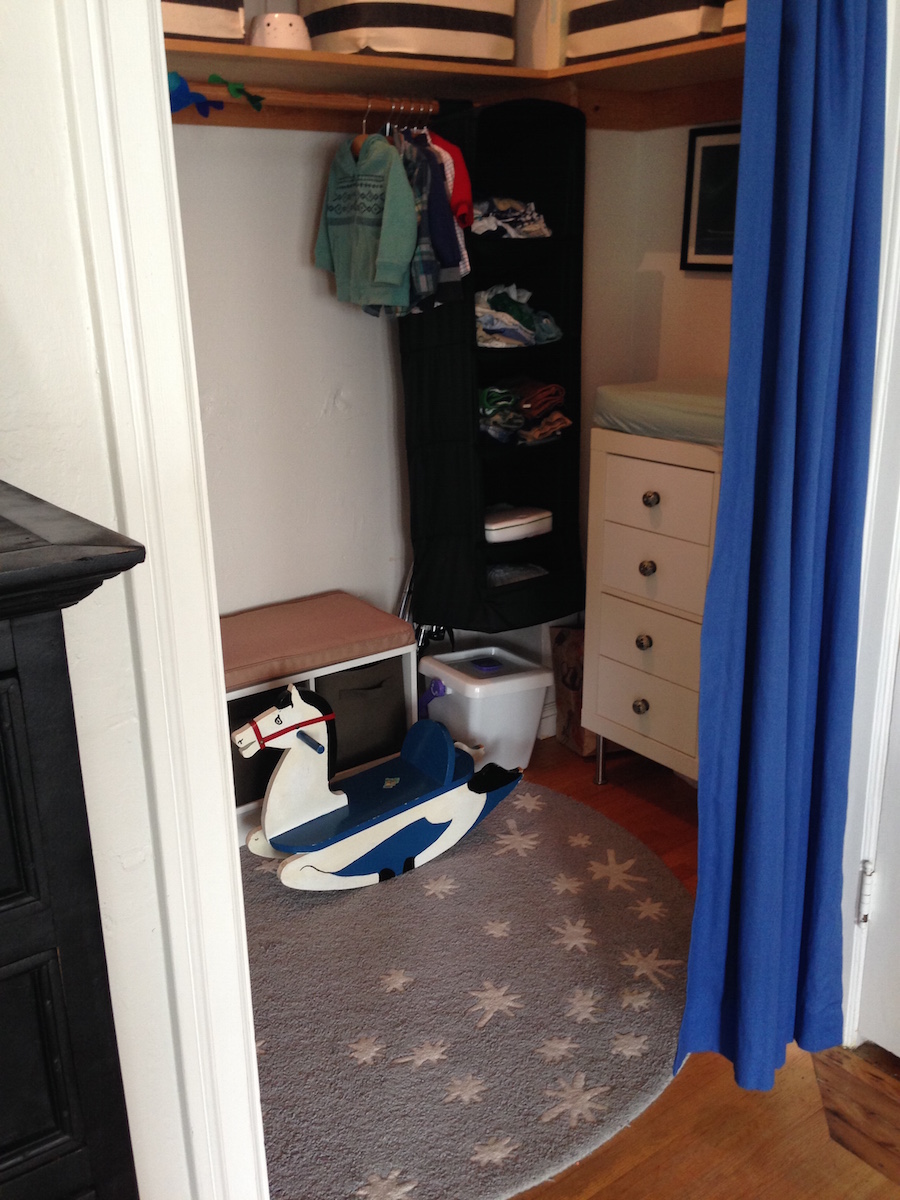
The more I read such articles, the more I think you'd have to be nuts to choose to live in San Francisco.
And yet, clearly, plenty of people do choose to live in San Francisco.
As someone who does not want to live there either, I can see why people move there.
It's simply where the most opportunities are. The idea is to move there and live uncomfortably until you network your way to an awesome, high paying job.
Alternatively, the tech companies there usually do more interesting stuff than in other area. Here in NYC most are related to advertising or media—stuff not easy to get exited about. San Francisco has its large share of silly ideas for companies, but it also has many that do interesting stuff.
It is absolutely not where the most opportunities are. It is the place where the most startups are, which means the top of the opportunity pile eclipses other locations in terms of earning potential and networking. But quantitatively, the most programming jobs per capita are in Washington, Colorado, and Utah.
The more interesting companies are in the bay area I find personally. In Seattle you have amazon, which has a horrible reputation, and Microsoft, which has another kind of bad reputation, but is better than amazon. In the SFBA, you have facebook, apple, google, and many many others.
Also I don't find jobs / people in the state the most accurate indicator. To someone living in LA, moving to SF might as well be moving to Utah. The open positions / qualified people is the far more useful metric, and SF will still beat all of them on that.
That's actually wrong. Facebook, Twitter, Apple and Google all have some of their largest engineering satellites in Seattle.
True. But sometimes being in a satellite office just isn't the same as being at HQ.
And here on the internet.
Source for those #s? Curious
Absolutely this, if I didn't have my business where I am I'd probably end up moving to London, it's the last place in the world I'd want to live but the salary gap even adjusting for cost of living/commuting is huge.
I could easily live somewhere cheap and commute for a few years then build up enough to move somewhere nicer.
What irritates me the most is there is absolutely no physical reason why London has to be the place for start ups in the UK and a whole bunch of reasons why it's not a good place.
Where I live now rent and house prices are incredibly cheap (even compared to most parts of the UK), the city is rolling out excellent fibre (I have 150Mbps at home and 100Mbps at work) and transport links are excellent, it would be a good place to start a software company (I am doing) but hiring is going to be hard since it will require relocation to get the talent needed (or working entirely remote, something I'm considering).
You don't have to live in San Francisco to work there. There are plenty of people who live on the other side of the bay and commute by train. This gives you a much more affordable place to live than San Francisco.
That has its own set of trade-offs. Prepare for at least an hour commute each way by BART if you work in SOMA, for instance.
Or 10-20 minutes if you live in oakland and your company is on market st. It's faster to live in oakland and get to work than live in the western side of sf in that case.
Huh? I literally live at the end of the line and my commute is 30 minutes...
Google maps thinks it's 36 minutes from Richmond station to Embarcadero station, and all the other combinations are slower. Where are you travelling between?
I used to commute via BART from Pittsburgh in the East Bay and it was easily an hour on BART alone.
You're not at the end of the line in the East Bay, then. The BART ride alone would be at least 40 minutes, and that's if there wasn't some kind of delay.
Del Norte (I guess its 2nd to last) to Embarcadero is 31 minutes.
Many professionals work long hours and thus want short commutes.
Well there are options and nothing is perfect. If people want to live in an area with high demand and they are not willing to compromise, they should quit their complaining and pay the high rental costs.
Plenty of places outside of SF are doing interesting things. Boston has plenty, as does Austin.
I live in Austin and have seen many of my coworkers and friends leave for the bay area. Besides interesting work I think there are more opportunities for career growth.
I am in security (but it's similar in many specialties) and while there are very good companies in Austin if I want to to rise become a security architect or director of information security I have to go to the tech headquarters. Companies like Google and facebook may have regional offices but the core innovative security/ai/pl work and executive decision making is being done in the home campuses.
That being said, I would never leave Austin for the SF bay unless it involved a $350k+ salary.
For security you could also look at the DC area, especially if you're an AMCIT who wouldn't mind undergoing an SSBI. The downside is that most of those jobs are playing whack-a-mole with breaches, but for high-paying, high-profile forensics, response and research positions, federal contractors are hard to beat.
Yes, but San Franciso has the most. Plenty of other cities have theaters, ballet, and opera—but people move to New York.
Austin is more hype than substance. And it has gotten really expensive as well.
San Diego, for example, stomps all over Austin in terms of software jobs, and Austin's hardware scene is laughable.
What are the SD companies?
Go down to Sorrento Valley. Take a rock, and throw it at a building. Austin doesn't have the defense and biotech sectors that San Diego has.
Big ones: BAE, Northrop Grumman, and General Dynamics. (Previously I would have listed Qualcomm ...)
A zillion biotech startups: I drive past at least a dozen near here every day: https://www.google.com/maps/@32.9104712,-117.2304182,18.57z
Rockstar San Diego seems to be hiring as far as I can tell.
In addition, a lot of manufacturing companies up in the San Marcos/Vista area all need automation programmers.
If you're not finding SD companies with software jobs, I'm very surprised.
I, too, would be interested to hear the response.
"And yet, clearly, plenty of people do choose to live in San Francisco."
Well, he didn't choose to live in San Francisco for long. By the end of his four years there, he decamped to Seattle, which seems to be the natural progression these days: live in SF and close a few deals in a tiny space, then move to Seattle into a slightly larger place and be amazed at all of the room you have.
It's a weird situation. There are so many tech companies out there and I'd like to work for some of them but I don't think the sacrifice I'll take with my standard of living will be worth it.
Why aren't SF tech companies hiring more remote workers? They could pay people who work remotely a lot less, save a lot on office space etc. Tech companies are the ones that should be able to pull that off.
Even if I lived in SF I'd be reluctant to commute an hour to work if I could just as well work from home.
Remote work is an excellent paradigm when you get an assignment, go work on it for a while in total independence/isolation, and then turn it in, i.e. when developer-hours are perfectly commoditized. Not every software project is like this at every part of its lifecycle.
The same pitfalls that apply to outsourcing to low-cost-of-living countries should apply to hiring American remote workers: communication overhead, lack of context and understanding of what the product should be, etc. If a projects works well with remote workers in developed countries, consider that it's probably irrational and a borderline violation of fiduciary duty to pay extra for them rather than equally skilled workers in India/China/Eastern Europe.
I wouldn't forget that communication is deeply entwined with regional culture. I would argue that it is much easier to hire a remote worker from the same country then it is from a third world country (which are frequently known for remote work). Everything from time zones, work hours (say western European countries accustomed to ~5-7 actual work hours /day), laws, religion, etc.
Yes, one shouldn't confuse outsourcing and remote work: with remote work I mean people working in the same tools (version control, issue tracking etc) in the same time zone (+/- 1 hour), and being always available on chat/voice/video and occasional physical meetings.
Most people who work in a multi storey office communicate the same way with the people on a different storey as they would with people in a different city.
I work in an office, and everyone on my team is remote, including my boss. I might as well be working from home most of the time! But I like going into the office :)
Everyone keeps asking this question. The answer: they are hiring remote workers. But my question: where is the evidence that tech companies are not able to be profitable with their high payroll costs?
> But my question: where is the evidence that tech companies are not able to be profitable with their high payroll costs?
You could look at the growing number of layoffs at post-seed stage companies[1].
Or you could look at startups that voluntarily publish financial information. Take, for example, this one[2], which, as of June, was spending $525,000/month on payroll (equating to an all-in cost of $146,000/year per employee) when it had less than $300,000 of monthly bookings revenue.
A lot (perhaps the majority) of venture-backed Bay Area startups are entirely dependent on investor money to sustain their workforces at their current sizes. Even some of the tech companies in the area that have gone public aren't profitable. FireEye and Marketo are two that come to mind.
Everybody has been trading profitability for growth, and that's a game most will eventually lose.
He said tech companies, not startups.
For tech companies, it doesn't really matter. They have unlimited money (relative to the cost of an employee). For startups, it does.
1. Since when did "tech company" come to mean "non-startup"? Lots of startups are by definition technology companies.
2. Many people in the Bay Area are employed by angel and venture-backed startups, so how does it make sense to ignore them? If and when there's a significant downturn that results in the unsustainable startup herd being culled, not all startup employees are going to find six-figure replacement jobs at companies like Google and Facebook. People who lived through the first .com bust know how fast the job market can dry up for a large subset of employees.
3. It is absolutely not true that the Bay Area's unprofitable publicly-traded tech companies have "unlimited money" relative to anything. Review their SEC filings and you can determine how much money they have down to the dollar. You should not be surprised when those that struggle to reach profitability sooner or later take cost-cutting action, which may include layoffs and adjustments to employee compensation. Twitter just did this. Even profitable tech companies, like IBM and HP, have laid off significant numbers of employees. Bottom line: when push comes to shove and the shit hits the fan, companies tend to use large knives, not scalpels.
Of course, but there is no evidence that operating in Tulsa would prevent that.
I worked in Colorado after the .com crash, the tech industry was devastated there, Bay Area companies that had opened offices in the area reconsolidated back in the Bay Area, rather than take advantage of lower payroll costs in Denver. It sounds good on paper to move out of the area, in practice it hadn't happened yet.
The author is pretty clear.
> And don’t forget about the importance of compound interest. I will remind you that $2k per month saved on rent for one year is $24k. Invested for 50 years averaging 6% interest comes to roughly $450k. Freedom. HTFU.
$450K towards retirement for one year of living in cramped, expensive SF sounds like it could be a reasonable payoff for many people.
Eh I moved my family (stay at home wife and two kids). If you are willing to live outside of the trendy areas you can find OK places. Unfortunately single family homes (like we inhabit now) are not rent-controlled. We're currently trying to decide between moving to a multi-unit building with a 3-bedroom place or staying and putting up with the ridiculous rent. The multi-unit building would still be high rent but at least it would be locked in forever.
It definitely costs my startup employer (and myself), especially factoring in preschool. It also steals a job and "juice" from the local economy - we'd have already hired a nanny if rents were merely 2x a normal city, and we'd happily spend more buying from local craftspeople. The money goes into my landlord's retirement account basically doing nothing.
> The money goes into my landlord's retirement account basically doing nothing.
Is your landlord's retirement account a sack under his bed? If not, that money is being invested in publicly traded companies or in bonds to fund public works. It is creating jobs, just not in your neighborhood.
Look at the founders of the author's employer: http://s831.us/1lcWYYh.
They can afford to live anywhere they want and start their company near their homes.
There are Orthodox Jewish families in Israel which have very few rooms for very large families. (Among the ultra-Orthodox in Israel the fertility rate is 10 children per family). Often these families have very little income which includes state support for their large families, and esp in large cities such as Jerusalem can little afford larger accommodations.
In SF, NYC (where I live) and other US localities, the issue is not family income but rather is the use of politics to limit zoning density and thus artificially creating housing scarcity.
Thus, renters pay more than they otherwise would with an efficient market and billionaire land-owners have much greater wealth than they would in an efficient market.
In NYC, we had a somewhat similar situation with Taxis. Medallions were artificially limited to 13,000 in this city of 8 million where many people do not own cars and use mass transit and taxis. As a result of this 13,000 limit, taxi medallions had a market value of $1.2 million.
Then thankfully, Uber came along, thus creating a larger supply of hail-able taxis and the taxis medallions now have a market value of $700,000 or so and some taxis are no longer in use.
In NYC, our current mayor has two properties that he rents out for a total of $120,000 per year. He is able to get this high rent because of city laws that limit zoning density. Thus, he has every incentive to want to artificially limit zoning densities.
Thus, while many liberals fret over income-inequality, they still support zoning regulations in cities such as SF and NYC that amount to a transfer of wealth from lower income individuals to wealthy individuals.
> Among the ultra-Orthodox in Israel the fertility rate is 10 children per family
There are not typically 10 children at once in the home BTW. The older children will be away at school, around 14 for boys, 17 for girls.
What you do is have 3 bedrooms: parents, boys, and girls. Depending on the boy/girl ratio you can have up to 2 triple-bunk-beds in a room.
Doing that you can easily sleep 12 children in the house (if you had to).
There is no living room, instead there is a dining room with a huge table (large enough to seat everyone at once) that doubles as a multi-purpose room for homework, and other activities.
Children are encouraged to play outside (there's hardly room inside).
For possessions there is not usually a need to store much since you'll pass things on to other people, your children, relatives, friends, neighbors, etc. and they with you, so most items are in active use. (For example, once the kids are older and you don't need a triple-bunk-bed you pass it on to someone else.)
This also means you don't need to spend as much as you might expect on stuff. If you don't have a lot of money you can go your entire life without once buying new clothes, or other gear for the kids.
This was pretty normal 50 years ago in the UK.
Growing up in communist Russia, 400sq. feet apartment would be the luxury option for 2 or 3 families with multiple children each. No joke, my parents lived with their siblings and parents (and sometimes grandparents) in the same apartment even after everyone had children of their own. Somehow we still managed to occasionally have 20 more people over for birthday celebrations and cook all the accompanying excessive amounts of food :)
Striking, but hardly common.
You should clarify that in Russia they operate in "living space" sq.meters, meaning that 400 sqft will not include kitchen, corridors, bathroom, etc. Just the bedrooms and the living room.
Secondly, you are over-generalizing. While a part of population did in fact live in cramped conditions (or even in shared condos, whereby 2+ families shared a single apartment), more than enough people lived in a very decently spaced apartments, with living space ranging between 28 sqm to 40-50 sqm. So "400 sqft" apartments were nowhere close to being "luxury".
OTOH, a bathroom with a window - now that was indeed a true luxury (because how the vast majority of buildings where designed).
Good point - size-wise, that's subpar for the number of people. My grandparents received a 95 sq.m. apartment for them and my aunt (teenager at the time) across from a beautiful park in Moscow, now that was considered super lucky.
Two "lucky" strikes in the same family in Russia? It seems there might be more than just luck to that.
Military families had better luck than others. Only politicians did better in USSR, but that's long gone.
Author here. As we lived in that apartment I constantly reminded myself that compared to all families from around the world and across time, we had a luxurious life. Clean water, climate control, safety, food 3 times a day, etc.
We definitely had company over, often gatherings of 10-12 people and one time we had 5 overnight guests (that was a bit crazy but fun).
Very helpful read! Even for someone who doesn't have a lack of space, all the lessons are still relevant and definitely made me think about my living spaces.
Also, in the sentence about the coffee table (seen two photos up), shouldn't that be "second photo from the top"? Unless I misunderstood and tried to find a coffee table in the photo with the surfboards/piano
Will check, thanks. I shuffled things some during editing and might have missed that.
Edit: it was in the picture with the surfboards. It is the blue trunk in the lower left. Coffee table/trunk/changing table
Thanks for replying! I see now I was looking at the coffee table in the old "bachelor setup"
and compared to what you could have had if you gave up on living in an absurdly expensive city?
33sq.m. was the norm for two adults. When you had a kid, you submitted paperwork for extra 10-15 sq.m., but usually got moved to a new development, not in a desirable area.
My parents went through it in 80s. By then this mostly worked for military/otherwise connected families, but has broken down for the rest of the country with wait list numbering in years. In theory you gave up smaller apartment for a slightly larger as need arose. In practice, most families did not want to move far and construction pace did not keep up for economic reasons.
And yet we get hordes of collectivists that infest HN that say we should try it again...."but it'll be different this time"
The question is why do we have the most talented people in a certain industry having to live in confined spaces while paying through the roof for it.
Not even Hollywood is like that. People may stay in trailers for some time but that's it
As personally having to live in a tiny place (not in SF though) it is not something I want to do for an extended period of time, even though the advantages like 'city living' are good
> The question is why do we have the most talented people in a certain industry having to live in confined spaces while paying through the roof for it.
Because it's their choice.
Right now the housing market in San Fran is redic. However, there are other major tech areas that don't nearly have the same problems.
It's obviously their choice. OP didn't mean anyone is forced against their will. The question is: why does the vast majority of new tech continue to
A) establish themselves in such an uncomfortable location
B) not embrace distributed teams
It's a terrible cycle at this point.
> why does the vast majority of new tech continue to > A) establish themselves in such an uncomfortable location > B) not embrace distributed teams
Hiring networks. You want to hire people based on referrals and not experience or qualifications, you need to hire through your extended friend network, which if you're raised in the SF startup scene, is all in SF.
It's also a state of affairs that ends up being unintentionally racist, since probably most of your friends look like you, and probably most of their friends that they'll refer to you when you're hiring look like them
While I see why you think "Because it's their choice." isn't very helpful, I would say there some truth to it.
People in technology seem far more willing to accept to accept "worse" conditions and just generally less aware of technology as an competitive industry compared to other people in their respective industries.
<<The question is why do we have the most talented people in a certain industry having to live in confined spaces while paying through the roof for it.>>
I think you making a pretty broad leap here... This is entirely his choice, and nobody is "making" them live in a confined space - most of my friends that are starting a family leave San Francisco and move to the suburbs to get more space at a lower cost (e.g., San Mateo) and take BART to get to their job in San Francisco.
> People may stay in trailers for some time but that's it
Isn't tech approach the same? You wait for your big break and then move out.
I really like the insight about density. I temporarily changed my living situation from a 4 bedroom house where my kids had moved out, to a 2 br apartment and I recognized the density issue but had not conceptualized it so clearly as the author did.
One of my favorite parts about living in constraints is it forces me to build new mental models.
Thanks for writing your experiences down so precise and readable. While reading, I had to think multiple times abouts the movie The Five Constraints[0], where a profound link is made between restrictions and a boost in creativity and new thoughts.
This is exactly the approach we had to adopt when we travelled around Europe in a camper (a sweet 1970s converted Ford Transit). I loved having to be creative about finding space and making sure every thing we took with us had multiple functions if possible.
I wish I could say we have kept this up now we are back living in the "real world" but some of the spirit has rubbed off and we're definitely much better at becoming less attached to particular belongings.
I strongly believe that most belongings end up becoming burdens if you don't establish a process of questioning their utility on a somewhat regular basis.
Thanks for the article! Really thought-provoking.
I lived in a small bus in New Mexico for a while and got addicted to this site, http://tinyhousetalk.com. You don't have to be a gypsy to admire the space efficiency and DIY furniture. Most of what I've put together (sofa, bookshelf, etc.) feels incredibly stronger than anything I could get for 4-6x the price. But that's just how things are, some trade off of price for quality for time. Anyway, I admire his/his wife's attitude and ability to look at the situation optimistically and make it work.
Even without DIY, I think e.g. Ikea showrooms are actually pretty good at showing how a little space can go a long way.
That said, I am looking forward to moving away from the Bay someday to more space. : )
Yeah, Ikea furniture seems to be designed for apartment living. Because their designs use glue-less fastening I can tear down all the furniture in my apartment and fill a truck without a lot of work. The only thing I wouldn't be able to move by myself now is my mattress.
The compromise is that the stuff they sell that has significant decorative elements is extremely flimsy. The malm series is probably the most durable furniture they sell, because it's just 3/4 inch or 1 inch osb sheeting that's cut and joined in different configurations with bolts.
Indeed. The bulk of my furniture is Malm series stuff. It also looks quite nice in my apartment!
This is off topic, but in March 2016, I'll become a dad for the first time and I was wondering if some more experienced parents could answer a question for me.
That article has a black board with a tally of diapers changed today. The count was up to thirty. Is that somewhat accurate/possible???
If so, holy shit, I'm investing in cloth....
Congratulations! 30 seems high but not off the chart for a young baby.
My main comment, though, is that modern diaper technology is the bomb and you should definitely not go for cloth.
1. strips that change color so you can see with a glance from across the room if they need a change (if baby just wearing a diaper)
2. the wicking effect and absorbent substance in the diaper really do keep the baby's skin dry, even when they pee their diaper (not 100% but way better than cloth)
3. baffles around the thigh made of various materials prevent leakage in ways washable diapers cannot
4. well-designed diapers are super easy to put on, and more importantly, to take off and convert into a sealed bundle of mess -- they have integrated tape fasters not only to keep the diaper on the baby, but also to fold it up into a little kind of poo burrito, fastened with tape
But all those features are just minor differentiators, what you are fundamentally paying for when you buy disposable diapers is "not having to store and deal with a mountain of small towels with human feces on them". It's way, way worth it.
Here in Tokyo I pay about ¥13 per diaper, delivered by Amazon. It works out to about USD $40-60 per month per kid in diapers.
The only argument for cloth diapers is perhaps the pollution one, although I have heard (and want to believe) that the energy consumed and detergent pollution makes the difference insignificant.
Still, you are committing bag after bag of plastic into the landfill with disposables. But... if I had to improve my "eco" rating, disposable diapers would probably be the very last thing I looked at. You will have so many things to deal with when your baby is born -- anything that makes that easier is worth it and disposable diapers help several times every day.
Also, try different brands. They fit differently, and as the baby grows the fit changes.
Nah, that's way high.
Diaper pro tip: very young babies (first few months) require a "5-minute rule" on changing poo diapers. You see them doing it, or smell it, wait 5 minutes to change it. It's very likely it'll be a 2-stage operation, and if you change it too early you'll waste a diaper when wave 2 hits right after you're done (after if you're lucky). They can live with it for a few minutes.
Congrats, and good luck. The first ~6-9 months are fairly bad (mostly because it's a lot of work and kids just aren't that much fun at that age) but when they start doing stuff it's awesome.
I would counter that the first nine months are also where you can easily get away with taking the baby out to a restaurant. After that you have a period of a few years where that is difficult as they have difficulty staying in one spot for any length of time.
This is such a great answer - thanks for the advice. I'll definitely follow the 5 minute rule!! :)
What has worked wonders for me: when/if there's a baby shower, invite your buddies out for a "diaper party" (bowling, driving range, pub crawl, whatever) where the "price of admission" is everyone brings a box of diapers. This can save your bacon (the trove can last 6+ months), and also can provide male friends with a way to be involved/contribute, which in my experience, many appreciate.
That's a really great idea - thanks so much for sharing!
Def doing this when one of my friends first has a kid!
Author here. Two important things. 1)We had two babies in diapers when that was taken so it might actually be realistic. 2) It wasn't a real tally, we started it one day after a particularly bad morning and then as a joke I added a bunch. Hadn't even thought about it when taking the picture, but wanted to show the shoe rack.
One less important thing, we used cloth some too, for pee it is great. If/when your baby poops reliably, you can save a lot by using cloth during pee times of day and disposable when poops occur.
Parent here. That is a common thought amongst new parents - the cost of disposable nappies. However, when you factor in the cost and time of keeping the cloth nappies clean then there may not be much difference at all. I recall reading somewhere (don't have a reference sorry) that cloth nappies are more environmentally damaging than disposables, perhaps due to the additional energy used for washing, or the impact due to detergents.
That's very interesting - thanks so much for sharing your experience with me!! I'll rethink the idea of cloth!! :)
Read an article about this a while ago, can't remember exactly where. This is location dependent. In places where there's tons of water cloth is better. Where there's little water, disposables are environmentally better.
There are only two words you need to know about handling disposable diapers. I'm surprised nobody has mentioned it here yet. It's "better than sliced bread":
https://en.wikipedia.org/wiki/Diaper_GenieDiaper GenieIf you take only one thing away from this thread, this should be it. It's phenomenal and worth every penny, IMO.
Incidentally, this is the first time since the change that I miss having the upvote score on an item.
The diaper genie is just okay. The plastic can retain smells after a while. During the diaper years my wife and I would simply take the trash out to the can twice a day or toss the soiled ones immediately to get then out of the house.
My 3 month old goes through about 5-8 and my 2 year old 1-4 a day depending if he uses the potty or not.
Thanks for your answer and congratulations on your family!! :)
30 is high. But about 8 to 10 per day is normal.
http://www.nhs.uk/conditions/pregnancy-and-baby/pages/nappie...
> Some babies have very delicate skin and need changing as soon as they wet themselves, otherwise their skin becomes sore and red. Other babies can wait to be changed until before or after every feed.
> All babies need changing as soon as possible when they've done a poo (stool) to prevent nappy rash.
> Young babies need changing as many as 10 or 12 times a day; older babies at least six to eight times.
The UK NHS has a bunch of information about pregnancy and newborn children. You might want to find a site that you trust because you will get a lot of unsolicited advice from friends and relatives and a lot of it will be bogus.
(Congratulations, btw!)
No, 30 is too high, but you will have very frequent changes during the first few months. I'll echo other advice: wait a bit, the poop often comes in phases.
By the time they hit six months it is less frequent, then after a year you may only have 3-6 diapers a day.
Remember with cloth that you have to scrape the poop into the toilet, you can't just toss it in a bag and have a service come pick it up (in which case you aren't saving money anyway).
I'm as environmentally conscious as anyone but disposable diapers are one of the few luxuries I choose to enjoy and I don't regret it for even a second.
The number of cloth diapers you need to buy is roughly proportional to the amount you'll go through in one day. So learning that babies typically go through 3X diapers/day instead of X doesn't actually change the cloth/disposable tradeoff.
That said, 30 seems high to me. Our kid probably peaked at about 8/day.
(We started with cloth diapers, but the amount of time washing them was just too high.)
Congrats! I vaguely contemplated cloth and now am so glad I didn't. It would have crushed my soul to put on a laundered and stuffed cloth diaper only to have my son dirty it while I was changing him.
30 is very high. ~16-18 is a reasonable top end, and doesn't last very long (maybe 1-2 months at most).
Up to 30 per day sounds crazy. My 2-month-old goes through 5-8 per day.
This was much, much more thoughtful than I expected. Some of the thought processes resonated with me. I spent a long time getting rid of everything I owned and, yet, after doing this for three years, I didn't have the change in mindset I really needed until I kind of marathon watched "Mission: Organization" on HGTV. I was still stuck in the American mindset of accumulation. I had long wanted to live more spartanly and I was deadest on buying my way there -- cuz, yeah, that makes so much sense.
Anyway, it's a really good read and not at all what I was expecting. I am sort of disappointed that so many of the comments here are about "Boo -- small space living!" or "Ugh! San Francisco!" or "It's even worse in many other countries!" because the piece really was not written that way. It wasn't written as "Ugh! Pity me! Boo hoo!" It is very thoughtful and a really good read.
I just wish the article had a native tweet button. I couldn't find one.
I've found slow change tends to be lasting change. Really glad you enjoyed the article, I put a lot of thought into it.
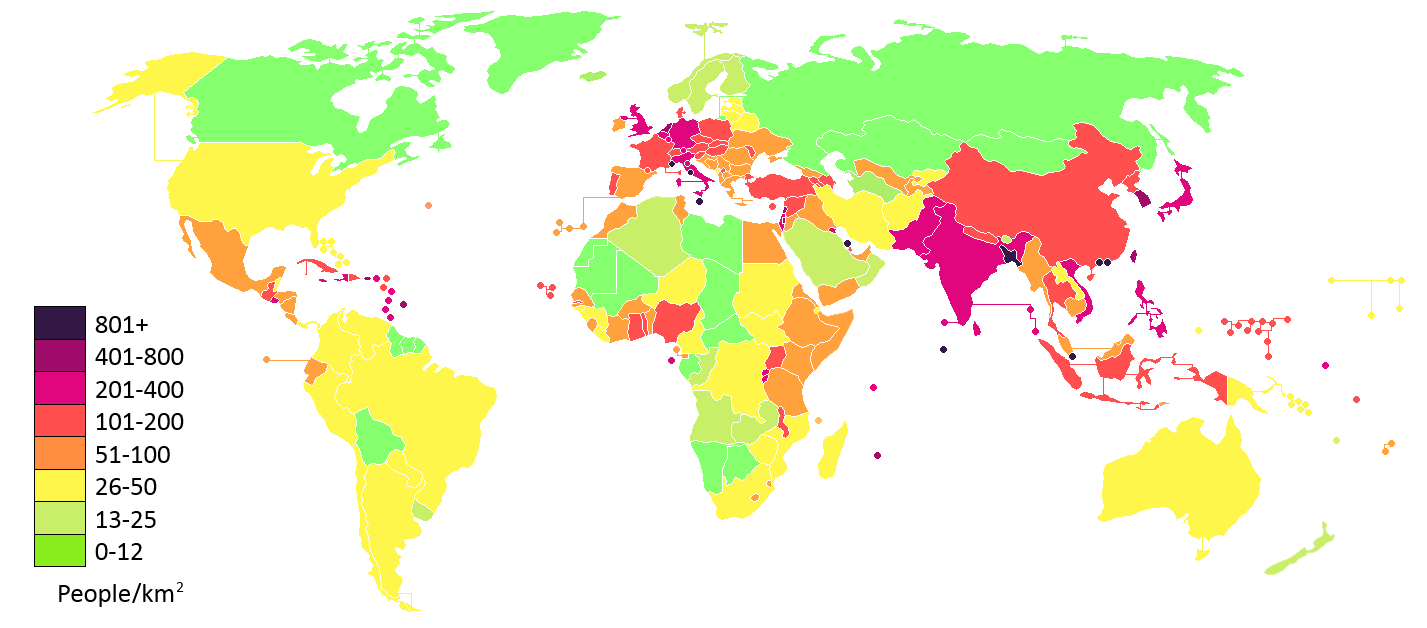
This isn't so bad. The Netherlands is the most dense population of any country outside Taiwan and families dwelling in small spaces continues to this day. There is a 12-member family spanning 3 generations all living in the same small house next door to me. Our tiny 60 square meter home is considered normal for our area. By American standards, SF seems like tight living, perhaps. But by world standards, space is not the priority that you find elsewhere in the States.
https://en.m.wikipedia.org/wiki/List_of_sovereign_states_and...
Netherlands is number 30. Admittedly most of the others are a lot smaller, but Bangladesh and South Korea are a lot bigger.
San Fran is also denser than the Netherlands, and AFAICS denser than any Dutch city (comparable with The Hague).
Hm I have a book right in front of me that says it is number 2 in the world, right after Taiwan. It's this book:
http://www.xpat.nl/product/holland-handbook-2015-2016/
Perhaps they taking other factors into account by excluding city-states like Singapore, Hong Kong, etc.
Interesting that in the PDF preview of the book on the page, which is a slightly newer edition than the one I have, they have changed the discussion of population density to say this:
>The Netherlands is in the world’s top ten in export volume and it ranks in the world’s top twenty for GNP, even though, in terms of square kilometers, it is one of the smallest countries of the world. Though it is true that, in population density, it is on a par with countries such as India and Japan, nonetheless this only amounts to a population of almost 16.8 million.
The ultimate problem is that SF is not really all that dense. It's ~7,000/km^2. (Amsterdam is ~4,000/km^2).
Seoul is 17,000/km^2. But living spaces are surprisingly reasonable, even by American standards.
It always blows me away that Paris has a density of 21,000/km^2, but the living spaces I've seen are pretty bad.
Like the article says, it just makes very poor use of its space.
Population density can be quite meaningless when talking about floor space to live in.
A city that has a height restriction of half of the other city can have exactly the same floor space to live in per person while ostensibly being half as population dense. And height is just one of many factors. Large bodies of water, parks, large open squares etc... they all can change density figures a lot without any change to the actual space per person in an actual house.
Paris certainly has tiny homes, I've been in more than a few, and they've felt smaller than Amsterdam (where I live) generally. But it's nowhere near the discrepancy that the density figures suggest (e.g. 21k vs 4k, but floor space per person is nowhere near 5x as big in Amsterdam, probably more like 25% or something). There are all kinds of reasons for this, one is that Amsterdam hasn't got nearly as many tall buildings as Paris does, and that Amsterdam's density is understated due to quite significant bodies of water (two rivers splitting the city vertically and horizontally), parks (Amsterdamse Bos is 3x Central Park), lakes etc etc, where nobody lives but that is part of the density calculation, making the actual places people do live denser than they appear in these numbers.
There are no other major countries from Europe on that list denser than Netherlands. Monaco is super dense, but consider that it's really really small.
Just compare the US to other developed countries (e.g. the vast majority of Europe), high-density living (like SF) is pretty much the standard, that's really his point. [0] On population density maps the US as a whole is more akin to Australia. [1]
Beyond that, I always wonder about population density figures, afaik there is no standardised process for these calculations. You may think 'well it doesn't get much simpler than population within certain area over that total area', but when making comparisons, the statistics can be deceiving, especially as a proxy for 'living space'.
For example, I live in Amsterdam and we have quite a bit of water (from the Amstel river that divides the city east-west, the Ij river that divides the city north-south, or the Slooterpas lake that's more than a mile wide to the many different canals), as well as numerous sizeable public parks including just one of them, the Amsterdamse Bos, that's 3x (!) the size of Central Park... And if you're not familiar with Amsterdam, it's a tiny city with less than a million inhabitants. When you're outside you won't feel cramped, there's a lot of public areas, it's open, it's quite nice. But that doesn't mean that the density of actual residential space is like that. Especially when you consider that most of the Netherlands, including much of Amsterdam (a city mostly built in a swamp area!) has relatively low buildings and little vertical space as opposed to say Taipei.
Further, you may say the Netherlands is only nr 30, but there are only 4 countries with more than 10m people which are denser of which only 2 are developed countries. The US for context is number 177.
So the Netherlands is quite dense per total area for one. Secondly, vertical space is quite low, and thirdly many of its cities have large open areas (e.g. parks, bodies of waters, like Amsterdam) has ample open-areas where nobody actually lives. So while population density numbers are interesting to measure density, they can't simply be used a proxy for measuring density of housing space.
A better look would be at floor space per person. It's hard to find internationally comprehensive numbers for local areas, but take Germany and France. Germany has about twice the population density, but the floor space per person is pretty much exactly the same. Pop density would've been a terrible proxy for comparing floor area per person between these two countries.
Another example is Ireland and the Netherlands. The latter has 6x the population density. But floor space per person according to this source [2] is larger for Ireland. That's a striking difference that completely blows the popdensity statistic to irrelevance if a comparison between these countries was made for space in the home to live, even if the numbers are adjusted for errors.
I see pop density references pop up all the time in online discussions and it strikes me as a pretty bad statistic to pick for most arguments in such discussions. This particular discussion is about OP's tiny amount of floor space in his home, a popdensity stat includes much more and it may not be applicable when trying to make international comparisons.
[0] https://upload.wikimedia.org/wikipedia/commons/thumb/6/67/Wo...
[1] https://upload.wikimedia.org/wikipedia/commons/4/4d/World_po...
I take your point that floor space per person is probably a better metric than population density.
That said,
> high-density living (like SF) is pretty much the standard
I don't believe this. Yes, there are denser cities than San Fran, and yes, San Fran probably has more floor space per square mile than most European cities. Still, my default guess is that people living in San Fran have less floor space per person than average, for most reasonable choices of population to average over.
If you have statistics that show otherwise (don't have time to look currently), I'll gladly admit that I was wrong.
It's also not really relevant what the U.S. As a whole looks like.
> If you have statistics that show otherwise
No I don't, floor space per person seems to be one of those things that's barely registered or studied, it seems, on an international level. Some municipalities/cities do their own studies, and some organisations (EU, OECD) etc do run some country-level averages, but even here definitions are non-standard (e.g. they'll look at floor area per dwelling per capita, but definitions of dwellings range from houses to caravans to vacation homes and may include or exclude vacant dwellings etc, some count all area including outer walls, others count not the balcony, some count the balcony for half), but comprehensive solid international data that's standardised and available down to a local (city) level I'm not aware of. It's a shame because it's definitely interesting data! Who knows there may be a market for this kind of information :)
> Our tiny 60 square meter home
is over 50% larger than the one in the article?
It's the difference between a studio and a nice one bedroom, or maybe even cramped 2 bedroom.
That really depends on how the space is arranged. I'm in just about that size, but my place is wheelchair-accessible with room for attendant care, so the bathroom is huge compared to normal, the entrance corridor is nearly wide enough for, say, a Smart ForTwo (or a chair with a drip and someone alongside), so the basic living area works out to "small bachelor/studio". That's a bit extreme, but a bad layout can really eat into the usefulness of your floor space without a corresponding drop in cost.
Coming from the UK it amazes me that the vast majority of family houses have a small footprint but are high. Our house has 3 stories + a small loft.
The new houses being built have 4 stories. Footprints are around 13x6.
In the UK in a similar town the footprint is easily twice that but the actual livable space is often less.

In another city a place this cheap would be less than $400 / month. Meaning someone could choose this lifestyle simply in a different city working for minimum wage and meet the requirements for housing costs of less than 1/3 income.
The problem is who you're living next to, at that price point, in another city.
Basically, if you live where all of the minimum-wage people live, you're going to get spill-over from all the typical problems in such a neighbourhood.
In other parts of the country, the kind of money the author is paying in rent on a studio will pay the mortgage on a 2500 sqft house, in an upper-middle class neighborhood.
In an age of high-speed internet, it's ridiculous that we insist software engineers be jammed into dense, expensive globs. Working remotely with Skype calls/IM/screensharing is a better experience, all around, than trying to collaborate in the same office, at least in my experience. You do have to have employees that will actually work, though.
For sure, but I was commenting on the parent's $400/mo.
Yeah, the assumption that all low-income neighborhoods have problems that you should be afraid of "spilling over" is a poor one.
It would be obvious to say that I haven't lived in every low-income neighbourhood, but I've lived in one. So, I'll list the least severe of my complaints and see whether you think they're not representative of low-income neighbourhoods.
I live in Canada, but feel free to comment on US / Commonwealth / Europe.
* Majority of students in elementary school's parents did not attend college.
* Less than a majority of high-school students continue to University
* Engineer, Doctor, or Lawyer is a very uncommon profession among my neighbours.
* Any non-domestic, non store-robbery, assault with a weapon (stabbing or shooting) within the neighbourhood within the last two years.
Fascinating article, and great observation on optimizing density. How do you think in a space like that? I need personal space just to think.
I've known people to at work later if they want time to themselves.
Been there, done that, but it can turn into a bad habit. Oh, look Daddy got home just as the kids are all prepared and in bed.
:) 400 sqf with two kids might be a drama for people in the US but it is completely normal in other places of the world, even including the EU. It's not comfortable, but 600-700 sqf is completely usual for families in where I live (an apartment like that costs around 15-20 times the average yearly salary).
EDIT: typo, I meant sqf and not sqm.
"400 sqm with two kids might be a drama for people in the US"
400 square feet (~37 m^2)
No need to turn this into another stereotyping Europe vs US issue. I agree 37 m^2 is plenty of room for some people, not for others, regardless of where you are from.
> No need to turn this into another stereotyping Europe vs US issue
But it is kind of true that Americans are extremely melodramatic about this stuff. 800 sqft house is often referred as a "tiny house" in American media. In the UK (for example) this is an average house size.
The US is over 10 times larger than the UK. Guess what, tons of land leads to different expectations. I don't understand why Europeans seem to like acting condescending about this stuff?
> The US is over 10 times larger than the UK. Guess what, tons of land leads to different expectations.
I'm not sure it's just that, it's also I think, that Americans find it acceptable to live in suburbs. If everyone tried to live in the city centers (like they do in nyc or SF), small places would also be the norm.
Why would you want to live in a city center, when you could have 40 acres of good land in the country for the same money, or less?
Suburbs are a compromise, where you get a little of column A (room enough for decent living) and a little column B (urban wages and access to capital), which equals a lot of column C (long, shitty commutes).
> Why would you want to live in a city center
Well, one reason would be:
> long, shitty commutes
another is that some people prefer urban life.
I bet you'd be surprised to hear that in some countries people actually prefer to live in apartments to houses.When I ask why, they often state the fact that it is much less work to upkeep an apartment, so I guess that would be another reason. I personally understand why would some kid from the midwestern suburbs want to live in nyc, even if it means a much lower standard of living.
But in reality I think it really is purely cultural, people prefer what people like them around them prefer. People in the US were living in the cities as well before the "white flight", so at some point, urban middle class families were also the norm.
"I bet you'd be surprised to hear that in some countries people actually prefer to live in apartments to houses."
One sniff test for the credibility of this is to look at what rich people do.
No matter where you go, the wealthy tend to have large country estates. Sure, they may have a luxury apartment in town as well, but where do they spend their leisure time? Bingo.
I wasn't referring to rich people. They have a whole different set of requirements. Also, they typically don't have to clean their own mansion, of take care of the pesky chores around the house.
> Someone who is forced to live in a tiny apartment because they can't afford anything better isn't really making a free choice, even if they rationalize it by claiming that it is.
Of course, but I wasn't referring to those people. I was talking about the people who prefer to live in apartments, like, for example, my parents who moved from a house (that was actually in a great location) to an apartment by choice (in a worse location, and some years after that in another apt in a better location). Now they live in a house again (not by choice), but keep their city apartment. And my mom keeps telling me how she hates the house, and can't wait to move back to the city apartment :)
and she even has a housekeeper so it's not like she has to do the whole work around the house by herself. This is why I say it's really deeply culturally embedded. You are not able to step out of your cultural conditioning and imagine that there are people who really truly prefer to live in apartment.
You're talking about specific people (your parents). I'm talking about society as a whole. Are there people who prefer living in an apartment? Sure, but most people, regardless of "cultural conditioning", will choose a large country dwelling over a small city apartment if they have the resources to do so. This is true everywhere, in every society and culture, and across all of known history.
It is actually fascinating how convinced you are that your worldview must be the prevailing one. Yes, you accept that it is possible for the "specific people" to have different preferences, but no way that these can be anything else but individual quirks of the few, and not embedded in a culture, despite you not knowing anything about the culture in question.
Really, you exhausted all my arguments.
"It is actually fascinating how convinced you are that your worldview must be the prevailing one."
Look, you have admitted that rich people (i.e., the people who actually have a choice) prefer country dwellings.
This was true in Ancient Rome. It was true in Victorian England. It was true in the Soviet Union. And it is true wherever it is that you live.
"Really, you exhausted all my arguments."
No, the facts on the ground have exhausted your arguments.
> Look, you have admitted that rich people (i.e., the people who actually have a choice) prefer country dwellings.
No, I haven't. I am totally disinterested in rich people and what they prefer, but I'm not sure that there are fewer rich people living in cities such as NYC or Shangai than in the country.
> And it is true wherever it is that you live.
Right. Good to know. I'll let you get on with it now.
He's using rich people as an example because in order to draw any inferences here you have to have a large sample set of people who could conceivably live in either a large house or an apartment, with no financial difficulties either way. Rich people are the simplest sample set to look at which trivially satisfies these criteria.
His basic point is that if your sample set consists of people who don't actually have the choice of buying a large home, then that's a major confounding variable whose influence you cannot reliably determine on the results. Beyond that, the sample set also must be large enough for it to not be anecdata. A single couple doesn't imply much about societal trends at large, but the behavior of an entire class of people -- the wealthy -- does, to at least some degree.
Well, they're the ones who are free to choose anything.
Someone who is forced to live in a tiny apartment because they can't afford anything better isn't really making a free choice, even if they rationalize it by claiming that it is.
I think it is illuminating that you refer to "pesky chores around the house." I'll acknowledge that I'm a weirdo, in that I consider my current living situation inferior due to its lack of opportunity for meaningful manual labor.
If I won Powerball tomorrow, I'd tell my boss I could either work 99% remote, or he could try to find someone else to take over. Then I would go home, and be a somewhat more comfortable version of the subsistence farmers my great-grandparents were. Sawing and splitting firewood would be an excellent break from debugging ASP.NET applications, and hilling potatoes would be a great distraction from fighting with upgraded Windows installer tooling. I would never have to bag up another dog turd. I'd have free, non-chlorinated, decent-tasting water. I could plink at tin cans in my back yard without violating any town ordinances, scaring the neighbors, or having the police called on me. I could see the stars at night without the baleful day-glo glare of halogen streetlights polluting the sky.
I am hopeful that this utopia might be achievable within a foreseeable timescale, sans massive lottery-related cash infusion. Much more hopeful than I am about the possibility of an urban environment that could possibly meet my requirements for livability.
> it's also I think, that Americans find it acceptable to live in suburbs
Guess what, tons of land leads to different expectations
Obviously it sucks, but the Europeans have to justify it because they can't admit its much better in the US when it comes to housing.
It's not just Europeans. I remember a conversation years ago where people from New York City were making fun of how "unrealistic" the Roseanne TV show was, "because people that poor couldn't possibly afford that house". Never mind that the show was set in a small Midwestern town, and small Midwestern towns are, in fact, chock-full of houses very similar to the one on the show, which are, in fact, occupied by working-class people.
Europeans, New Yorkers, and (increasingly) people from the Bay Area think that paying forty billion dollars a month to live in a closet is normal. It is not.
More like 40 times (3.8 million square miles compared to 94,000 square miles). The UK is smaller than Oregon.
I think I switched one to miles and then dropped a zero.
I should probably return that math degree :/
It is now, it wasn't always so: http://www.dailymail.co.uk/news/article-2398714/The-incredib...
(see yesterday's discussion about rubbish buildings)
Yes, it is definitely a consequence of suburbanization of America.
I meant square feet, sorry. I wanted to hightlight that the 'normal' or 'acceptable' size of private space varies hugely between regions. You can call that stereotyping, but we can also just call them cultural differences.
>400 sqm
You mean 40 m^2 ? 400 m^2 is a big house :D In that case I can agree - in my country (Croatia) ~40-60 m^2 is the norm for family apartment. Also interesting - huge apartments (>100 m^2) are nowhere near to being proportionally expensive (except on the top end) because people can't afford them - eg. they might be double in size but only 1/2 more in price.
While the average size of housing in the UK went down considerably the average 3 bed room flat is still 950sqft, land attached houses are on average 25% larger than flat with the same number of bedrooms not counting external land area like balconies and yards.
People need their space while it's true that there might be some "romantic" aspects to small housing the disadvantages are quite noticeable there are plenty of adverse physical and mental health effects when you live in smaller spaces, from asthma to mental stress and social friction that can increase the likelihood of divorces and breakups.
I live with my GF for 6 years and I would never ever live in an apartment with less than 2 bedrooms, people need their space, if you have a fight it's good to have a place to go and just cool down and not continuously get annoyed at the person, having a guest bedroom/office is also quite good for that time where you under allot of stress at work or just having a bad day and need to finish some things without being disturbed.
And while It's perfectly fine to say to your partner "look, I'm having a rough day and I need to be alone" it's just much better when you don't have too, when you know you can sit down some where and just relax.
Having larger space also gives people privacy which even in a relationship is very important if the 2nd bedroom door is closed my GF knows to knock, if our bedroom door is closed I know to knock. And before some one makes jokes about it no we don't expect to catch one of us with the mailperson in there but she might be having a private call with her parents or doctor, she might be planning a surprise and i can do the same.
And while you can do those things even without having an extra room by juggling your schedule the fact that you don't need too adds quite a bit of relief, I've seen other couples having issues while living in small apartments from having to lock yourself in the bathroom after a fight to having to make personal calls from it or worse have to say "hon, I need to make a call so I'm going out for a few" which is just uncomfortable for both people because even in a trusting relationship having a private call inside the house gives the added assurance that it's probably not that, while when you need to go out to make it there might be some fears gowning at your partner even if they are completely subconscious they are still there.
People need their space,calling it a luxury and that people in "Insert European, 2nd world, 3rd world country here" are living in small spaces is not true, because in many of them the overall living space tends to be much much bigger than what people would imagine, especially when you count in communal and open spaces.
I'm about to move going from 1100sft to about 800, and bemoaning that change... it's hard for me to imagine 400... I lived for almost two years in under 500sqft, and don't think I could ever do it again... as soon as I was able, I moved into the biggest apartment I could find close to where I wanted to live.
I'm only making the change I am now because it's actually closer to the job I started a couple months ago, and I'm hoping in the next 18 months to have my credit clear (still paying off medical bills from 5-6 years ago), my car is paid off in 14 months, and want to have enough for a down payment for a house.
It's hard for me to imagine living in SF, where rent is significantly more than I pay now, and the pay doesn't quite correlate.
This is one reason I think we should do a type of zoning in-between urban and suburban. Even if you divide a normal residential suburban lot into 9 pieces, if you do two stories, then every little lot could contain 578 square feet, which is 178 square feet more than their 400 square feet apartment.
The author describes a strategy: maximize the density of storage space and minimize the density of living space.
I had discovered that excellent wisdom independently when setting up my various college dorm rooms.
He later says that he is "forever changed" by the experience. I hope so. Myself, I had forgotten, and I thank him for the reminder.
I'll be that guy: affect != effect
Thanks, I fixed it. If only there was a way I could let people open up PRs to my blog posts to fix typos and grammatical errors :)
Great and insightful article. Loved the line about getting larger pants to fix a weight problem.
As someone who got into cycling a few years ago Rule V (Harden the Fuck Up) has permeated the rest of my life.
If you can do 50 miles when the hail is coming in sideways and it's dark and your on a hill in the middle of nowhere then everything else seems easier.
I had a colleague in nyc, who moved with his homemaker wife and 2 children, from Utah where they owned their own home, to nyc to live in a studio. I thought it was a very brave choice.
I really want to know where the author moved next. It doesn't mention it specifically in the article.
It is north of San Francisco and rains a lot
What's a good way of storing clothes if you don't have a closet?
I live in Japan, where a lot of people live in spaces that small (and smaller). My wife and I did too (before having kids though) and what is common in Japan is these expandable bars that you can put up between any two strong walls.
In our case, we put one up over the middle of our bed, and hung all our clothes on it (even hanging-optional stuff like T-shirts). You had to kind of tunnel through it when getting into bed, but this let us make use of the otherwise useless airspace over our bed. It also formed a kind of soft wall or curtain that made the area where your head was darker than the rest of the main room. That was handy when one person wanted to sleep and the other was still working.
Man, I love Chicago.
Interesting this about San Francisco, you don't have to live there.
If neither of them worked, they could get a three bedroom apartment at Taxpayer expense!
http://www.section8facts.com/2014/10/23/section-8-guidelines...
That is stupid. If your salary won't cover decent living then why bother? It is people like yourself who drive rates low and then post how difficult is to live on them...
> That is stupid. If your salary won't cover decent living then why bother?
I think you fail to see that he'd definitely describe his living over the past few years as 'decent', and likely even much more than just decent.
Can confirm. My life is awesome.
Can you explain how the author is not living decently?